
Last updated September 24, 2026
Insulation Warning Signs: A Yorba Linda Homeowner’s Reference Guide
A second-floor bedroom that reads 5°F warmer than the rest of the house in July isn’t a duct problem until the attic directly above it has been ruled out. In Yorba Linda tract homes built between 1975 and 1995, the most common cause is a compressed batt over a recessed light housing that was never air-sealed - a $90 material fix that presents as a $3,000 HVAC complaint. Most insulation failure signals show up in the utility bill, the thermostat behavior, and the attic’s physical condition months before they appear as obvious damage. This guide shows you what those early indicators look like, how to confirm them with simple measurements, and when the problem has moved past a homeowner observation into professional territory. For a deeper dive, see The Complete Guide to Insulation in Yorba Linda.
Quick Answer
The most reliable insulation warning signs in a Yorba Linda home are: indoor temperature differences of more than 3°F between floors or between rooms that share an exterior wall; summer electricity bills that drift upward year-over-year without rate increases; attic insulation that measures below R-38 (about 12 inches of fiberglass batt or 10 inches of blown-in); and HVAC compressor run times that lengthen by 20% or more in comparable weather. These four indicators, checked in order, will identify envelope problems before they become comfort emergencies.
Table of Contents
- Thermal Comfort Indicators: What Temperature Differences Actually Mean
- Utility Bill Pattern Recognition: Reading the Drift
- Physical Signs in the Attic: What to Look For and Measure
- HVAC Runtime as a Proxy: Logging Compressor Hours
- Yorba Linda Housing Stock: Era-Specific Vulnerabilities
- Tools and Methods: Inexpensive Verification
- Common Mistakes to Avoid
- When to Call a Professional
- Frequently Asked Questions
- The Bottom Line
Thermal Comfort Indicators: What Temperature Differences Actually Mean
We start with the symptom homeowners notice first: a room that won’t hold its temperature. The key is distinguishing an insulation deficiency from an HVAC distribution problem, because the fixes and costs diverge sharply.
Here’s the measurement that separates them. On a day when the outdoor temperature is stable above 85°F - common in Yorba Linda from June through September - use an inexpensive infrared thermometer (about $30 at any hardware store) to check wall and ceiling surface temperatures in the problem room versus a comfortable room at the same time of day. Point at drywall, not windows or vents. If the ceiling in the hot room reads 4-8°F warmer than the ceiling in the comfortable room, and both rooms have similar sun exposure, the attic insulation above the hot room is almost certainly compromised. If the wall surfaces differ dramatically instead, look to wall insulation or window performance first.
Floor-to-floor differentials tell a similar story. In a two-story Yorba Linda home with a vented attic, the second floor should run no more than 2-3°F warmer than the first floor during peak cooling load. A 5°F or greater split, especially in bedrooms directly under attic space, points to attic floor insulation that has settled, been disturbed, or was never adequate for the R-value required by Title 24 (California’s energy code, which has required R-38 in attics since 2005).
Pay attention to timing. An insulation problem worsens as the day heats up and the attic temperature climbs. If a room is uncomfortable by 2 PM but tolerable by 8 PM, that’s attic-driven. If it’s uncomfortable from the moment the system turns on and never improves, that’s more likely duct leakage or an undersized unit.
We’ve logged this pattern across thousands of Yorba Linda homes. The bedroom over the garage, the bonus room with cathedral ceiling, the south-facing second-floor office - these are the locations where compressed batts, recessed light penetrations, or missing insulation at the eaves first announce themselves as temperature complaints.
Utility Bill Pattern Recognition: Reading the Drift
Your Southern California Edison bill contains a year-over-year comparison that most homeowners glance past. For envelope diagnostics, it’s the most important number on the page.
Establish a baseline first. For a mid-size Yorba Linda home - roughly 1,800 to 2,400 square feet - built between 1980 and 2000 with original or partially upgraded insulation, summer cooling costs typically run $180-$320 per month in June through September at current rates. This assumes thermostat set points around 76-78°F and no pool or EV charging on the same meter. If your home is smaller or larger, scale proportionally: about $0.09-$0.13 per conditioned square foot per month in peak summer.
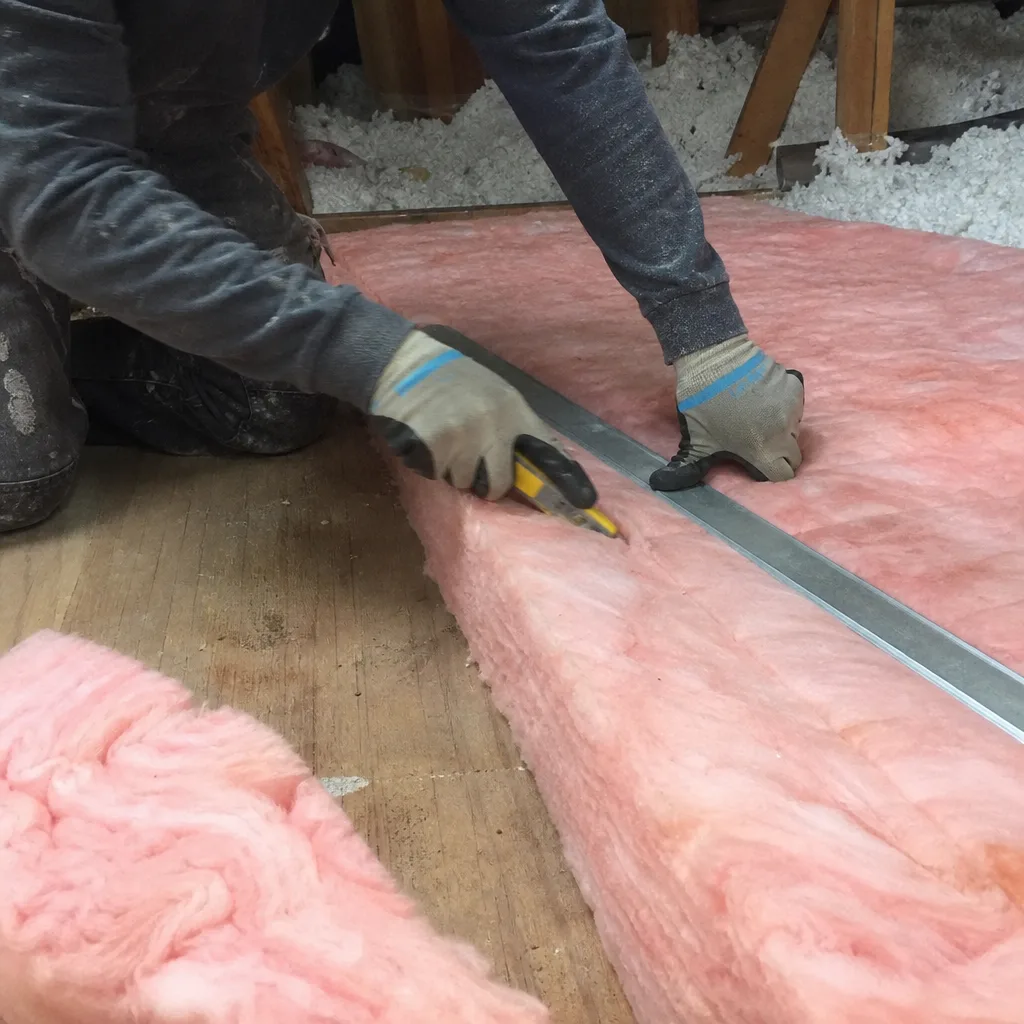
Now watch for drift. A year-over-year increase of 15% or more in comparable-weather months, with no rate change, no new occupants, and no added equipment, indicates envelope degradation. The most common causes we find in Yorba Linda:
- Settled blown-in insulation that has lost 20-40% of its original thickness, often from foot traffic during prior HVAC or solar work
- Air leakage pathways that have opened at top plates, wire penetrations, or chimney chases - the house is “breathing” attic air into conditioned space
- Damaged or displaced batt insulation from rodent activity, particularly in homes near Yorba Linda’s equestrian zones and hillside interfaces
Check your bill’s “average daily use” in kWh, not just the dollar total. This strips out rate changes. Compare July of this year to July of last year, and July two years prior. A rising trend line that doesn’t reverse in milder months is structural, not behavioral.
Here’s a table of typical summer baselines we see in Yorba Linda service calls:
| Home Size (sq ft) | Original Construction Era | Typical July kWh | Typical July Bill Range |
|---|---|---|---|
| 1,400-1,800 | 1975-1985 | 1,100-1,500 | $220-$310 |
| 1,800-2,400 | 1985-1995 | 1,400-2,000 | $280-$400 |
| 2,400-3,200 | 1995-2005 | 1,800-2,600 | $360-$520 |
| 3,200+ | 2005-present | 2,200-3,200 | $440-$640 |
If your usage sits two brackets above your home’s profile, the envelope is the prime suspect. We’ve had Yorba Linda homeowners bring us twelve months of bills that showed a 30% climb over three years - the attic had been disturbed during a solar panel installation, and nobody had checked the insulation afterward.
Physical Signs in the Attic: What to Look For and Measure
The attic tells its own story, and it’s worth looking if you can do so safely. In Yorba Linda, attic access is typically through a hallway ceiling hatch, garage pull-down stair, or bedroom closet. If your access is a pull-down stair, check that it’s safe and that you have a stable platform to stand on. If you have any doubt, stop and call us - falls through ceiling drywall are common and serious.
Once you’re up, bring a tape measure, a flashlight, and your phone for photos. For a structured approach, see our Attic Insulation Maintenance Checklist for Yorba Linda Homeowners. Here’s what to document:
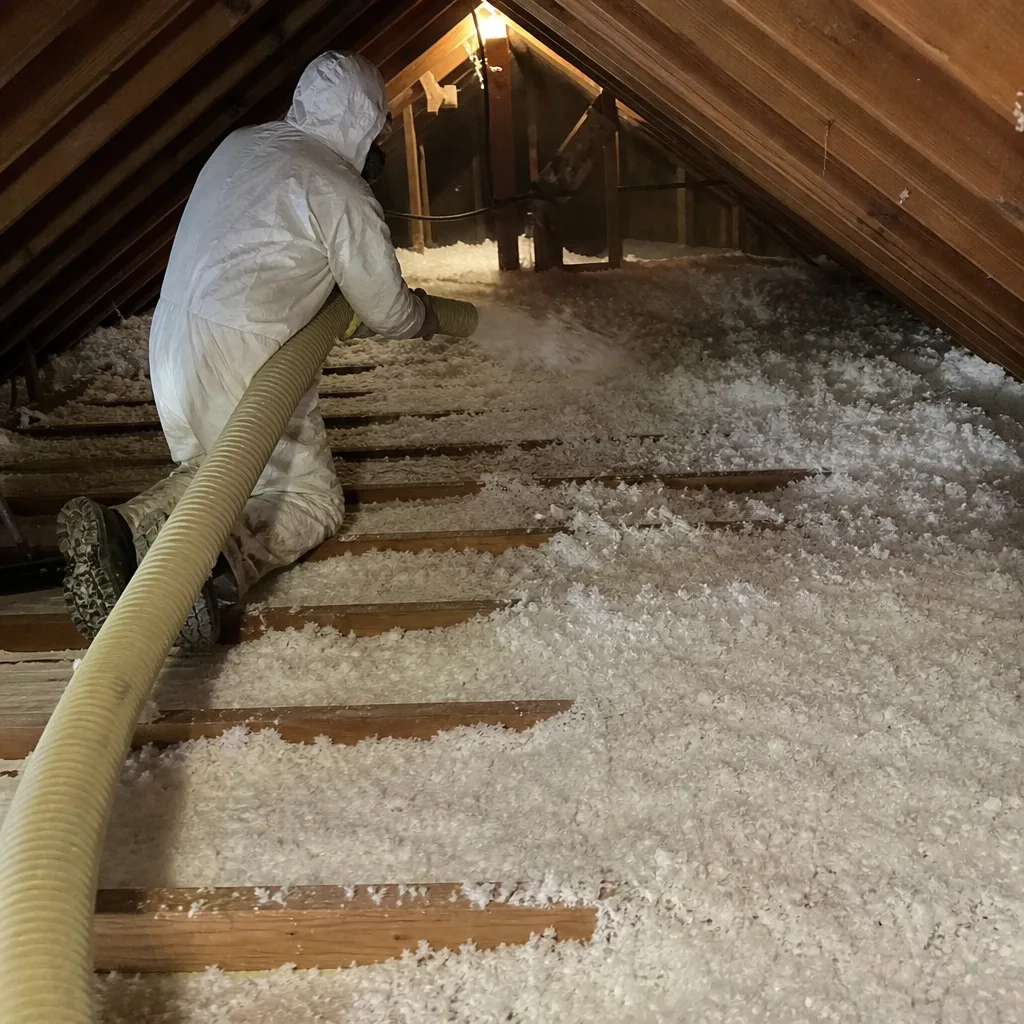
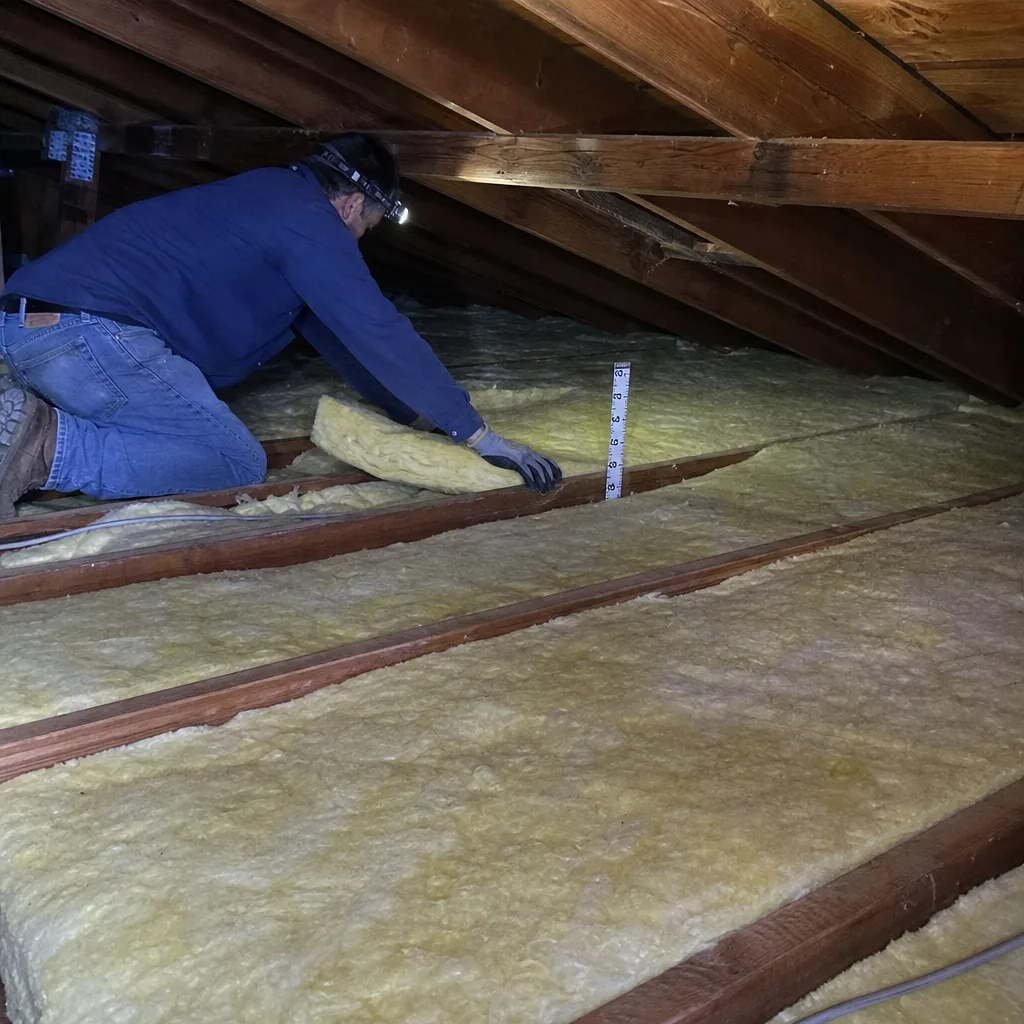
- Insulation depth. Measure at multiple points, especially near the eaves, at the center of the attic, and around any penetrations. Use a ruler or tape measure vertically through the insulation to the drywall below. In Yorba Linda’s climate zone, current code requires R-38 minimum. Fiberglass batts achieve roughly R-3.1 per inch; blown-in cellulose about R-3.5 per inch; loose-fill fiberglass about R-2.5 per inch. So 12 inches of fiberglass batt, 11 inches of cellulose, or 15 inches of loose-fill fiberglass gets you to code. Many homes we inspect in the Eastlake, Travis Ranch, and Bryant Ranch areas measure 6-8 inches - adequate for 1980s construction, insufficient now.
- Settled versus disturbed. Settled insulation has a uniform, flattened appearance with consistent depth. Disturbed insulation shows footprints, drag marks, or areas compressed to half the surrounding depth. Look for rectangular depressions where storage boards were placed and removed - these are permanent compressions that no longer insulate.
- Pest tunneling. In blown-in material, rodents create distinct pathways: smooth, rounded channels about 2-3 inches in diameter, often with droppings nearby. The insulation around these tunnels is displaced, not compressed, creating thermal bypasses. In Yorba Linda, roof rat activity peaks in late summer and early fall; we’ve found active tunnels within a quarter mile of the Richard Nixon Library, in the hillside neighborhoods off Fairmont Boulevard, and throughout the older tracts near Yorba Linda Boulevard.
- Dark streaking on batts. This is one of the most misread signs. Dark gray or black streaks on fiberglass batts, especially near the edges or on the top surface, indicate air moving through the insulation rather than being blocked by it. The discoloration is filtered dust. It means the batt is functioning as an air filter, not an air barrier - a sign that the attic floor has not been properly air-sealed. This is exactly the condition we address before adding any new insulation, per our sealed-first protocol.
- Wet spots or staining. Any brown, yellow, or dark staining on insulation or rafters indicates a roof leak or condensation issue that must be resolved before insulation work proceeds. Note the location and call a roofer or us for assessment.
Take photos of anything that matches these descriptions. When we provide a Topside Attic Insulation Yorba Linda home assessment, we compare homeowner photos to what we find on inspection - the correlation is usually exact.
HVAC Runtime as a Proxy: Logging Compressor Hours
This method requires patience but yields the clearest early warning of envelope degradation. You’re going to log how long your air conditioner’s outdoor compressor runs during stable weather, then watch for changes.
Pick a week in May or early June, before Yorba Linda’s sustained heat arrives. You want daytime highs of 78-85°F, lows of 60-65°F - weather stable enough that your system isn’t fighting extreme load. For seven consecutive days, note:
- Outdoor high temperature
- Thermostat set point
- Total compressor run time (use a smart thermostat data log, or simply note start/stop times)
Calculate your daily average. For a well-insulated 2,000 square foot Yorba Linda home at 78°F set point in 82°F weather, expect roughly 4-6 hours of compressor runtime per day. Poorly insulated homes of the same size often run 8-12 hours in identical conditions.
Now repeat this logging in August, when Yorba Linda sees weeks of 90-95°F days. The ratio between your May baseline and August runtime tells you how hard your envelope is working. A well-sealed, well-insulated home might see August runtime 50-70% above May. A leaky home often doubles or triples. More importantly, repeat the May test next year. If May runtime increases 20% or more year-over-year with similar weather, your envelope has degraded - insulation settlement, new air leaks, or both.
We’ve used this method to catch failing insulation in Yorba Linda homes where the homeowner’s only complaint was “the system seems to run more.” The blower-door test - a pressurization reading that shows, in one number, how much air your building envelope is losing - confirmed what the runtime log suggested. In one case near Serrano Avenue, the May-to-May compressor hours had increased 34%; the blower door read 3,800 CFM50 before air sealing and 2,100 after, with new insulation bringing the total project cost to $2,400 rather than the $6,800 HVAC replacement the homeowner had been quoted.
Yorba Linda Housing Stock: Era-Specific Vulnerabilities
Yorba Linda’s development waves created distinct insulation profiles. Knowing your home’s era helps you know what to suspect first.
1970s-Early 1980s: The First Tracts
Homes in the original flatlands near Yorba Linda Boulevard and Imperial Highway often have R-19 or less in the attic, originally installed as 6-inch fiberglass batts. Many have vermiculite insulation - a pebbly, granular material that may contain asbestos. Do not disturb vermiculite. If your attic has a gray-brown, gravel-like loose fill with occasional reflective particles, stop and call for professional assessment. We do not handle asbestos abatement directly but will coordinate with certified remediation before our work proceeds.
These homes also commonly have original single-pane aluminum windows and minimal wall insulation. The attic is your highest-return target, but understand that envelope performance is limited by these other factors.
Mid-1980s-1995: The Boom Tracts
This is the largest housing stock in Yorba Linda, including most of Eastlake and the lower hillside areas. Attic insulation was typically R-30 fiberglass batt, installed before Title 24’s 2005 R-38 requirement. The critical vulnerability: non-IC-rated recessed light housings - metal cans that protrude into the attic and create both fire hazard and massive air leakage.
IC (insulation contact) rated housings, required after approximately 1990 in most jurisdictions, can have insulation placed directly against them. Non-IC housings cannot, so installers either left gaps around the can (air leaks) or compressed batts to clear the housing (reduced R-value). In hundreds of Yorba Linda inspections, we’ve found this exact condition: a 12-inch batt compressed to 3 inches over every recessed light, with a 2-inch air gap around the can itself. The room below reads hot; the homeowner blames the air conditioner.
These homes also often have original jalousie or single-pane sliding windows in bathrooms and bedrooms, which interact with attic insulation performance by creating stack effect - warm air exits high windows, pulling attic air downward through ceiling penetrations.
1995-2005: Transition Era
Better baseline insulation, but frequent problems at the eaves where blown-in insulation was installed without baffles - the cardboard or foam channels that keep insulation from blocking soffit vents. For seasonal timing on these checks, read Seasonal Insulation Care for Yorba Linda: Year-Round Homeowner’s Guide. Blocked soffits create attic ventilation problems, summer heat buildup, and winter moisture accumulation. Look for water staining on the roof deck underside, or insulation packed tight against the eave with no visible gap to the soffit below.
2005-Present: Code-Compliant Baselines
These homes should have R-38 or better and IC-rated housings. Problems we find are typically installation quality issues: missed air sealing at top plates, gaps around chimney chases, or insulation displaced by subsequent trades. Solar installations are a frequent culprit - crews need roof access, move insulation for walking paths, and rarely restore it properly.
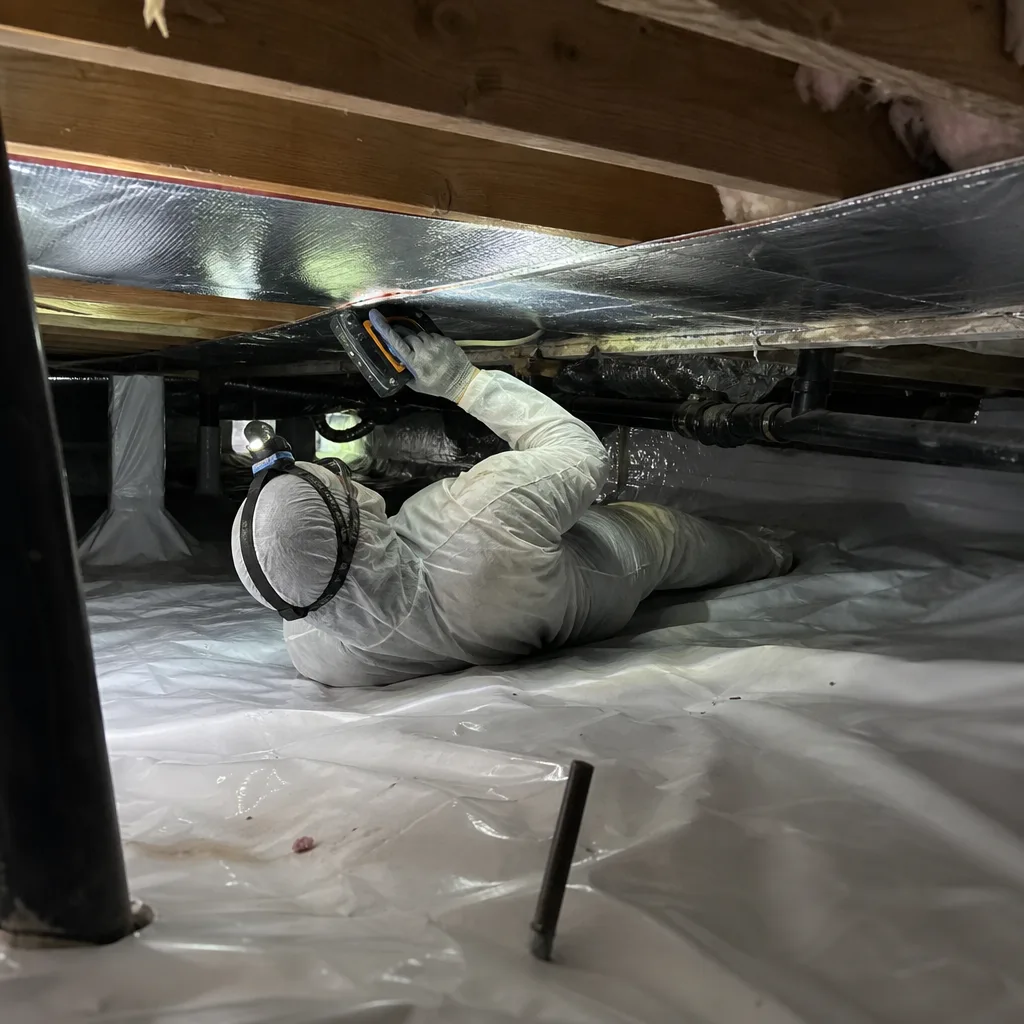
For Crawl Space Encapsulation & Vapor Barrier in Yorba Linda in homes of any era, the same sealed-first principle applies: the crawl space must be isolated from ground moisture and exterior air before insulation improvements will hold their value.
Tools and Methods: Inexpensive Verification
You don’t need professional equipment to confirm suspicions. Here’s what we recommend homeowners keep on hand:
- Infrared thermometer ($25-$40): For surface temperature comparisons as described above. Look for one with a 12:1 distance-to-spot ratio or better.
- Tape measure and ruler: For attic depth verification. A paint stirring stick marked in inches works well for quick checks.
- Smart thermostat data: Most modern thermostats log runtime. Ecobee, Nest, and Honeywell Home all provide daily or hourly compressor operation data through their apps.
- Utility bill kWh tracking: A simple spreadsheet with 24 months of usage, sorted by month, will show drift faster than dollar totals.
- Flashlight with focused beam: For attic inspection. Phone flashlights are inadequate for spotting subtle discoloration or moisture.
Professional verification comes when these tools confirm a problem but you need to know the scope before budgeting. Our home energy audits include blower-door testing, thermal imaging, and a written scope with flat pricing - the Haven Standard Clause 1 commitment. We’ve delivered over 9,000 of these since 2016, every one with a written price before work started and a documented record when the crew left.
Common Mistakes to Avoid
- Adding insulation over unsealed air leaks. This is the most common error we correct in Yorba Linda. Blown fiberglass or cellulose over a leaky attic floor simply creates a filter; conditioned air still escapes, and the new insulation performs at a fraction of its rated R-value. We never install insulation before air sealing is complete.
- Assuming new HVAC will fix a temperature problem. We’ve replaced perfectly functional 3-ton systems with 4-ton systems in homes that needed $800 in air sealing. The new unit cycles on and off rapidly, fails to dehumidify properly, and costs $8,000 more than the actual fix.
- Ignoring the eaves. Soffit ventilation and baffle installation are invisible but essential. In Yorba Linda’s summer heat, an attic without proper ventilation can reach 140°F, overwhelming even adequate insulation. Check that you can see daylight at every eave; if not, baffles may be blocked or missing.
- Compressing insulation for storage. Plywood boards laid on attic joists compress insulation to the depth of the joist - typically 6 inches - reducing R-value by half. Store items in the garage or install raised platforms that span multiple joists without contacting insulation.
- DIY spray foam in confined attics. Two-component spray foam generates heat and toxic fumes during cure. We’ve been called to remove improperly installed foam that trapped moisture against roof sheathing, causing rot. Spray Foam Insulation in Yorba Linda is a professional application with specific ventilation and temperature requirements.
- Trusting visual assessment alone. Insulation that looks adequate may be moisture-damaged, pest-contaminated, or the wrong material for the location. Fiberglass near a furnace flue, for example, is a fire hazard that should be replaced with Rockwool or another non-combustible material.
When to Call a Professional
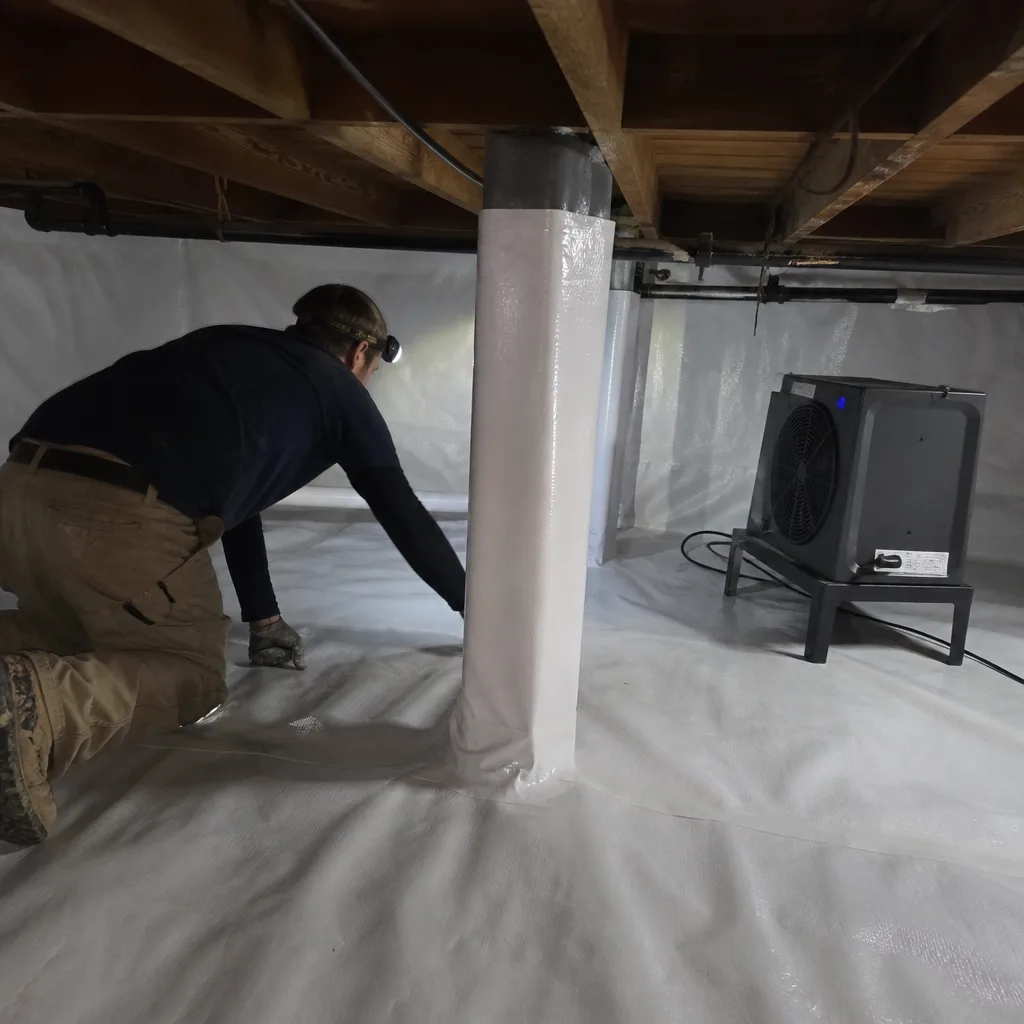
Call when your measurements confirm a problem beyond simple homeowner correction: attic depth below R-38 with widespread settlement, active pest contamination, vermiculite presence, moisture staining indicating roof leaks, or temperature differentials exceeding 5°F that persist after basic checks. Also call when you’ve logged increasing HVAC runtime or climbing kWh usage without explanation - these trends don’t self-correct.
Topside Attic Insulation Yorba Linda offers free estimates in Yorba Linda - call (909) 323-1675. Every estimate includes a written scope, flat pricing, and documentation of what we find. Under Haven Standard: Have it in writing. We also provide free second opinions on any written estimate you’ve received; bring us a competing quote and we’ll read it with you. Our technicians are background-checked and uniformed, and a live person answers calls 24/7.
Frequently Asked Questions
Most complete attic insulation removals and replacements in Yorba Linda run $2,800-$5,200 for homes between 1,500 and 2,500 square feet, with air sealing included. Partial top-ups or additions over existing material range $1,200-$2,400. The exact price depends on access difficulty, contamination level, and whether air sealing or baffle installation is needed. Call (909) 323-1675 for a written estimate - estimates are free, and we deliver the price before any work starts.
You can, but only if the existing insulation is dry, uncontaminated, and the attic floor has been air-sealed. Adding material over wet, pest-damaged, or uncompressed insulation traps problems and reduces performance. We inspect first, then recommend. In many Yorba Linda homes built 1980-1995, the labor to air-seal properly and add selective new material costs less than full replacement and performs better than a thick layer over a leaky floor.
Look inside the housing for an “IC” rating stamp - “IC” means insulation contact rated, safe to cover. Non-IC housings, common in Yorba Linda homes before 1990, have explicit warnings against contact and require 3 inches of clearance. If you cannot access the housing safely or find no marking, assume non-IC and call for assessment. We replace non-IC housings with airtight IC-rated LED units as part of our air-sealing protocol.
At current Southern California Edison rates, a 2,000 square foot Yorba Linda home with reasonable efficiency should run $260-$380 for July cooling, assuming 78°F set point and no pool or EV on the meter. If your July bill exceeds $450 consistently, or has climbed more than 15% year-over-year in comparable weather, schedule an envelope assessment. The problem is usually addressable for less than one year of excess utility cost.
Blown-in cellulose or fiberglass generally provides better coverage in irregular attic spaces with many penetrations, which describes most Yorba Linda homes. Batts work well in open, uniform spaces with minimal obstructions. We install both - Owens Corning, Johns Manville, and Knauf materials depending on the application - and select based on attic geometry, access, and whether we’re air-sealing first (we always are). There’s no universal better; there’s appropriate for the condition.
Fiberglass and cellulose insulation can last 20-30 years if undisturbed, dry, and uncontaminated. In practice, Yorba Linda attics see disturbance from HVAC maintenance, solar installation, pest activity, and homeowner storage that reduces effective lifespan to 10-15 years. The material doesn’t disappear; it compresses, shifts, or becomes interwoven with dust and debris. We measure what remains and recommend based on depth, condition, and air leakage - not age alone.
The Bottom Line
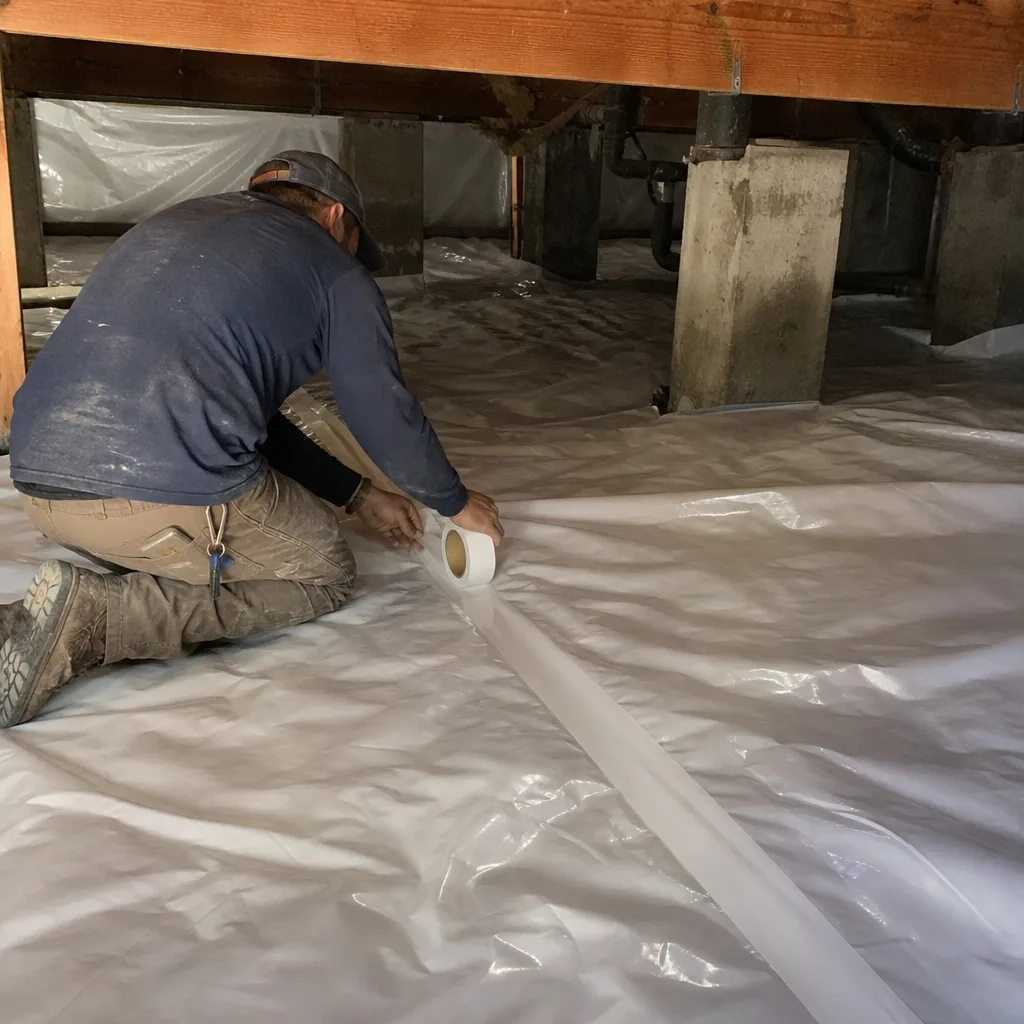
Insulation failure in Yorba Linda announces itself through measurable signals: temperature differences you can check with a $30 tool, utility drift visible on your bill, attic conditions visible to the careful observer, and HVAC runtime you can log yourself. The homeowners who catch these signs early intervene for hundreds of dollars in air sealing and targeted insulation; those who wait until the comfort complaint is severe often face thousands in remediation or misdirected HVAC replacement. Document what you find, measure what you can, and call when the problem exceeds homeowner scope. Explore more guides & resources for additional homeowner tools. Every project we complete includes a written price before work starts, a Documented Photo Record, and where applicable, before-and-after blower-door numbers that show the performance change you paid for.
Written by Wes Okafor, Owner at Topside Attic Insulation Yorba Linda, serving Yorba Linda since 2016.