
Last updated September 24, 2026
Seasonal Insulation Care for Yorba Linda: Year-Round Homeowner’s Guide
The best time to add insulation to a Yorba Linda attic is March or April. By July, attic temperatures exceed 140°F, which affects both installer safety and the cure rates of spray foam products. Most homeowners call in August, when the discomfort peaks, and then wait four months for a cooler window they could have booked in spring. Yorba Linda doesn’t have four equal seasons for insulation work. It has two distinct stress periods, the June-September radiant heat load and the October-November Santa Ana wind infiltration spike, bracketed by mild months that are the only practical windows for attic work. This guide maps what to do, when to do it, and what happens if you wait too long. For a deeper dive, see our Complete Guide to Insulation in Yorba Linda.
Quick Answer
Seasonal insulation care in Yorba Linda means sealing air leaks in March-May before the cooling season, inspecting for moisture after January-February rains, and checking attic hatches and recessed lights during October-November Santa Ana winds. The ideal maintenance calendar has two action windows: spring for installation and air sealing, and fall for infiltration checks. Download our Attic Insulation Maintenance Checklist for Yorba Linda Homeowners to track each task. Waiting until summer heat peaks means longer scheduling delays and reduced material performance.
Table of Contents
- The June-September Radiant Heat Load: What 140°F Attics Do to Insulation
- Santa Ana Season (October-November): When Wind Becomes the Enemy
- Winter Rain Events: What January-February Moisture Means for Your Insulation
- The March-May Work Window: Why Spring Is the Only Practical Season for Major Work
- Year-Round HVAC Interaction: How Insulation Performance Connects to Your Heating and Cooling
- Yorba Linda Neighborhood Variations: East Hills vs. Flatlands
- Common Mistakes to Avoid
- When to Call a Professional
- Frequently Asked Questions
- The Bottom Line
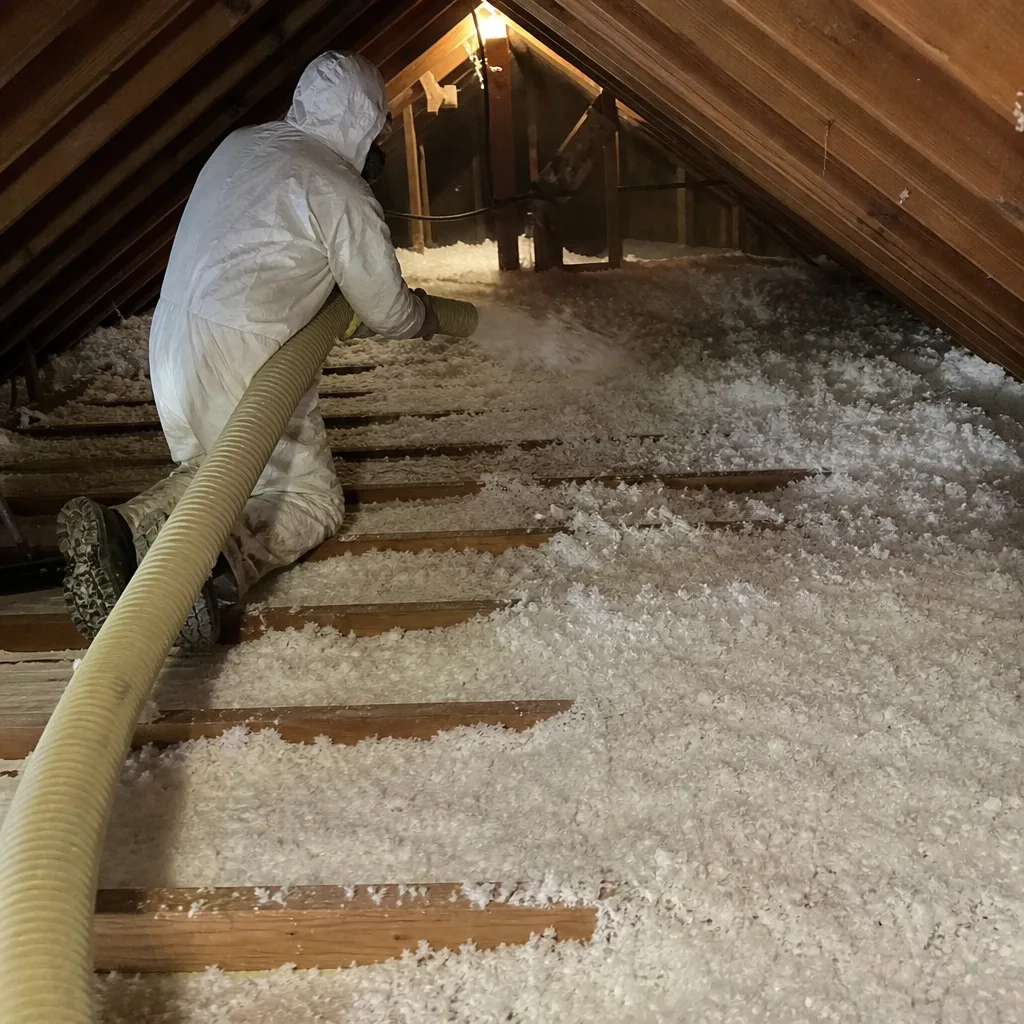
The June-September Radiant Heat Load: What 140°F Attics Do to Insulation
Yorba Linda sits at the western edge of Orange County, where afternoon sun strikes roof decking at a low angle and lingers for hours. In summer, we’ve measured attic air temperatures above 140°F in west-facing homes near the 91 corridor. That heat doesn’t stay in the attic. It pushes downward through the ceiling assembly, and your insulation is the only barrier.
Here’s what most homeowners miss: fiberglass batt and blown-in insulation lose effective R-value at elevated mean temperatures. This is the hot-R-value effect. A product rated R-38 at 75°F may perform closer to R-32 when the attic side of the assembly is at 130°F and the conditioned side is at 78°F. The temperature differential itself reduces the material’s resistance to heat flow. We’ve documented this on jobs in the Travis Ranch area, where post-installation thermal imaging showed heat flux through R-38 batts that lab ratings would predict shouldn’t happen.
Radiant barriers help, but only when installed correctly. Stapling foil to rafters without an air gap converts a radiant barrier into a conductive heat sink. In Yorba Linda’s climate, a proper radiant barrier installation requires a minimum ¾-inch air space on the radiant side, typically achieved with furring strips or proprietary standoff systems. We’ve revisited homes where DIY vs professional insulation mistakes actually increased cooling loads because the foil contacted roof decking and conducted heat inward.
Spray foam performs differently. Closed-cell spray foam, like Demilec’s Heatlok series or Icynene’s medium-density products, maintains dimensional stability across temperature ranges. But cure rates matter. Most spray foam products require substrate temperatures between 60°F and 100°F for proper adhesion and cell structure. In a July attic in Yorba Linda, the substrate (your roof decking) may exceed 120°F even at 8 a.m. We’ve declined to spray in those conditions. The foam may skin over and trap solvents, or it may delaminate within two seasons. This is why our schedule for spray foam insulation in Yorba Linda books solid by late April.
What to check in summer:
- Walk your attic after 4 p.m. on a 95°F day. If the air feels above 130°F, your insulation is working at a deficit.
- Look for compressed or disturbed blown-in insulation near HVAC ducts. Vibration from air handlers settles loose-fill over time, creating thin spots.
- Check ceiling registers for conditioned air temperature. If supply air is more than 4°F warmer than thermostat setting, duct leakage in the attic is likely adding to the cooling load.
The fix isn’t always more insulation. In many Yorba Linda homes built 1985-2005, the attic floor has adequate depth but massive air bypasses at top plates, wire penetrations, and chimney chases. Blowing more fiberglass over those leaks is like adding a thicker blanket over an open window. We seal first, then insulate. Every time.
Santa Ana Season (October-November): When Wind Becomes the Enemy
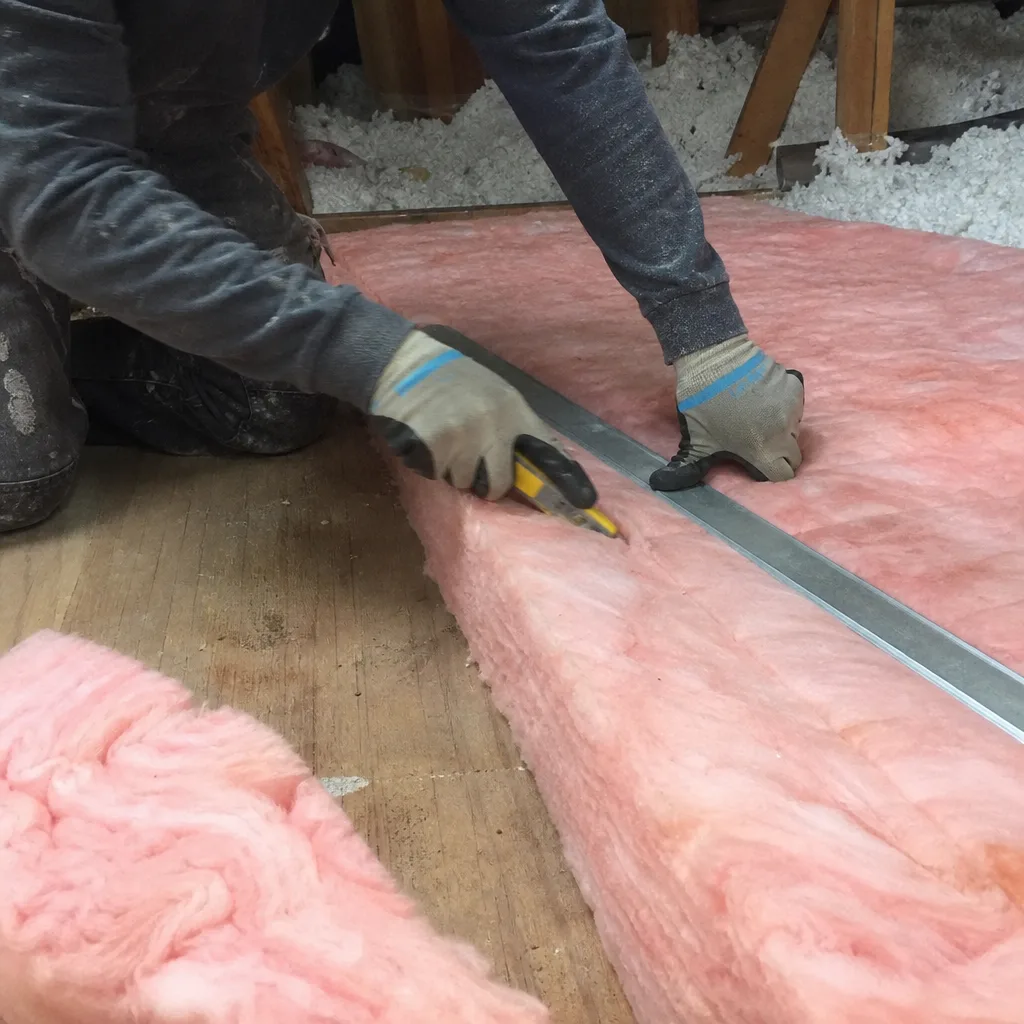
Between October and November, Yorba Linda experiences sustained Santa Ana wind events. We’ve recorded gusts above 50 mph in the East Yorba Linda hills, and even flatland neighborhoods see sustained 25-35 mph winds with single-digit humidity. Those winds create positive pressure on windward walls and negative pressure on leeward surfaces, which turns every crack and gap in your building envelope into an air exchange pathway.
The attic is especially vulnerable. Most Yorba Linda homes have vented attics with some combination of soffit vents, ridge vents, and gable vents. In a Santa Ana event, wind pressure can reverse normal stack-effect airflow. Instead of warm air exiting the ridge vent, outside air is forced in, carrying dust, pollen, and in some cases, embers. After the 2008 Freeway Complex Fire, Yorba Linda adopted stricter ember-resistant venting requirements for new construction. Older homes remain exposed.
What matters for insulation is infiltration at the attic floor. Conditioned air gets pulled upward through recessed light housings, attic access hatches, and top plate gaps. We’ve done blower-door tests in November where the initial reading was 40% higher than the same home tested in June. The building envelope hadn’t changed. The pressure differential had.
Here’s what homeowners can inspect during Santa Ana season:
- Attic hatches: Close the hatch, turn on all exhaust fans and the HVAC blower, then feel around the perimeter with your hand. Any detectable airflow indicates a failed gasket or unsealed trim. Weatherstripping costs $8 at hardware stores; the conditioned air you lose costs far more.
- Recessed light housings: “Can lights” installed before 2010 are rarely airtight. In Yorba Linda’s dry climate, the thermal expansion and contraction of housing trim cracks caulk seals within three to five years. Look for dust streaks on ceiling drywall around the trim ring. That’s your tell.
- Bathroom and kitchen vent terminations: Wind can force damper flaps open if spring tension is weak. Check from the attic side; the damper should close positively against its seat.
- Whole-house fan louvers: These are notorious infiltration points. In Santa Ana conditions, a failed louver seal can pull 200 CFM of conditioned air into the attic continuously.
We document these findings on every Topside Attic Insulation Yorba Linda home energy audit. The blower-door test, a pressurization reading that shows in one number how much air your building envelope is losing, typically reads 3,500-5,500 CFM50 in unsealed Yorba Linda homes of 2,000-3,000 square feet. After sealing top plates, can lights, and penetrations, we commonly see 40-55% reduction. Those numbers go on your invoice. You can verify them.
Winter Rain Events: What January-February Moisture Means for Your Insulation
Yorba Linda averages 14-16 inches of annual rainfall, concentrated in December through March. Most falls as light, steady precipitation rather than intense storms, which creates a particular moisture risk: slow, undetected leaks that saturate insulation before staining appears on ceilings.
Blown-in fiberglass and cellulose are both vulnerable, but in different ways. Fiberglass doesn’t absorb water well, but it loses loft when wet. A saturated batt compressed to half its original thickness performs at half its R-value even after drying. Cellulose, treated with borate fire retardant, can absorb significant moisture before feeling damp to the touch. The borate inhibits mold, but sustained wetting degrades the treatment and can support fungal growth in the paper-based fibers.
We’ve found the most common winter moisture sources in Yorba Linda are:
- Wind-driven rain at ridge vents: Santa Ana winds in October-November can damage ridge vent weatherproofing. The first winter rains then enter through compromised seals. We inspect ridge vent fasteners and membrane on every attic visit.
- HVAC condensate pan overflows: In winter, heat pumps in defrost mode produce more condensate than summer cooling. Overflow pans with failed float switches dump water directly onto attic insulation.
- Exhaust vent terminations: Bathroom vents routed through soffits rather than gable or roof terminations can draw humid air back into the attic soffit, where it contacts cold roof decking and condenses.
What to look for during or immediately after a January-February rain event:
- Discolored insulation, especially near eave vents or under HVAC equipment
- Compressed or crusted areas in blown-in material, indicating past wetting and drying cycles
- Musty odor at the attic hatch, detectable even from the hallway below
- Corrosion on metal ductwork or nail heads, signaling chronic humidity
If you find any of these, don’t add more insulation over the wet material. Trapping moisture against wood decking accelerates rot and can void roofing warranties. We remove compromised insulation, identify the source, repair it, and allow the deck to dry to below 19% moisture content before reinstalling. Under Haven Standard: Have it in writing, you get photos of the wet removal, moisture meter readings of the deck, and photos of the replacement install. No exceptions.
The March-May Work Window: Why Spring Is the Only Practical Season for Major Work
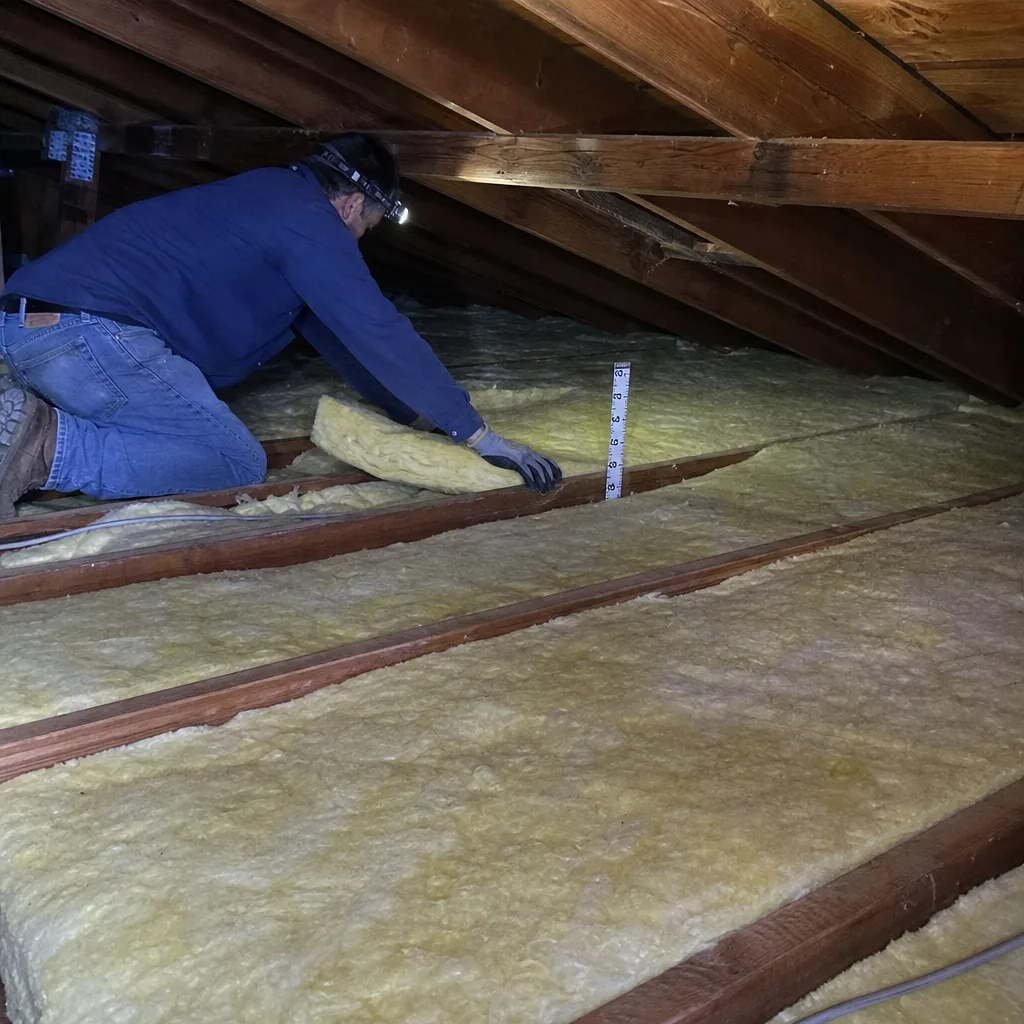
March through May is the optimal window for attic work in Yorba Linda. Attic temperatures run 75°F-95°F, which is safe for installers and ideal for material performance. Spray foam cures predictably. Fiberglass and Rockwool don’t off-gas binders at elevated temperatures. And scheduling is available, because most homeowners haven’t yet felt the summer heat that prompts their call.
We’ve completed over 9,000 homes sealed and insulated since 2016. The pattern is consistent: 60% of our annual inquiries arrive July-September, but only 30% of our annual work happens then because we limit attic hours when temperatures exceed 120°F. Homeowners who call in March get their choice of dates. Homeowners who call in August get the remaining slots, often pushed to October.
What to have done in the March-May window:
- Air bypass sealing: Top plates, wire penetrations, plumbing stacks, chimney chases, and recessed light housings get sealed with fire-rated caulk, expanding foam, or rigid foam baffles depending on the penetration type. This is prerequisite work. We will not blow insulation over an unsealed attic floor.
- Insulation depth assessment: Current California Title 24 standards call for R-38 minimum in climate zone 8, which includes Yorba Linda. Many homes built 1970-1995 have R-19 or less. We measure existing depth with a ruled probe, photograph the grid pattern, and specify exact material quantities.
- Duct seal inspection: Flex duct seams and plenum connections should be sealed with mastic, not tape. Tape degrades in attic heat within 3-5 years. We pressure-test duct systems where accessible and document leakage rates.
- Radiant barrier evaluation: Existing radiant barriers should be inspected for dust accumulation, which reduces reflectivity by 30-50% over five years. Cleaning is rarely cost-effective; replacement with a clean surface or conversion to a sealed attic with spray foam insulation in Yorba Linda may be preferable.
Material selection in spring matters. For blown-in applications, we specify Owens Corning AttiCat or Johns Manville Climate Pro fiberglass, or GreenFiber cellulose where fire rating and sound dampening are priorities. For batt repairs, Rockwool Comfortbatt provides higher density and better fire resistance than fiberglass equivalents, though at higher installed cost. For spray foam, we use Icynene open-cell for roofline applications where vapor permeability is desired, and Demilec closed-cell for crawl spaces and rim joists where moisture exclusion is critical. We don’t push proprietary products. We specify what the assembly needs.
Every spring job closes with a Documented Photo Record and, on air-sealing work, before-and-after blower-door numbers. The written scope, written price, and written warranty were delivered before anyone lifted a tool. Haven Standard Clause 1.
Year-Round HVAC Interaction: How Insulation Performance Connects to Your Heating and Cooling
Insulation doesn’t work in isolation. In Yorba Linda’s climate, with 30°F daily temperature swings common in spring and fall, your HVAC system and insulation are in constant negotiation. Poor insulation forces longer run times. But poor duct sealing, dirty filters, or incorrect thermostat programming can overwhelm even excellent insulation.
Here’s how we think about the system as a whole:
Filter change frequency: Yorba Linda’s Santa Ana dust and pollen load is severe. A standard 1-inch pleated filter loaded to pressure drop spec can reduce airflow 15-20%, which extends HVAC run times and increases attic duct heat gain. We recommend monthly inspection during Santa Ana season, replacement at 60-day maximum intervals year-round. The $8 filter costs less than the incremental energy from restricted airflow.
Duct leakage: In a vented attic, every CFM of supply air lost to leakage is replaced by unconditioned attic air pulled into the return. We’ve measured homes where 25% of cooling capacity was lost to attic duct leakage. Insulation around ducts helps, but it doesn’t seal them. Mastic sealant on all seams and connections, verified with pressure testing, is the only durable solution.
Thermostat behavior: The “set it and forget it” advice common in humid climates doesn’t apply to Yorba Linda. Our dry air allows rapid temperature recovery. A 4°F setback during peak hours (4 p.m.-9 p.m. under SCE’s current time-of-use rates) reduces cooling load when attic temperatures are highest and electricity is most expensive. But deep setbacks, 8°F or more, cause extended recovery runs that can exceed the savings. We recommend 4°F maximum setback, programmed to begin recovery by 7 p.m.
Attic ventilation interaction: Proper vented attic design assumes intake at soffits and exhaust at ridge. In Yorba Linda, we’ve found many homes with blocked soffit vents from prior insulation installs, or ridge vents undersized for the attic volume. The result is superheated air that stratifies above the insulation, increasing conductive heat gain. We verify soffit vent clearances with baffles on every job and specify ridge vent linear footage against attic square footage.
For homes with HVAC equipment in the attic, the stakes are higher. Air handlers and ductwork in 140°F environments work against extreme temperature differentials. Sealing the attic with spray foam at the roofline, converting it to conditioned space, is often the most cost-effective upgrade for these homes. We’ve seen cooling energy reductions of 25-35% in Yorba Linda homes with this conversion, verified against prior year utility bills. The attic insulation in Yorba Linda page details when roofline foam makes sense versus floor insulation.
Yorba Linda Neighborhood Variations: East Hills vs. Flatlands
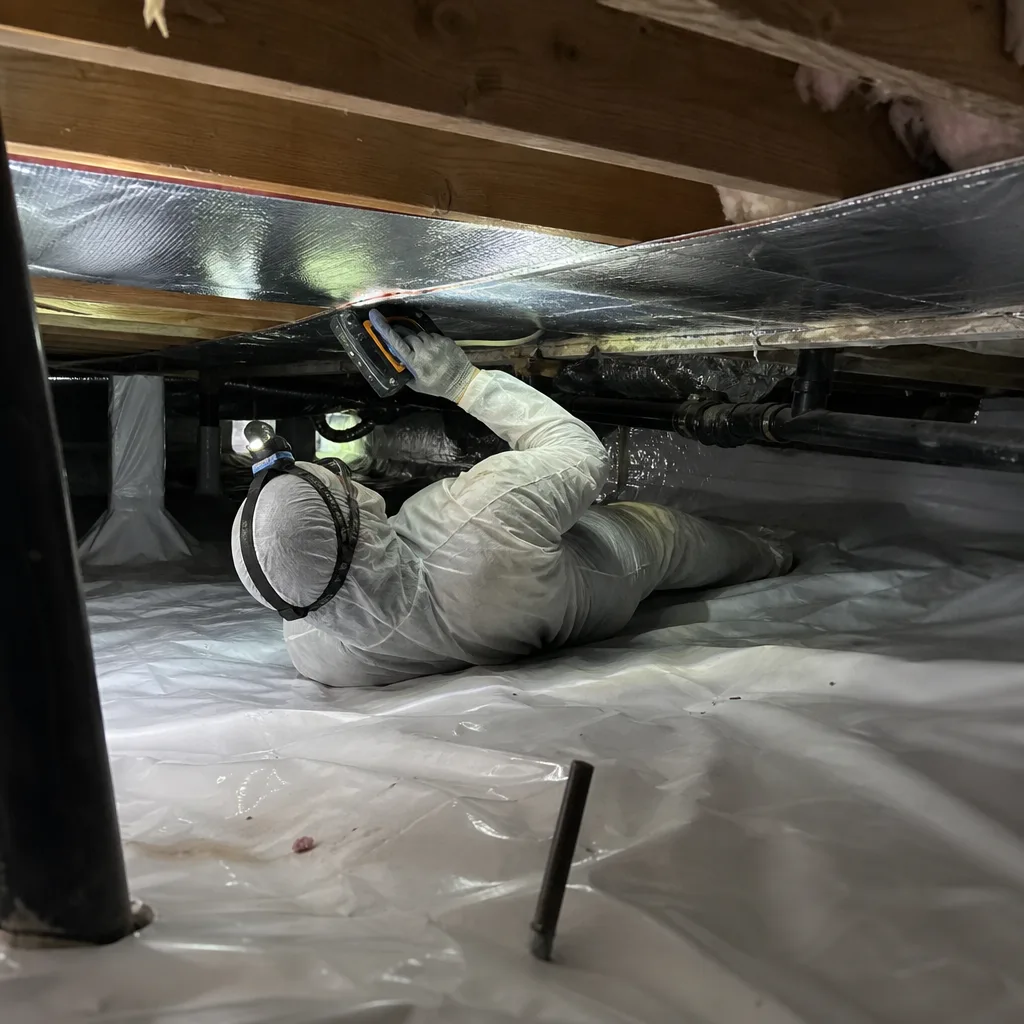
Yorba Linda’s geography creates two distinct building envelope challenges. The eastern hills, above 800 feet elevation near the county line, experience more extreme Santa Ana exposure and greater temperature variation. The flatlands west of Imperial Highway have more consistent conditions but older housing stock with less initial insulation.
In the hills, we’ve found:
- Greater wind infiltration at gable end vents, which should be screened with ⅛-inch mesh and backed with fire-resistant fabric per current wildfire standards
- More frequent radiant barrier degradation from UV exposure through gable vents
- Higher incidence of ice dam risk in unusual cold snaps, though rare, due to heat loss through insufficient ceiling insulation
In the flatlands:
- Homes built 1965-1985 commonly have R-11 batt insulation, original to construction, often degraded by prior roof leaks
- Greater prevalence of knob-and-tube wiring remnants, which limits insulation contact and requires electrical upgrade before full attic insulation
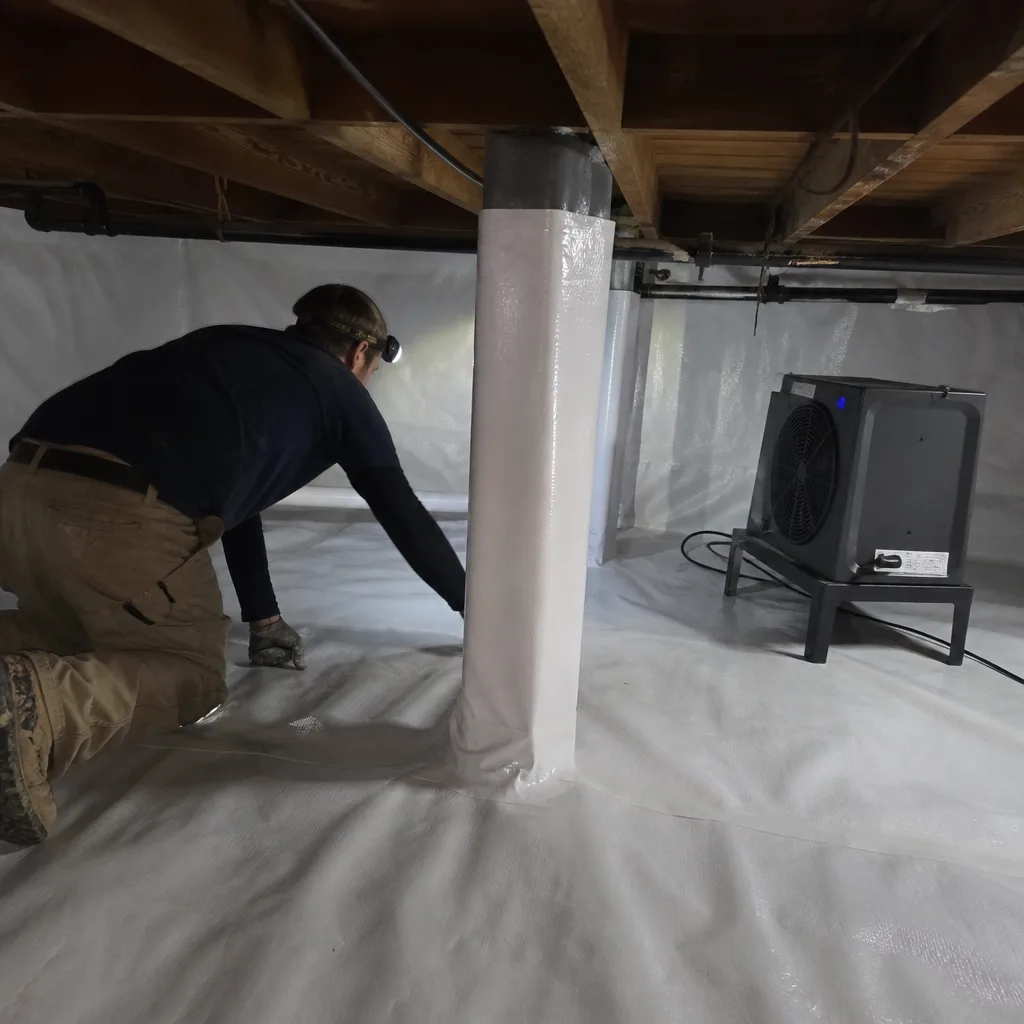
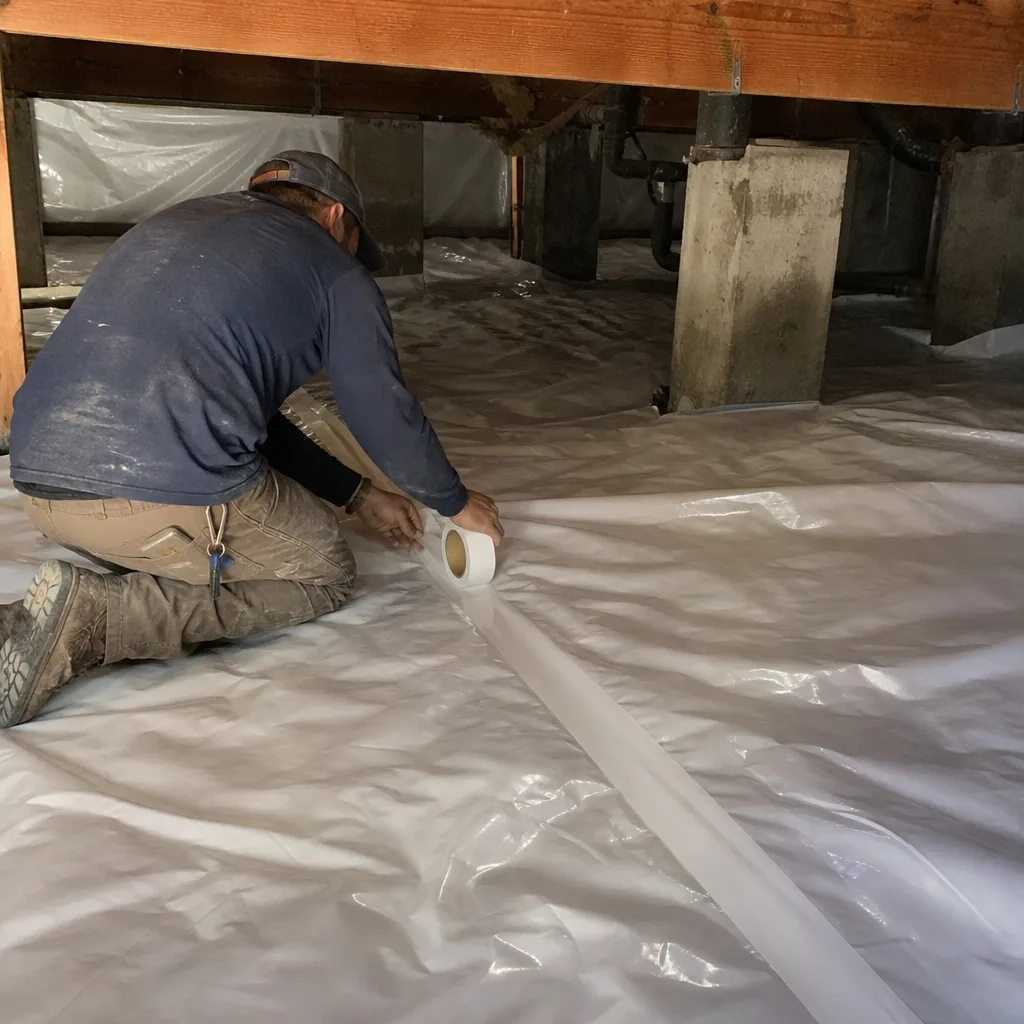
- More slab-on-grade construction with minimal foundation insulation, making crawl space encapsulation and vapor barrier in Yorba Linda a higher priority for whole-home performance
We adjust our specifications by microclimate. A home in Bryant Ranch gets different air-sealing priority than a home in Eastlake, even at similar square footage. The blower-door test reveals the actual leakage pattern; we don’t assume.
Common Mistakes to Avoid
- Adding insulation before sealing air leaks: In Yorba Linda’s climate, unsealed top plates and can lights can account for 30% of conditioned air loss. Blowing fiberglass over these leaks buries them visually while leaving them functionally open. We remove insulation to access leaks, seal them, then reinstall.
- Ignoring the attic hatch: A ¼-inch gap around a standard attic hatch is equivalent to a 6-inch hole in your ceiling. Most homeowners focus on insulation depth and miss this single largest infiltration point. We install insulated, weatherstripped hatch covers with latch compression on every job.
- Installing radiant barrier without air gap: Foil laid directly against roof decking or insulation becomes a conductor, not a reflector. We’ve measured roof deck temperatures 15°F higher in failed radiant barrier installations. Proper installation requires engineered air space.
- Blocking soffit vents with insulation: Blown-in fiberglass drifts over time. Without baffles to maintain the vent channel, insulation contacts roof decking and traps moisture. In Yorba Linda’s occasional heavy rains, this causes deck rot within 3-5 years.
- DIY spray foam in summer: The substrate temperature issue isn’t theoretical. We’ve been called to remove foam that delaminated within 18 months because a homeowner sprayed in July. The removal cost exceeds professional installation would have.
- Neglecting to check after roof work: Any roofing contractor walking in your attic disturbs insulation. After a re-roof, we recommend a targeted inspection for compressed areas, displaced baffles, and damaged vapor barriers. Most roofers don’t carry insulation probes.
- Assuming R-value is static: The hot-R-value effect means your insulation underperforms when you need it most. In Yorba Linda’s summer, effective R-value can drop 15-20% below labeled rating. This is why we specify higher nominal R-values than code minimum and prioritize air sealing, which doesn’t degrade with temperature.
When to Call a Professional
Some conditions require immediate professional assessment. If you find wet or discolored insulation, smell mustiness from the attic hatch, or notice your cooling bills spiking without thermostat changes, your building envelope has a failure point that DIY inspection won’t locate. We use thermal imaging to find missing insulation pockets, blower-door testing to quantify air leakage, and moisture meters to assess deck condition. Topside Attic Insulation Yorba Linda offers free estimates in Yorba Linda. Call (909) 323-1675. We’ll read your existing estimates with you under our Free Second Opinion on Any Written Estimate policy. Written price before any work starts. Documented Photo Record on every visit. That’s Haven Standard.
Frequently Asked Questions
Most attic insulation jobs in Yorba Linda homes of 2,000-2,500 square feet run between $2,800 and $5,200 for blown-in fiberglass to R-38, including air sealing of top plates and penetrations. Spray foam at the roofline typically ranges $8,500-$14,000 depending on attic complexity. We provide a written price before any work starts, always. Call (909) 323-1675 for an exact quote on your home, estimates are free.
We can, but with significant constraints. Attic work stops when temperatures exceed 120°F for installer safety, and spray foam applications are suspended when substrate temperatures exceed 100°F. This limits summer scheduling and can delay projects by weeks. March through May is the practical window for major work.
We recommend a visual attic inspection every two years, and a professional assessment with blower-door testing every five years or after any roofing, HVAC, or pest control work in the attic. Yorba Linda’s Santa Ana dust and seasonal temperature swings accelerate material settlement and seal degradation.
Repair is cost-effective only for localized damage, less than 15% of attic area, with no moisture history. Widespread compression, moisture exposure, or rodent contamination requires full removal and replacement. We’ve found that partial repairs in Yorba Linda’s climate often leave thermal bridges that negate the savings. Call (909) 323-1675 and we’ll assess whether repair or replacement makes sense for your specific condition.
Three common causes in Yorba Linda: duct leakage in the attic, which dumps cooled air before it reaches registers; air bypasses at the attic floor, which allow conditioned air escape; and insufficient or failed radiant barrier, which lets roof decking radiate heat directly onto insulation surface. A blower-door test and thermal imaging identify which applies.
A properly installed radiant barrier reduces cooling loads 5-10% in Yorba Linda’s climate, with highest benefit on west-facing roofs with dark shingles. It’s not a substitute for adequate insulation depth, and improper installation can increase heat gain. We evaluate radiant barrier as part of a complete attic assembly assessment, not as a standalone upgrade.
The Bottom Line
Yorba Linda’s insulation calendar has two stress periods and two work windows. The June-September radiant heat load degrades insulation performance when you need it most. The October-November Santa Ana winds exploit every unsealed gap. January-February rains test your moisture management. Only March-May offers reliable conditions for major work. Plan your maintenance around these realities, not around when the discomfort becomes unbearable. For more guides & resources on optimizing your home’s efficiency, explore our blog. The homeowners who book in spring don’t wait in summer. They also get the documented performance, the written price, and the blower-door numbers that prove what changed. That’s the difference between guessing and knowing.
Written by Wes Okafor, Owner at Topside Attic Insulation Yorba Linda, serving Yorba Linda since 2016.