
Last updated September 24, 2026
The Complete Guide to Insulation in Yorba Linda
A house in Yorba Linda can sit at R-38 in the attic and still lose more conditioned air through bypasses - the gaps around plumbing penetrations, top plates, and recessed lights - than through the insulation layer itself. The R-value label on the bag doesn’t measure that. We’ve sealed and insulated more than 9,000 homes since 2016, and the pattern repeats: homeowners in Yorba Linda’s Climate Zone 8 focus on material thickness while missing the air movement that drives their summer cooling bills. This guide covers what actually works in Yorba Linda - the sequence of air sealing before insulating, the materials that perform here, and the documentation that proves the job was done right. For more guides & resources, visit our blog.
Quick Answer
Effective insulation in Yorba Linda requires sealing air leaks before adding material, using products suited to Climate Zone 8’s hot-dry summers, and verifying results with a blower-door test. Most complete attic jobs in Yorba Linda run $3,800-$7,200 for air sealing plus blown-in insulation in a 1,800-2,400 square foot home, with spray foam ranging higher depending on coverage area and open- versus closed-cell selection; see our Insulation Cost Breakdown: The Yorba Linda Homeowner’s Reference for 2026 for full details. The work should always begin with a written scope and price, and end with documented blower-door readings that show the actual air-leakage reduction.
Table of Contents
- Why Yorba Linda’s Climate Zone 8 Changes the Calculation
- The Air-Sealing-First Sequence: What We Do Before the Insulation Goes In
- Insulation Materials Compared for Yorba Linda Homes
- What a Blower-Door Test Measures and What the Numbers Mean
- Insulation Costs in Yorba Linda: Real Price Ranges
- The Documentation You Should Receive: Haven Standard Record
- Insulation Records and Yorba Linda Home Resale Disclosures
- Common Mistakes to Avoid
- When to Call a Professional
- Frequently Asked Questions
Why Yorba Linda’s Climate Zone 8 Changes the Calculation
Yorba Linda sits in California Energy Commission Climate Zone 8, a hot-dry designation where summer temperatures regularly reach the mid-90s and cooling-degree days outpace heating-degree days by a wide margin. Title 24, Part 6 - California’s building energy code - sets minimum R-values for this zone at R-38 for attics in new construction and R-30 for retrofits, but those numbers describe conductive resistance only. They don’t account for how much conditioned air escapes through the building envelope before the insulation ever gets a chance to work.
In our experience across Yorba Linda neighborhoods from Eastlake Village to Bryant Ranch, the homes built during the 1980s and 1990s boom share a common vulnerability: excellent insulation on paper, poor air sealing in practice. Tract builders in that era met code with batts laid over leaky top plates, can lights punched through the ceiling without airtight housings, and bathroom fans vented into attics rather than through the roof. The insulation was there. The air barrier wasn’t.
Climate Zone 8 amplifies this problem. Hot attic air in August doesn’t just conduct through the ceiling; it convects through every gap, pressurized by the stack effect and wind. A home losing 4,000 cubic feet per minute at 50 pascals (CFM50) in a blower-door test is essentially running its air conditioner with a window cracked. R-value can’t fix that. Only sealing can.
What this means practically: Yorba Linda homeowners should prioritize the air-sealing-and-insulation sequence over chasing higher R-values alone. R-38 with a tight envelope outperforms R-49 with bypasses. We’ve measured it repeatedly.
The Air-Sealing-First Sequence: What We Do Before the Insulation Goes In
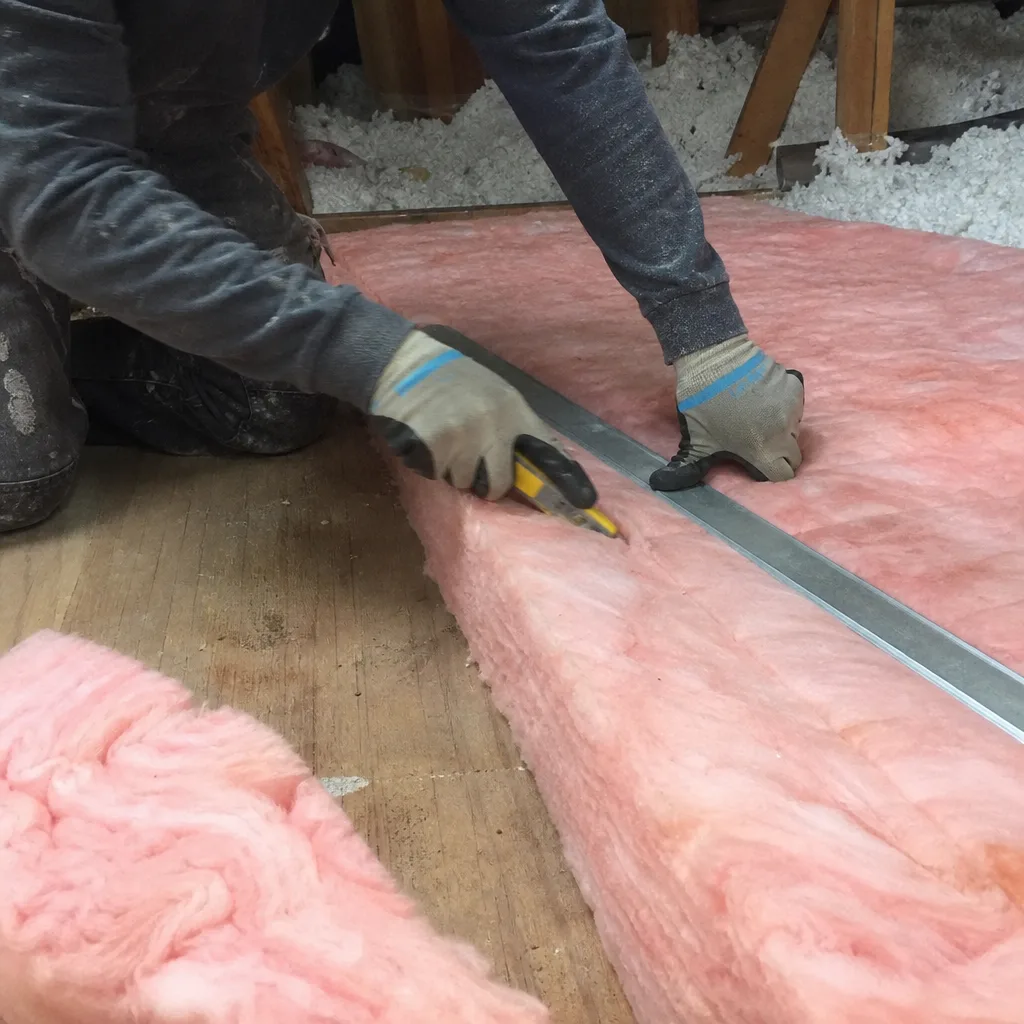
At Envelope Insulation Co., we will not blow insulation over an unsealed attic floor. This isn’t an upsell; it’s the sequence that produces a measurable result. The Haven Standard requires it. Here’s what that sequence looks like in a typical Yorba Linda home:
- Locate the bypasses. We map every penetration between conditioned space and attic: plumbing vent stacks, electrical wiring holes, chimney chases, dropped soffits over kitchen cabinets, and the top plates where interior walls meet the ceiling. In Yorba Linda’s Spanish Colonial and ranch-style homes, these hide in predictable patterns.
- Seal with appropriate materials. Top plates and wire holes get fire-rated caulk or expanding foam. Can lights in older homes get sealed housings or replacement with ICAT-rated (insulation contact, airtight) units. Large chases get rigid foam sealed with acoustical sealant. We don’t use fiberglass batts as air barriers; they filter air, they don’t stop it.
- Address the attic floor as a system. Before any new insulation, we verify that bathroom fans vent through the roof (not into the attic), that the attic access hatch is weatherstripped and insulated, and that any HVAC ducts in the attic are sealed and insulated if they run through unconditioned space.
- Blower-door test: the baseline. We pressurize the house to 50 pascals and record the starting CFM50 and ACH50 (air changes per hour). This number becomes the benchmark against which we measure our work.
- Install insulation over the sealed envelope. Only after the air barrier is continuous do we add blown fiberglass, cellulose, or spray foam - materials chosen for the specific application and homeowner preference.
- Final blower-door test. We pressurize again and compare. The homeowner receives both numbers in writing.
In a 1992 tract home near Yorba Linda Boulevard and Imperial Highway, we recently recorded a starting blower-door reading of 3,800 CFM50. After sealing top plates, can lights, and a poorly vented bathroom fan, the reading dropped to 2,100 CFM50 - a 45% reduction in air leakage - before we added any insulation. The insulation layer then performed as designed, because it wasn’t being bypassed by moving air.
That’s the sequence: sealed first, then insulated. The alternative is burying leaks under material that hides them without fixing them.
Insulation Materials Compared for Yorba Linda Homes
R-value per inch is the number most homeowners compare. In Yorba Linda’s climate, we think that’s incomplete. What matters is how the material performs as an air barrier, how it handles radiant heat gain, and whether it suits the specific application - attic floor, sloped cathedral ceiling, or enclosed wall cavity.
Blown Fiberglass
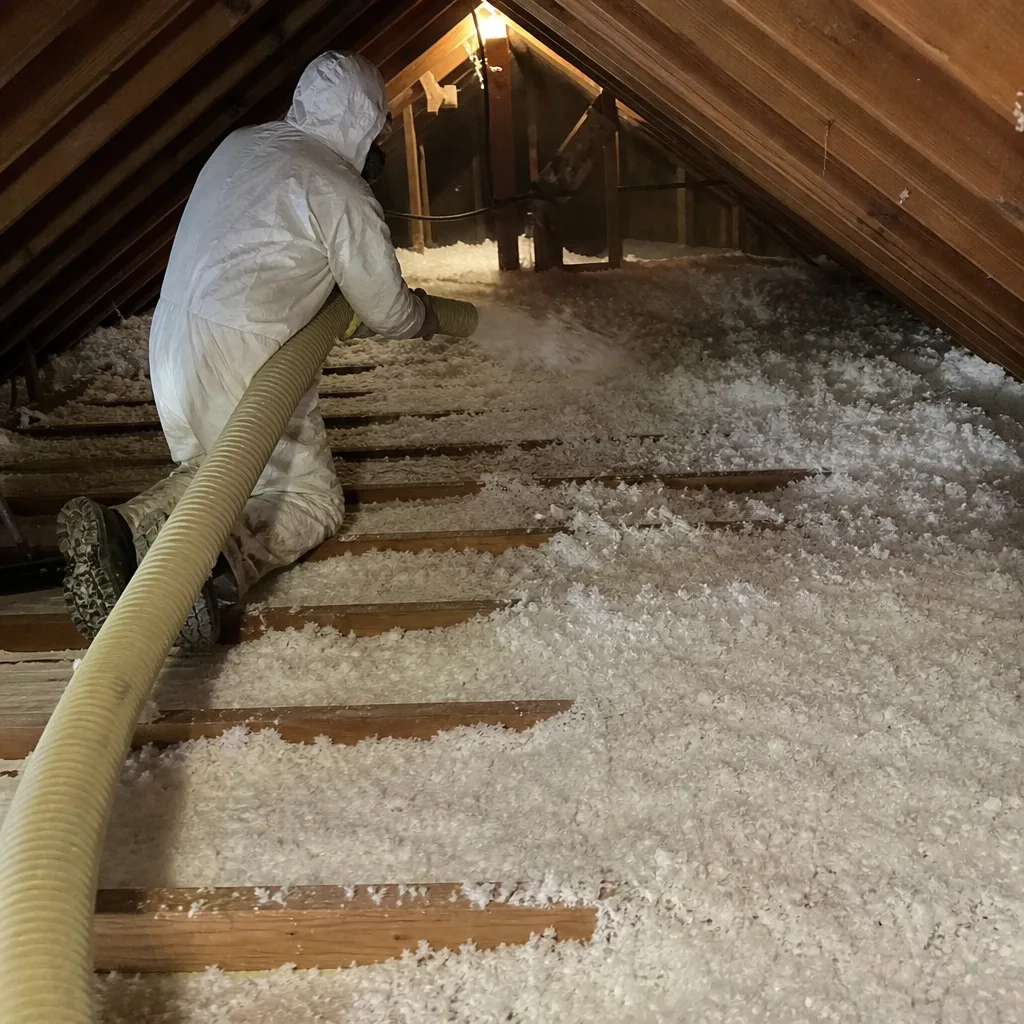
Made from spun glass fibers, blown fiberglass is the most common attic insulation in Yorba Linda retrofits. It delivers R-2.5 to R-3.5 per inch depending on density, doesn’t settle significantly, and resists moisture absorption. We source from Owens Corning, Johns Manville, and CertainTeed. Blown fiberglass is cost-effective for open attic floors and works well when installed over a properly sealed air barrier. It is not an air barrier itself; air moves through it. That’s acceptable if the sealing beneath it is thorough.
Blown Cellulose
Cellulose is ground paper treated with borate fire retardant, delivering R-3.2 to R-3.8 per inch. It densifies better than fiberglass in irregular spaces and provides modest air resistance at higher densities. We use GreenFiber and other borate-treated products. In Yorba Linda’s dry climate, moisture concerns are minimal, though we still verify attic ventilation is adequate before installation. Cellulose can settle 10-20% over decades; we account for this in our depth specifications.
Open-Cell Spray Foam
Open-cell spray foam (half-pound density) expands to fill cavities and delivers R-3.5 to R-3.7 per inch. It is an air barrier when installed at proper thickness (typically 3.5 inches minimum for walls, 5+ inches for roofs). We use Icynene and Demilec products. In Yorba Linda, open-cell works well for cathedral ceilings and conditioned attics where the foam is applied directly to the roof deck. It is vapor-permeable, which matters in our climate: moisture can dry to the interior, reducing condensation risk.
Closed-Cell Spray Foam
Closed-cell spray foam (two-pound density) delivers R-6 to R-7 per inch and is both an air barrier and a vapor barrier. It is more expensive and requires careful application to avoid over-thickness in confined cavities. We use it selectively in Yorba Linda: under roof decks where space is limited, in crawl space rim joists, and in applications where structural rigidity is beneficial. It is not always the right choice; the vapor impermeability can trap moisture if the assembly isn’t designed for it.
Radiant Barrier Considerations
Yorba Linda’s intense summer sun makes radiant barrier sheathing or foil-faced insulation worth considering for unconditioned attics. A radiant barrier doesn’t replace insulation; it reduces radiant heat gain from the roof deck to the attic floor. In homes with dark shingle roofs and minimal shade, we’ve measured attic temperature reductions of 20-30°F with proper radiant barrier installation. This is most effective when combined with adequate attic ventilation.
| Material | R-Value per Inch | Air Barrier? | Best Application in Yorba Linda | Relative Cost |
|---|---|---|---|---|
| Blown Fiberglass | R-2.5-3.5 | No | Open attic floors over sealed air barrier | $ |
| Blown Cellulose | R-3.2-3.8 | Partial (dense pack) | Attic floors, irregular cavities | $ |
| Open-Cell Spray Foam | R-3.5-3.7 | Yes (at proper thickness) | Cathedral ceilings, conditioned attics | $$$ |
| Closed-Cell Spray Foam | R-6-7 | Yes | Rim joists, limited-space applications | $$$$ |
The right choice depends on the assembly, the budget, and the performance goal. We specify materials after inspecting the home, not before.
What a Blower-Door Test Measures and What the Numbers Mean
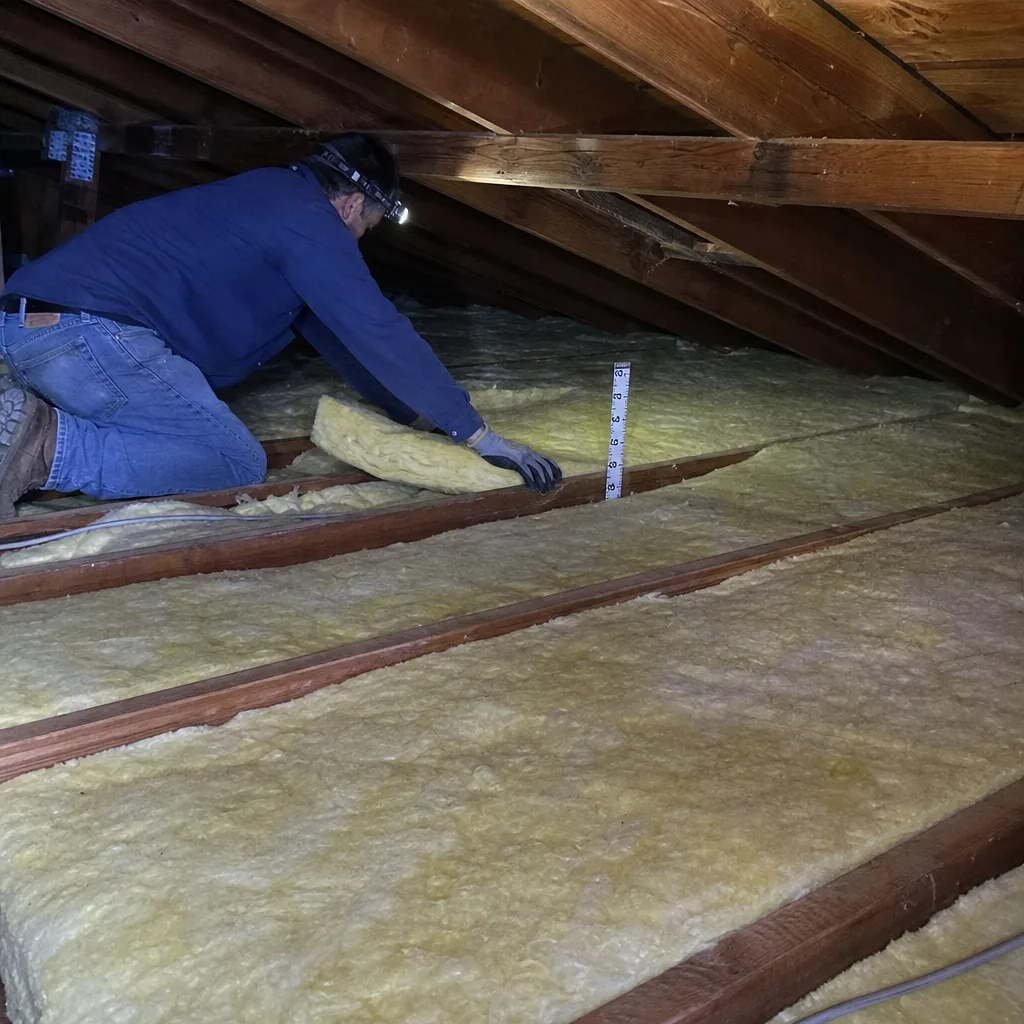
A blower-door test is a pressurization measurement that shows, in one number, how much air your building envelope is losing. The equipment consists of a calibrated fan mounted in an exterior door, plus pressure sensors that measure the difference between inside and outside. We depressurize the house to 50 pascals - roughly the pressure of a 20 mph wind - and measure the airflow required to maintain that pressure difference.
The two numbers that matter:
- CFM50: Cubic feet per minute of airflow at 50 pascals. A tighter home has a lower number.
- ACH50: Air changes per hour at 50 pascals. This normalizes CFM50 by house volume, allowing comparison across different-sized homes.
For context: a typical 1980s-1990s Yorba Linda home of 2,000 square feet often tests at 3,500-5,000 CFM50 and 8-12 ACH50 before any work. After thorough air sealing and insulation, we target below 2,500 CFM50 and 5 ACH50 for retrofits. New construction built to tighter standards can reach 1,500 CFM50 or lower, but existing homes have practical limits based on structure and ventilation requirements.
We publish before-and-after blower-door numbers on every applicable job. The homeowner receives both readings in writing, with the date, conditions, and technician name. This isn’t a feeling about efficiency; it’s a measurement of it. When we reduced a home in Travis Ranch from 4,200 CFM50 to 1,900 CFM50 last spring, the homeowner had a documented record of exactly what changed. That’s the Haven Standard.
One caution: blower-door testing should be performed by technicians trained to BPI (Building Performance Institute) or RESNET standards. An improperly conducted test - wrong fan ring selection, unsealed fireplace, open windows - produces meaningless numbers. We include the test protocol in our written scope so the homeowner knows how the measurement was taken.
Insulation Costs in Yorba Linda: Real Price Ranges
We publish price ranges because Haven Standard Clause 1 requires a written price before any work starts. The ranges below reflect what we’ve written for Yorba Linda homes in the past 24 months. Every job is priced individually after inspection; these are benchmarks, not quotes.
| Service | Typical Range (Yorba Linda) | What Affects Price |
|---|---|---|
| Attic air sealing only | $1,400-$2,800 | Accessibility, number of can lights, chimney chase complexity |
| Air sealing + blown fiberglass (R-38, 1,800-2,400 sq ft) | $3,800-$5,600 | Existing insulation removal, attic condition, access difficulty |
| Air sealing + blown cellulose (R-38, same size) | $3,600-$5,400 | Density specification, borate treatment, ventilation upgrades |
| Open-cell spray foam, cathedral ceiling or conditioned attic | $4.50-$7.00 per board foot | Thickness, access, roof deck condition |
| Closed-cell spray foam, selective application | $5.50-$9.00 per board foot | Thickness, confined space work, vapor barrier requirements |
| Insulation removal and replacement | $2.00-$4.50 per sq ft | Contamination (rodent, mold), disposal fees, access |
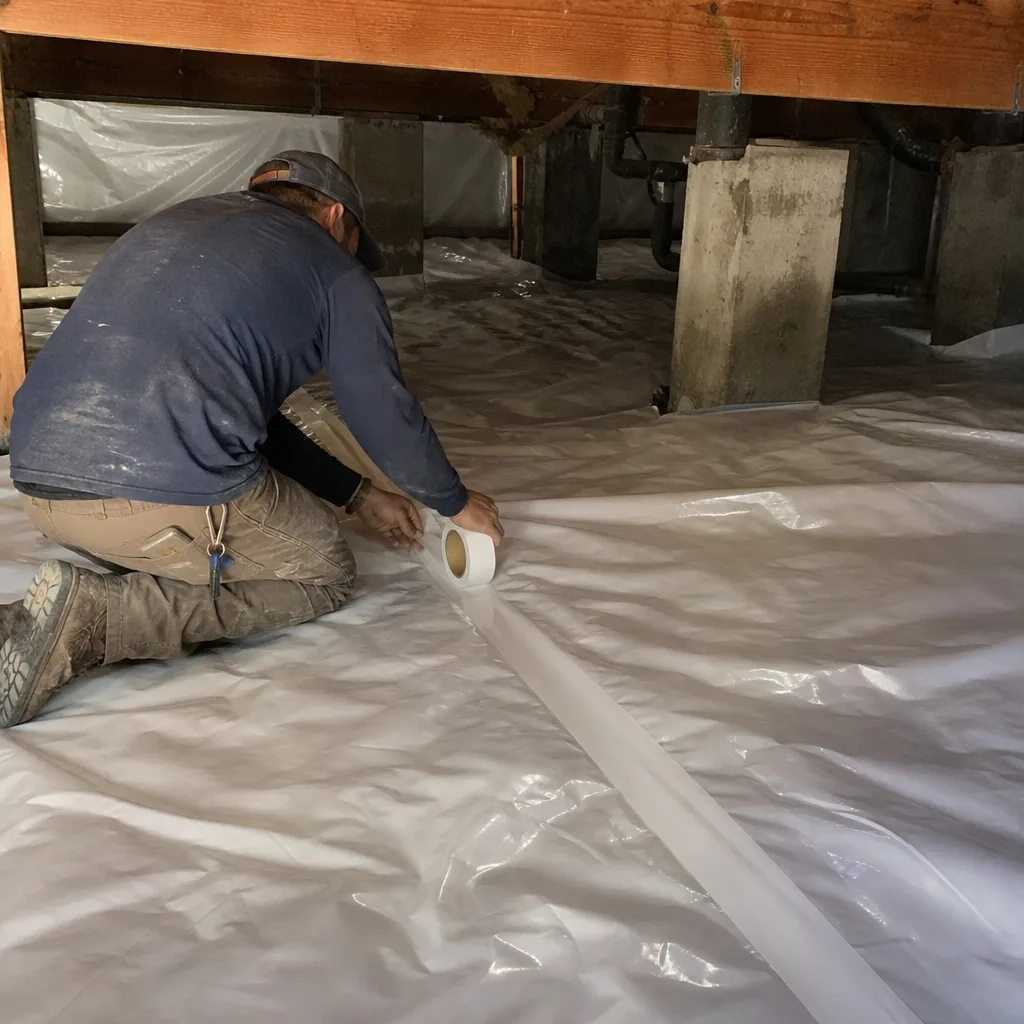
| Crawl space encapsulation with vapor barrier | $3,200-$7,500 | Area, liner thickness, dehumidifier need, access |
Factors that push Yorba Linda jobs toward the higher end: homes in the hillside areas near Carbon Canyon with limited attic access; original 1970s construction with minimal initial insulation; and homes where previous DIY insulation buried electrical or ventilation issues that must be addressed first. Read our DIY vs Professional Insulation: The Yorba Linda Homeowner’s Decision Guide before attempting this yourself.
We also offer a Free Second Opinion on any written estimate. Bring us a competing quote and we’ll review it with you, line by line, and explain where the scope differs from ours. No obligation.
For a written price specific to your home, we inspect first. Call (909) 323-1675 to schedule.
The Documentation You Should Receive: Haven Standard Record
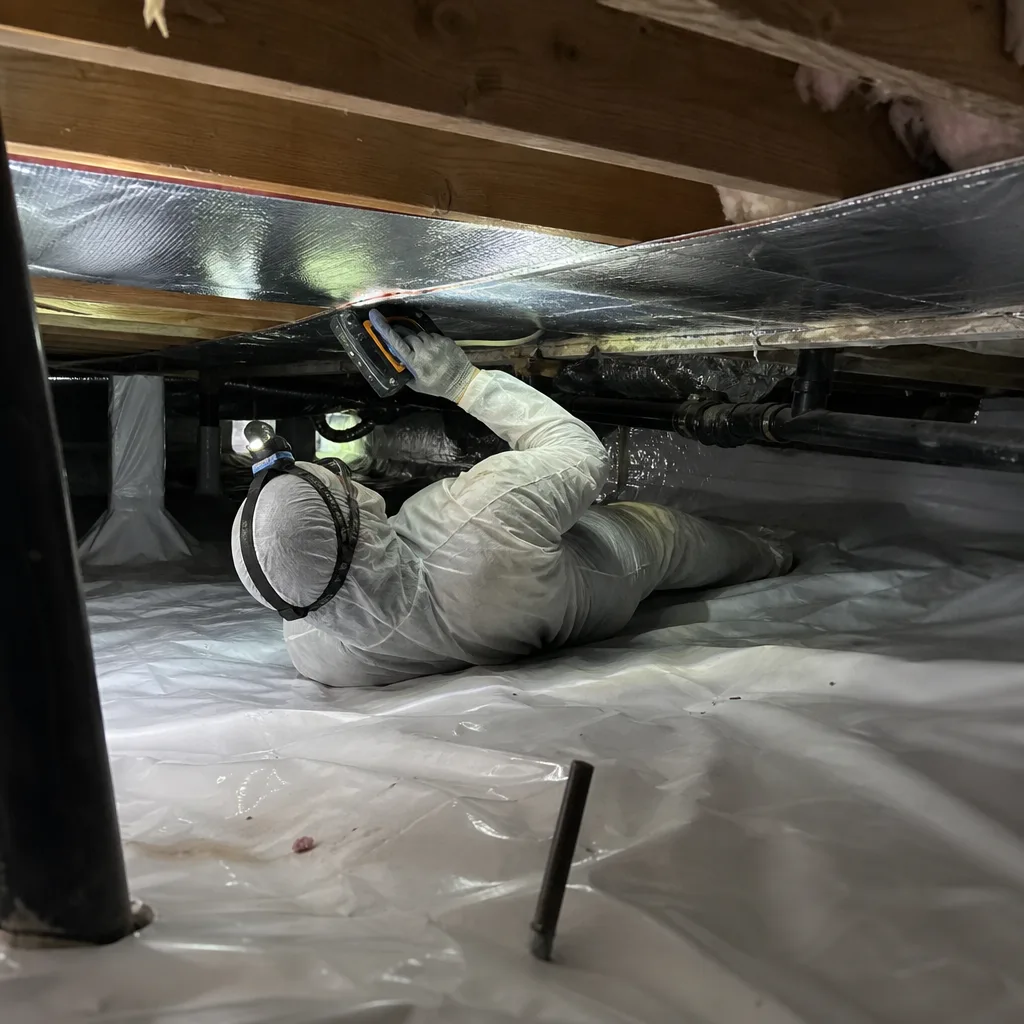
Every job we complete in Yorba Linda closes with a documented record. Not “available on request” - included, always. Here’s what the homeowner receives:
- Written scope of work: Signed before any work begins, describing every task, material specification, and performance target.
- Written price: Flat price, no escalation clauses, valid for the scope as written.
- Written warranty: The 365-Day Done Right Promise - if it’s not done right, we make it right.
- Documented Photo Record: Date-stamped photos of attic conditions before, during, and after work; sealed bypasses; insulation depth markers; and any findings (frayed wiring, inadequate ventilation, structural concerns).
- Blower-door readings (applicable jobs): Pre- and post-work CFM50 and ACH50, with test conditions noted.
- Material invoices or batch records: On request, documentation of the specific products installed.
This record serves multiple purposes. It verifies that the work matches what was sold. It provides a baseline for future energy audits or utility rebate applications. And it travels with the home: when you sell, the disclosure packet with documented insulation and air-sealing work distinguishes your property from comparable listings.
We’ve had Yorba Linda homeowners use our blower-door records to qualify for SCE (Southern California Edison) rebate programs and to resolve disputes with HVAC contractors who oversized replacement equipment. The documentation matters. Have it in writing.
Insulation Records and Yorba Linda Home Resale Disclosures
Yorba Linda’s housing market includes significant turnover in the 32-50 age bracket - exactly the demographic that researches thoroughly before buying. When these buyers review seller disclosures, documented energy improvements stand out. A home with a 2023 blower-door test showing 2,100 CFM50 and R-38 attic insulation carries more credibility than one where the seller checks “yes” to “insulation present” without specifics.
California’s Transfer Disclosure Statement doesn’t require insulation documentation, but voluntary disclosure of performance testing is increasingly common in Yorba Linda’s competitive market. We’ve had past clients report that their documented envelope work became a selling point, particularly when competing against similar homes in Eastlake, Travis Ranch, or the older neighborhoods near Yorba Linda Boulevard.
For homeowners planning to stay, the documentation still matters for utility rebate applications, property tax reassessment appeals (where energy improvements may qualify for exclusions), and future maintenance planning. The photo record shows what’s under the insulation - wiring, plumbing, structural conditions - without requiring the next contractor to disturb the material.
We structure our records for this long-term use. The homeowner isn’t just buying insulation; they’re buying a documented building performance upgrade that retains value.
Common Mistakes to Avoid
- Adding insulation over unsealed bypasses. In Yorba Linda’s older tracts, this is the most common error we correct. The new insulation looks full, but hot attic air still streams through the gaps, and the homeowner sees no bill reduction.
- Blocking soffit vents with insulation. Yorba Linda homes need attic ventilation to manage summer heat. Baffles must maintain the air path from soffit to ridge; without them, moisture and heat build up.
- Using the wrong material for the application. Open-cell spray foam on an unvented roof deck without proper thickness creates condensation risk. Blown fiberglass in a wall cavity without dense-pack equipment leaves voids.
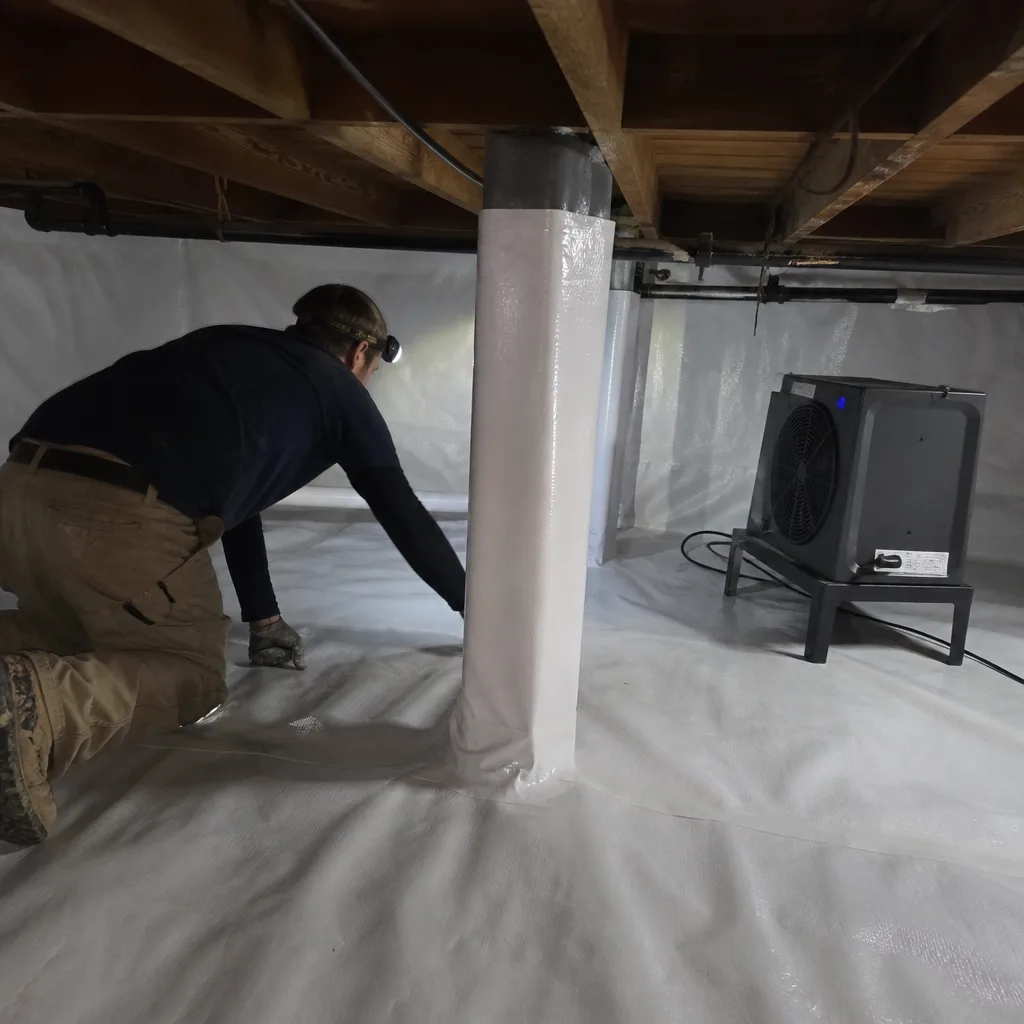
- Ignoring the crawl space. In Yorba Linda’s hillside homes, unsealed crawl spaces introduce moisture and unconditioned air that undermines attic work. Crawl space encapsulation completes the envelope.
- Skipping the blower-door test. Without a number, you don’t know if the sealing worked. We’ve reinspected homes where “professional” air sealing produced no measurable improvement because the obvious leaks were missed.
- Chasing R-value without considering air leakage. A homeowner in Bryant Ranch once added R-60 over existing R-19 without sealing. The blower-door reading barely changed. The money was better spent on sealing to R-38.
- DIY spray foam in confined spaces. Closed-cell foam generates heat during cure and requires respiratory protection. We’ve removed improperly applied foam that trapped moisture and damaged roof sheathing.
When to Call a Professional
Call a professional when you can’t verify the condition of what’s under your existing insulation, when your energy bills don’t match your insulation level, or when you’re considering spray foam in any assembly. Our How to Hire a Insulation Contractor in Yorba Linda: A Step-by-Step Guide walks you through vetting providers. In Yorba Linda, we also recommend professional assessment before any major HVAC replacement; an oversized system installed on a leaky envelope wastes capacity and money.
Specific scenarios: visible mold or rodent damage in the attic, can lights that are hot to the touch (indicating unsealed housings), rooms that are consistently 5+ degrees different from the thermostat setting, or any home built 1985-2005 where the attic has never been inspected for bypasses.
Topside Attic Insulation Yorba Linda offers free estimates in Yorba Linda - call (909) 323-1675. Every estimate includes a written scope and price, and we provide a Free Second Opinion on any competing written quote. Live person answers, 24/7. Background-checked, uniformed technicians. Written by Wes Okafor, Owner at Topside Attic Insulation Yorba Linda, serving Yorba Linda since 2016.
Frequently Asked Questions
Most complete attic jobs in Yorba Linda run $3,800-$7,200 for air sealing plus blown-in insulation in a typical 1,800-2,400 square foot home, with spray foam ranging from $4.50-$9.00 per board foot depending on open- or closed-cell selection and application area. We provide a written price after inspection, never before. Call (909) 323-1675 for a free estimate - estimates include a written scope and flat price with no obligation.
Repair is rarely cost-effective when insulation is compressed, contaminated, or installed over unsealed bypasses. In Yorba Linda’s climate, removal and replacement with proper air sealing typically delivers faster payback than spot repairs that leave the underlying leakage unaddressed. We evaluate this case by case and provide both options in writing when repair is genuinely viable. Call (909) 323-1675 to schedule an inspection.
We can complete some air-sealing-only jobs in a single day, but full attic insulation with proper preparation typically requires 1-2 days depending on existing material removal, accessibility, and weather. Same-day service is available for urgent situations like failed insulation after rodent damage or water intrusion. Call (909) 323-1675 to discuss timing - a live person answers 24/7.
Title 24 requires R-30 minimum for attic retrofits in Climate Zone 8, but we typically specify R-38 for Yorba Linda homes because the incremental material cost is modest and the performance improvement is measurable. R-value alone doesn’t determine comfort; air sealing quality matters equally. We’ve seen R-38 with tight air sealing outperform R-49 with bypasses.
Signs include rooms that won’t hold temperature, dust streaks around outlets and baseboards, hot ceilings in summer, and energy bills that spike despite moderate thermostat settings. The definitive test is a blower-door test, which we include in our assessment. In Yorba Linda’s tract homes, we find significant bypasses in more than 80% of pre-2005 construction.
Open-cell foam (half-pound density, R-3.5-3.7/inch) is vapor-permeable and suited to conditioned attics and cathedral ceilings in Yorba Linda’s dry climate. Closed-cell foam (two-pound density, R-6-7/inch) is vapor-impermeable and used where space is limited or structural reinforcement is needed. We use Icynene and Demilec products, selected for the specific assembly after inspection. Both require professional application; DIY installation risks off-gassing, improper cure, and moisture trapping.
Insulation and air sealing reduce heat gain in summer at least as much as heat loss in winter. In Yorba Linda, where cooling-degree days dominate, a tight envelope with adequate attic insulation typically produces larger summer bill reductions than winter savings. We’ve measured 25-40% summer cooling load reductions after combined air-sealing-and-insulation jobs in Yorba Linda homes with dark roofs and minimal shade.
The Bottom Line
In Yorba Linda’s Climate Zone 8, insulation performance depends on sequence and verification, not just material. Air sealing before insulating, blower-door testing to prove the result, and documented records for the homeowner’s files - these are the practices that separate effective work from cosmetic work. The R-value on the bag is a starting point. The air leakage number, measured before and after, is what tells you whether the investment performed.
We’ve applied this approach to more than 9,000 homes since 2016. Every job began with a written price and ended with a documented record. The 365-Day Done Right Promise applies to all completed work. If you’re researching insulation for a Yorba Linda home, start with an inspection that includes a blower-door test and a written scope - not a phone estimate based on square footage alone.
Call (909) 323-1675 for a free estimate. Live person answers, 24/7. Written price before any work starts. Free Second Opinion on any written quote from another contractor. Background-checked, uniformed technicians. Serving Yorba Linda since 2016.
Written by Wes Okafor, Owner at Topside Attic Insulation Yorba Linda, serving Yorba Linda since 2016.