
Last updated September 24, 2026
Attic Insulation Maintenance Checklist for Yorba Linda Homeowners
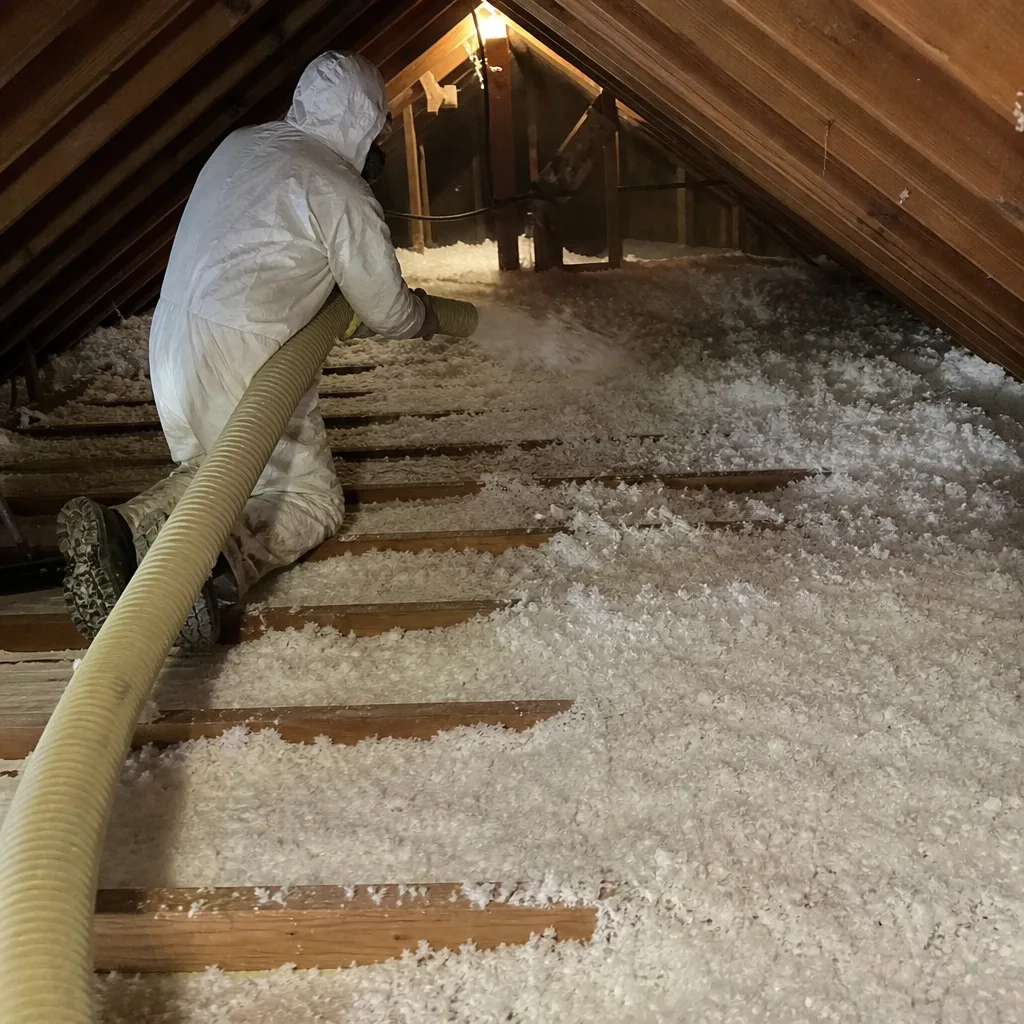
Blown insulation in a Yorba Linda attic settles roughly 10-15% in the first two years after installation. If no one re-measures depth at the marked gauge sticks the installer should have left, the homeowner has no way to know whether their R-38 is now performing at R-32. Attic insulation doesn’t fail on a single bad day - it degrades through a slow accumulation of compressed batts, pest intrusion, and uncapped bypasses that open incrementally as a house settles, and a structured annual check catches each one before it compounds the next. This checklist gives Yorba Linda homeowners a room-by-room, measurement-driven inspection they can perform themselves.
Quick Answer
Attic insulation maintenance in Yorba Linda means checking insulation depth with a gauge stick at multiple points (not just the hatch), inspecting for roof-rat disturbance in blown material, verifying attic ventilation ratios meet 1:150 or 1:300 net free area rules, and documenting air bypass gaps at recessed lights and top plates. Do this annually, preferably in October before the Santa Ana wind season, and keep written records with photos so any contractor can see your baseline. Most settled blown insulation can be topped off; compressed or pest-contaminated material needs removal and replacement.
Table of Contents
- Why Insulation Settles Faster in Yorba Linda
- The Annual Depth Check: How to Measure R-Value Loss
- Reading Your Insulation: Pest Damage vs. Normal Settling
- Attic Ventilation: Checking Net Free Area in Yorba Linda Homes
- Air Bypass Inspection: Finding the Gaps That Undo Your R-Value
- HVAC Duct and Equipment Observations
- Documentation: What to Record and Why It Matters
- Common Mistakes to Avoid
- When to Call a Professional
- Frequently Asked Questions
Why Insulation Settles Faster in Yorba Linda
Yorba Linda sits at the intersection of two forces that accelerate insulation degradation: high summer attic temperatures and seasonal Santa Ana winds that pressurize attic spaces. Attic temperatures in this part of Orange County regularly exceed 140°F from June through September. That sustained heat cycling causes blown fiberglass and cellulose to compact more rapidly than in coastal zones where marine layer cooling moderates attic conditions.
The Santa Ana winds arrive October through March, often with sustained speeds of 25-40 mph and gusts well higher. These winds don’t just rattle vents; they create positive pressure in attic spaces that can push conditioned air out through bypasses, or pull dust and fine particulate through soffit vents directly onto insulation surfaces. Over multiple seasons, this deposits a layer of fine silt that adds thermal bridging and can support mold if moisture follows.
Homes in neighborhoods like East Lake Village and Travis Ranch, built during the 1985-2005 construction boom, often have original insulation that was installed to code minimums of the era - typically R-19 or R-30 in attics. Those batts or early blown applications have had 20-40 years to settle, compress, and accumulate the effects of minor roof leaks, cable installer traffic, and HVAC maintenance visits. A home built in 1995 with original R-30 batts may be performing closer to R-22 in practice, even if the material looks intact from the hatch.
We see this pattern repeatedly in Yorba Linda: homeowners who assume their insulation is “fine” because it was installed 15 years ago and there’s no visible water damage. For a deeper look at local conditions, see The Complete Guide to Insulation in Yorba Linda. The degradation is invisible until you measure it. That’s why this checklist starts with depth measurement, not visual inspection.
The Annual Depth Check: How to Measure R-Value Loss
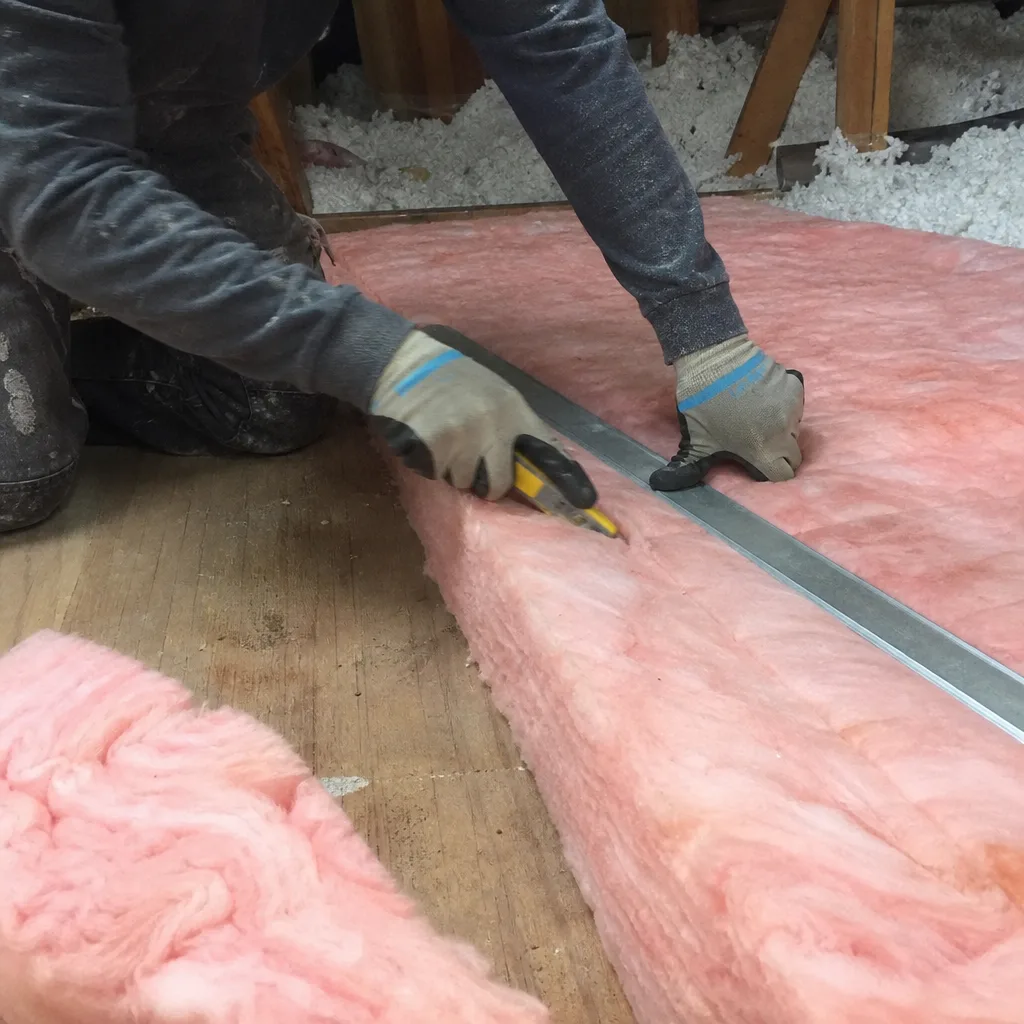
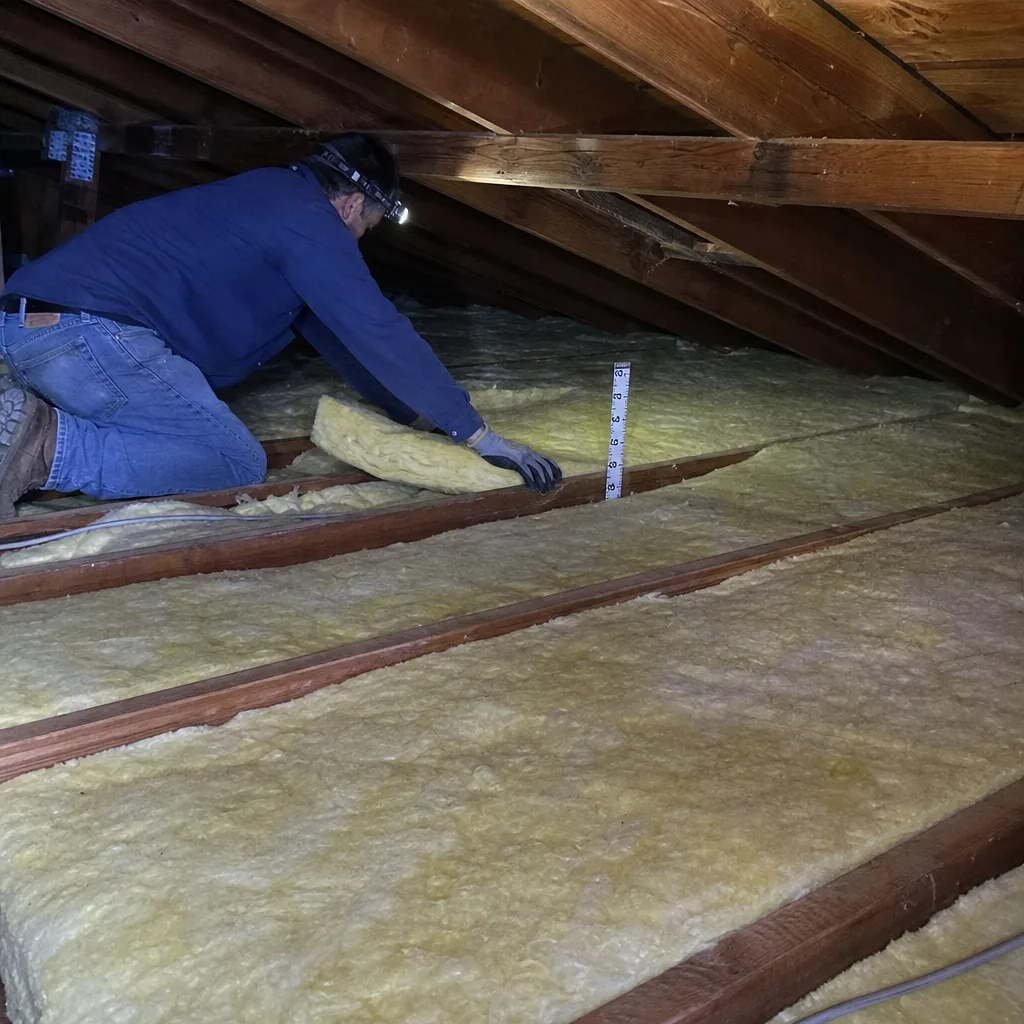
The only reliable way to know if your insulation still performs at its labeled R-value is to measure depth at multiple points and compare against the marked gauge sticks or depth rulers your installer should have left. If no gauge sticks exist, you’ll need to create your own measurement protocol.
What You’ll Need
- A rigid measuring tape or dedicated insulation depth ruler (available at hardware stores for under $10)
- A camera or phone for documentation
- A printed sketch of your attic floor plan with measurement locations marked
- A permanent marker to label any new gauge sticks you install
Step-by-Step Measurement Protocol
- Locate your attic hatch and identify six to ten measurement points. The hatch opening itself is where insulation is always deepest - installers know inspectors look there first. Measure at least 8 feet away from the hatch, toward the eaves, near interior wall intersections, and above any rooms that feel disproportionately warm in summer or cool in winter.
- Measure to the top of the insulation material, not the highest fluff point. Press the ruler gently until you feel resistance from the drywall or existing batt below. Record the depth to the nearest half-inch.
- Check for uniform density. In blown cellulose or fiberglass, probe with a yardstick in several directions. If you hit a hard layer 2 inches down and then soft material below, you may have a “crust” of compacted dust or degraded material over intact insulation. This is common in Yorba Linda homes near construction zones or agricultural areas where airborne particulate is higher.
- Compare against your target R-value depth. Blown fiberglass typically requires 14-17 inches for R-38, depending on product density. Blown cellulose needs 10-12 inches for the same R-value. Dense-pack cellulose in walls is different - this checklist addresses attic floor insulation only.
- Calculate percentage of original depth remaining. If your insulation was installed at 15 inches and now measures 12.5 inches, you’ve lost roughly 17% of your thermal resistance. That doesn’t translate linearly to R-value loss - settled insulation can actually increase in density and maintain more R-value per inch - but depth loss beyond 20% generally indicates performance degradation that warrants professional assessment.
- Install or verify gauge sticks at three representative points. A gauge stick is simply a wooden dowel or painted strip marked with the original installation depth and the target R-value depth. Drive it into the insulation at a point you’ll remember, photograph it, and note the location on your attic sketch. Next year, you’ll know exactly where to re-measure.
In our experience across Yorba Linda, homes with original insulation from the 1990s often show 25-35% depth loss at the eaves, where wind exposure and occasional roof-edge moisture are highest. The center of the attic may look fine while the perimeter has degraded significantly. Multiple measurement points catch this pattern.
If you find your insulation has settled below target depth, attic insulation in Yorba Linda can often be addressed with a top-off application rather than full removal - provided the existing material is clean, dry, and uncompacted. A professional assessment determines which path makes sense.
Reading Your Insulation: Pest Damage vs. Normal Settling
Yorba Linda’s hillside interface with Chino Hills State Park and the consistent presence of mature citrus and avocado groves create sustained roof-rat pressure that coastal Orange County doesn’t experience at the same intensity. These rats don’t just nest in attics; they tunnel through blown insulation, compressing it into runways and contaminating surrounding material with urine and feces that degrades fiber structure and creates health hazards.
Visual Indicators in Blown Cellulose
Cellulose - made from recycled paper treated with borate fire retardant - shows rat activity as distinct tunnel networks, often 3-4 inches in diameter, with compacted walls and loose fill pushed to the sides. The tunnels may follow joist lines or radiate from a central nest point near a heat source, such as a recessed light housing or furnace vent. Fresh activity shows dark, moist-looking tunnel walls; older abandoned tunnels dry to a lighter gray and may collapse when probed.
Cellulose contaminated by rat urine develops a faint ammonia odor detectable from the hatch on warm days. The borate treatment can mask early contamination, but once the material clumps or shows discoloration beyond the normal gray-brown of settled cellulose, it’s no longer performing as designed. Borate is water-soluble; repeated urine exposure washes the fire retardant out, creating both a thermal and safety issue.
Visual Indicators in Blown Fiberglass
Fiberglass doesn’t tunnel the same way. Rats push it aside in broad, shallow depressions rather than cylindrical tunnels, and the material tends to mat into flat, discolored patches where oils from fur and repeated compression break down the fiber loft. You may find nests constructed from stripped fiberglass and other debris - these look like dense, discolored balls 8-12 inches across, often located near a warm penetration.
Fiberglass contaminated by pests loses R-value faster than cellulose because the contamination mats rather than tunnels, creating broad areas of compression. A single nest site can reduce effective R-value across 20-30 square feet of attic floor.
What to Do If You Find Evidence
Don’t disturb the material extensively - disturbing contaminated insulation aerosolizes particles. Photograph the area from multiple angles, note the approximate square footage affected, and mark the location on your attic sketch. Professional insulation removal with proper PPE and negative-air containment is the standard for pest-contaminated material; adding fresh insulation over contaminated old material traps the problem and often violates warranty terms from material manufacturers like GreenFiber or CertainTeed.
Before any new insulation goes in, the entry points must be sealed. In Yorba Linda, we see roof-rat access most commonly at tile roof gaps, unscreened vent openings, and where plumbing vents pass through soffits. A pest control professional handles the active infestation; an insulation contractor handles the contaminated material replacement. We coordinate with pest control on these jobs so the sequence is correct: seal entry, eliminate population, remove contamination, install new insulation.
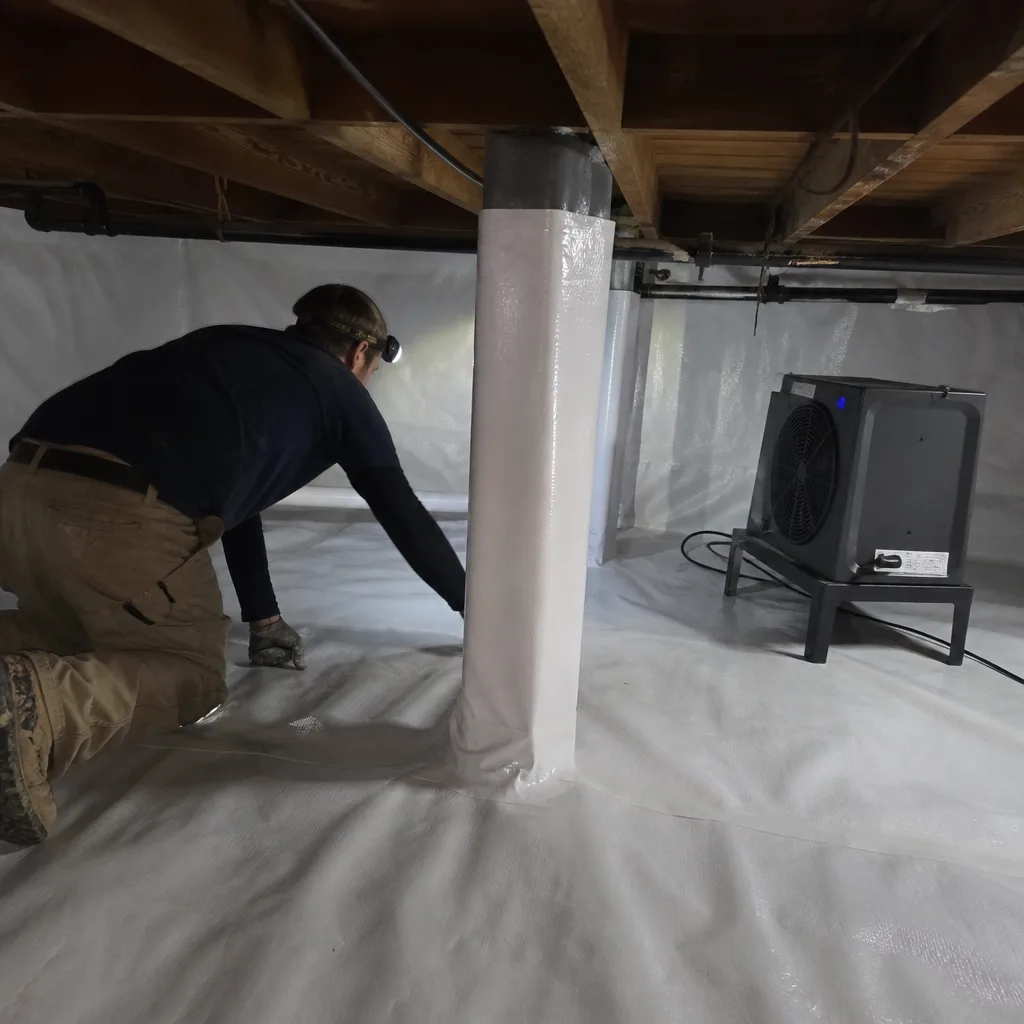
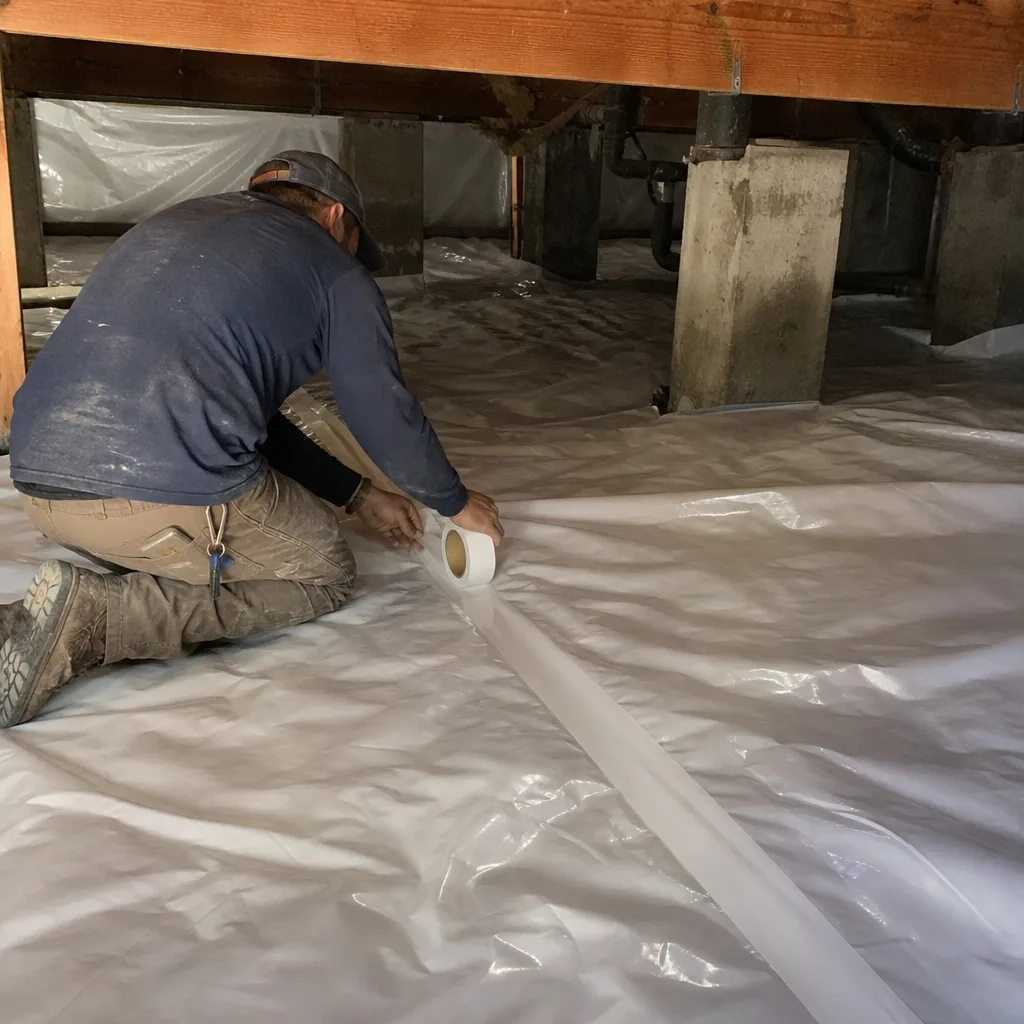
For homes with recurring pest issues, crawl space encapsulation and vapor barrier in Yorba Linda may be part of the solution - rats often access attics through crawl spaces in split-level or hillside homes common in the Yorba Linda Hills area.
Attic Ventilation: Checking Net Free Area in Yorba Linda Homes
Attic ventilation and insulation performance are directly linked. An under-ventilated attic in Yorba Linda traps summer heat that accelerates insulation degradation, and during Santa Ana events, pressure differentials between attic and conditioned space force air through bypasses that should remain sealed. The building code specifies two paths for net free ventilating area (NFVA): 1:150 ratio of vent area to attic floor area when no vapor retarder is present, or 1:300 when a vapor retarder is installed and at least 40% of the venting is in the upper half of the attic space.
How to Check Your Ventilation
- Calculate your attic floor area. Measure the footprint of your home’s conditioned attic space - not the roof surface area. A 2,000 square foot single-story home has roughly 2,000 square feet of attic floor.
- Determine your required NFVA. At 1:150, that 2,000 square foot attic needs 13.3 square feet of net free vent area. At 1:300 with upper venting, 6.7 square feet. Most Yorba Linda homes built 1985-2005 were constructed to 1:300 standards; homes built or re-roofed under current Title 24 may have stricter requirements.
- Identify and measure your existing vents. Soffit vents (intake) typically provide 6-9 square inches of NFVA per linear foot, but only if unobstructed. Ridge vents (exhaust) provide 12-18 square inches per linear foot. Gable vents vary widely by size and louver design - a 12×12 inch gable vent may have only 72 square inches of actual NFVA after accounting for screen and louver blockage.
- Check for obstruction. In Yorba Linda, we find soffit vents blocked by paint, stucco overspray, or insulation baffles that collapsed against the vent opening. From inside the attic, you should see daylight through every soffit vent. If you see insulation against the soffit rather than a clear air channel, the vent is not functioning.
- Verify balanced flow. Ideally, 50-60% of vent area is intake (soffit) and 40-50% is exhaust (ridge or gable). Exhaust-only ventilation pulls conditioned air from the house through ceiling bypasses. Intake-only ventilation stalls and creates moisture pockets. Many Yorba Linda homes have adequate total vent area but poor balance - often too much ridge vent and blocked soffits.
During Santa Ana wind events, strong ridge-level exhaust can create negative pressure that pulls conditioned air upward through recessed lights and top-plate gaps. This is why air sealing - not just ventilation - matters. A well-ventilated but poorly sealed attic loses more energy than a moderately ventilated, tightly sealed one. At Topside Attic Insulation Yorba Linda home, we measure both: blower-door test for airtightness, ventilation calculation for flow.
If your ventilation is inadequate, adding insulation without addressing airflow traps heat against the roof deck, shortening shingle life and accelerating insulation degradation. The fix may be as simple as clearing soffit vents and installing proper baffles, or as involved as adding ridge venting to a hip roof that was originally built with minimal exhaust.
Air Bypass Inspection: Finding the Gaps That Undo Your R-Value
Air bypasses - gaps in the ceiling plane that allow conditioned air to escape into the attic - are the single largest source of energy loss in most Yorba Linda homes. Insulation does not stop air movement; it only slows conductive heat transfer. A bypass gap the size of a deck of cards can negate the performance of R-38 insulation across a 100 square foot area through convective looping.
These gaps widen over time as houses settle, as framing lumber shrinks and expands through humidity cycles, and as penetrations are added for retrofits. A Yorba Linda home built on expansive clay soils - common in the eastern neighborhoods near Esperanza High School - experiences more differential settlement than homes on bedrock or compacted fill, accelerating gap formation at interior wall intersections.
Critical Bypass Points to Inspect
- Top plates at interior wall intersections. The horizontal framing member where an interior wall meets an exterior wall often has a gap where the drywall doesn’t fully seal, or where the plate was not caulked to the subfloor below. Look for gaps 1/8 inch or wider, or gaps that show dust streaks indicating air movement. In two-story homes, the second-floor top plate is accessible from the attic and is frequently the leakiest junction in the building envelope.
- Recessed light housings. “Can” lights installed before 2012 are rarely airtight; even IC-rated (insulation contact) housings leak at the trim ring and housing seams. Look for dust accumulation on the housing top, or insulation that has been pushed away from the housing by convective airflow. In Yorba Linda, we see original can lights from the 1990s that leak continuously - the homeowner doesn’t notice because the leak is into the attic, not into the room.
- Plumbing and HVAC chases. Any pipe or duct that passes from conditioned space into the attic creates a penetration. The escutcheon or flashing around these penetrations often gaps as the pipe vibrates or the framing settles. Check especially around PVC vent pipes for water heaters and furnaces - the high-temperature cycling causes sealant to degrade faster than at cold-water lines.
- Chimney and flue penetrations. Metal chimneys require non-combustible clearance that often leaves a 2-inch gap filled with loose fiberglass - not an air seal. This gap is visible from the attic as a dark rectangle around the chimney pipe, often with soot staining if the gap has been active for years.
- Attic access hatch or pull-down stair. The hatch itself is a bypass if not weatherstripped and insulated. Pull-down stairs are worse - the folding mechanism creates multiple leak paths, and the thin plywood or MDF panel provides minimal thermal resistance. Look for dust accumulation on the attic side of the hatch, or feel for air movement with your hand on a windy day.
How to Document What You Find
Don’t attempt to seal bypasses yourself if they involve electrical penetrations, gas flues, or recessed light housings - fire and combustion safety risks are real. Instead, photograph each bypass from 2-3 angles, measure the gap width with a ruler for scale, and note the location on your attic sketch. A professional air-sealing crew uses fire-rated caulk, intumescent sealant, and proper cover assemblies for recessed lights - materials and techniques that are code-required and safety-critical.
The documentation you create becomes valuable baseline data. If you have your attic air-sealed in 2025, and you document the bypass locations now, you can re-inspect in 2028 to verify the seals have held through settlement and seasonal cycling. This is part of the documented record that spray foam insulation in Yorba Linda and other professional services should provide - before-and-after photos, blower-door numbers, and a written scope of what was sealed.
HVAC Duct and Equipment Observations
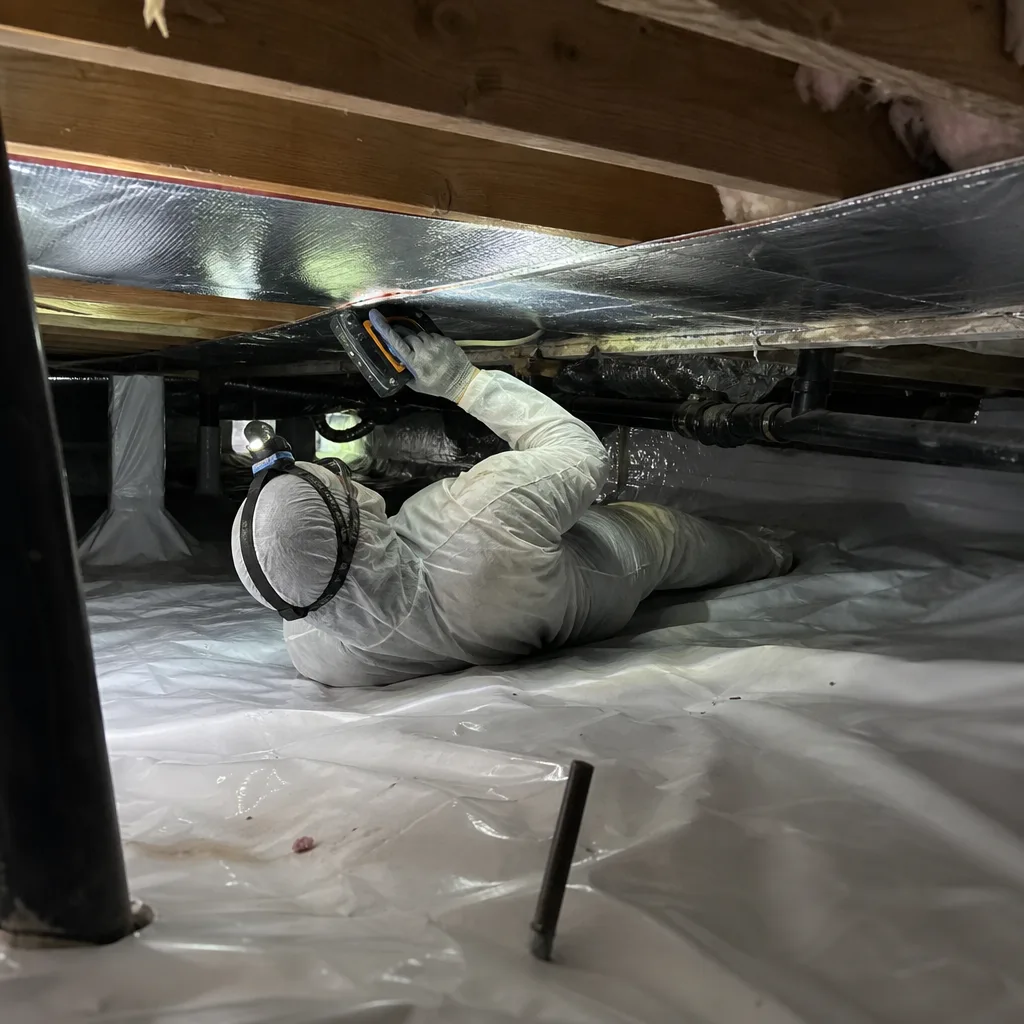
Your annual insulation check should include observation of any HVAC equipment in the attic, because duct leakage and equipment location directly affect insulation performance and indoor air quality. Yorba Linda’s cooling-dominated climate means attic ductwork operates under significant temperature differential for six to eight months annually - 55°F supply air in a 130°F attic creates condensation risk and drives energy loss through duct walls.
What to Look For
- Duct insulation condition. Flexible duct with damaged or degraded outer vapor barrier - the silver or black jacket - allows attic air to contact the inner liner. Look for tears, compression where ducts rest on framing, and disconnected sections where the inner core is visible. A duct with compromised insulation can lose 15-30% of its cooling capacity before the air reaches the register.
- Duct seal at connections. Metal duct connections should show intact mastic or foil tape - not duct tape, which degrades in attic heat. Flex duct connections to plenums should have mechanical supports (straps or clamps) plus sealant. We see many Yorba Linda homes where flex duct has pulled partially off the plenum, creating a leak that pressurizes the attic with conditioned air and depressurizes the house, pulling in garage or crawl space air through wall leaks.
- Condensate pan and drain line. Attic-mounted air handlers have emergency drain pans that should be dry. A wet pan indicates primary drain blockage - common in Yorba Linda where algae growth accelerates in warm attics. Water in the pan can overflow onto insulation, creating localized compression and mold growth that spreads.
- Filter access and condition. Note the filter size and last replacement date. A restricted filter increases duct system pressure, which can exacerbate leakage at existing gaps.
If you observe duct leakage or damaged insulation, note it on your documentation sheet. Duct sealing - properly, with mastic and mechanical reinforcement - is often performed as part of a comprehensive attic improvement. Some contractors, including those using Icynene or Demilec spray foam products, can apply foam directly to duct exteriors for both insulation and air sealing in one step. This is distinct from “duct lining” with internal spray foam, which has different code requirements and potential indoor air quality implications.
Don’t attempt duct sealing yourself with consumer-grade tape or wrap - the temperature cycling in Yorba Linda attics destroys these materials within one season, and you may cover leaks that need proper mechanical repair.
Documentation: What to Record and Why It Matters
The difference between a homeowner who maintains attic insulation effectively and one who discovers problems only when energy bills spike is documentation. A written record with photos creates a baseline that any future contractor, home inspector, or energy auditor can interpret without starting from zero. It also protects your investment if warranty claims arise - material manufacturers like CertainTeed and GreenFiber require documentation of proper installation conditions for warranty enforcement.
Your Annual Record Should Include
- Date and weather conditions. Record the inspection date and approximate outdoor temperature. Attic conditions vary significantly between a 65°F March morning and a 95°F September afternoon; knowing the conditions helps interpret your observations.
- Insulation depth at each measurement point. List the six to ten locations with depths measured to the half-inch. Note the measurement tool used for consistency.
- Photos of each measurement point. Include the ruler or gauge stick in the frame for scale. Take one photo from directly above, one from a 45-degree angle showing surrounding area context.
- Pest evidence documentation. If you find tunnels, nests, or droppings, photograph from 3 feet and 1 foot, with a ruler or coin for scale. Note approximate square footage of affected area.
- Ventilation inventory. Count and type of soffit vents, ridge vent linear feet, gable vent dimensions. Note any blocked or damaged vents with photos.
- Bypass location map. Mark each identified bypass on your attic sketch with a reference number, and maintain a corresponding photo folder (Bypass-1, Bypass-2, etc.).
- HVAC observations. Filter size and date, duct damage notes, condensate pan condition, any unusual equipment operation sounds or cycles.
- Previous work records. If you’ve had insulation work performed, keep the written scope, invoice, and any contractor-provided documentation (blower-door readings, photos, warranty) in the same folder. When we perform work in Yorba Linda, we provide a Documented Photo Record on every job, plus before-and-after blower-door numbers on air-sealing jobs, so our customers have this material ready.
Store this record digitally with cloud backup - a dedicated folder in Google Drive or Dropbox, with subfolders by year. Physical copies in a home file are vulnerable to the same moisture and pest issues you’re monitoring in the attic.
The documentation habit pays off when you sell. Yorba Linda’s real estate market draws buyers who request energy audits and home inspections that include attic assessment. A seller who can produce five years of depth measurements, ventilation photos, and professional work records demonstrates maintenance discipline that supports asking price and reduces inspection contingencies.
Common Mistakes to Avoid
- Measuring only at the attic hatch. Insulation is always deepest here - it’s the access point installers use, and it’s often the last area to settle. A single measurement at the hatch can overstate your actual R-value by 20% or more. Measure at multiple points, especially toward eaves and above problem rooms.
- Adding new insulation over pest-contaminated old material. This traps odor, pathogens, and ongoing pest attractants. It also voids most manufacturer warranties. Contaminated material must be removed, the space sanitized, entry points sealed, and then new insulation installed.
- Blocking soffit vents with insulation during a DIY top-off. Blown insulation drifts with air movement and easily covers soffit vents if baffles are missing or improperly installed. Every vent needs a clear air channel from the soffit into the attic space. We see this mistake frequently in Yorba Linda’s older neighborhoods where homeowners added insulation without understanding ventilation requirements.
- Sealing bypasses with non-fire-rated materials. Great Stuff foam around a recessed light housing or flue pipe creates a combustion hazard. Intumescent caulk, fire-rated putty pads, and approved cover assemblies exist for these applications; using the wrong material can invalidate your homeowner’s insurance after a fire.
- Ignoring the 1:150/1:300 ventilation ratio and adding insulation only. More insulation without adequate ventilation traps heat, accelerates shingle degradation, and can create moisture problems during rare Yorba Linda rain events when warm, moist attic air contacts cooler roof decking.
- Assuming settled insulation is “still doing its job.” Settled blown insulation loses R-value non-linearly - the first 10% of depth loss may cost only 5% of R-value, but beyond 20% depth loss, performance drops accelerate. Annual measurement catches this curve before it steepens.
- Failing to document before and after any contractor work. Without your own baseline photos, you have no way to verify that work was performed as specified, or to assess whether settlement or degradation since installation is within normal parameters. The Haven Standard requires that we provide documentation; you should maintain your own as well.
When to Call a Professional
Call a professional insulation contractor when your annual inspection reveals depth loss exceeding 20% of original installation, any pest contamination, bypass gaps you cannot safely seal, or ventilation calculations that show inadequate net free area. Also call if your energy bills have risen 15% or more year-over-year without rate changes, or if you have rooms that are consistently 5°F or more different from the thermostat setting.
Topside Attic Insulation Yorba Linda offers free estimates in Yorba Linda - call (909) 323-1675. Every estimate includes a written price before any work starts, a documented photo record of conditions found, and on air-sealing jobs, before-and-after blower-door numbers so you can verify the result. The 365-Day Done Right Promise applies to all completed work: if it’s not done right, we make it right, backed by a written scope and written warranty delivered before anyone lifts a tool.
We also provide free second opinions on any written estimate from another contractor. Bring us a competing quote; we’ll read it with you and explain what we see. Since 2016, we’ve sealed and insulated more than 9,000 homes, every one with a written price before work started and a documented record when the crew left.
Frequently Asked Questions
Check your attic insulation annually, ideally in October before the Santa Ana wind season begins. The pre-wind timing lets you verify that ventilation and bypass seals are intact before the strongest pressure differentials arrive. If your home is on hillside soils or has had previous pest issues, inspect twice yearly - April and October. Call (909) 323-1675 for a free estimate if you find anything concerning.
Most attic insulation top-off jobs in a Yorba Linda home between 1,800 and 2,800 square feet run between $1,800 and $3,400 for blown fiberglass or cellulose, depending on current depth, target R-value, and attic accessibility. Full removal and replacement of contaminated or degraded material typically runs $3,500 to $6,500. We provide a written price before any work starts - no exceptions - and offer free second opinions on any written estimate you’ve received. Call (909) 323-1675 for an exact quote; estimates are free.
Homeowners can perform annual inspections and minor depth checks safely, but adding insulation requires equipment and knowledge most homeowners don’t maintain. Before deciding, read DIY vs Professional Insulation: The Yorba Linda Homeowner’s Decision Guide. Blown insulation requires a blowing machine with proper hose length and pressure settings; batts require precise cutting around obstructions and maintenance of vapor barrier orientation. More importantly, professionals identify bypasses, ventilation issues, and moisture problems that a DIY installation would cover over. We see many Yorba Linda attics where well-intentioned DIY insulation trapped pre-existing problems that became expensive to fix later.
Both perform well when installed to proper depth and density. Blown fiberglass maintains loft better in high-heat attics but is more susceptible to wind disturbance during Santa Ana events. Cellulose has higher density per R-value, which reduces convective looping in leaky attics, but settles more initially and is more attractive to pests if borate treatment degrades. We source both from Owens Corning, Johns Manville, Knauf, and GreenFiber, among others, and specify based on attic conditions rather than defaulting to one product.
Calculate your attic floor area and compare against your vent inventory using the 1:150 or 1:300 NFVA rules described in this checklist. Practical signs of inadequate ventilation include shingle edges that curl prematurely, paint blistering on gable-end exterior walls, and attic temperatures exceeding outside temperature by more than 30°F on mild days. If you’re uncertain, a professional energy audit includes ventilation calculation and airflow verification. We include this assessment on every attic inspection we perform in Yorba Linda.
Yes, but the savings depend on what else is wrong. If your attic has R-19 insulation and significant bypass leakage, air sealing plus insulation upgrade typically reduces cooling load 15-25% in Yorba Linda’s climate. If your insulation is already R-30 and reasonably intact, the return on adding more insulation diminishes unless bypasses are sealed first. This is why we measure blower-door performance - a pressurization reading that shows, in one number, how much conditioned air your building envelope is losing - before recommending any insulation work. Sealed first, then insulated: in that order.
The Bottom Line
Attic insulation maintenance in Yorba Linda is a structured annual practice, not a one-time installation. Measure depth at multiple points with a gauge stick or ruler. Inspect for roof-rat evidence specific to our hillside-grove interface. Verify ventilation ratios against 1:150 or 1:300 code requirements. Document bypass gaps at top plates, recessed lights, and penetrations without attempting unsafe DIY seals. Record everything with photos and written notes so you have a baseline that compounds in value over time. Caught early, settled insulation needs only a top-off; ignored for years, it becomes removal, remediation, and full replacement. The checklist above gives you the measurement tools and observation points to stay ahead of that curve. Explore more guides & resources for maintaining your home’s efficiency.
Written by Wes Okafor, Owner at Topside Attic Insulation Yorba Linda, serving Yorba Linda since 2016.