
Last updated September 24, 2026
Insulation Cost Breakdown: The Yorba Linda Homeowner’s Reference for 2026
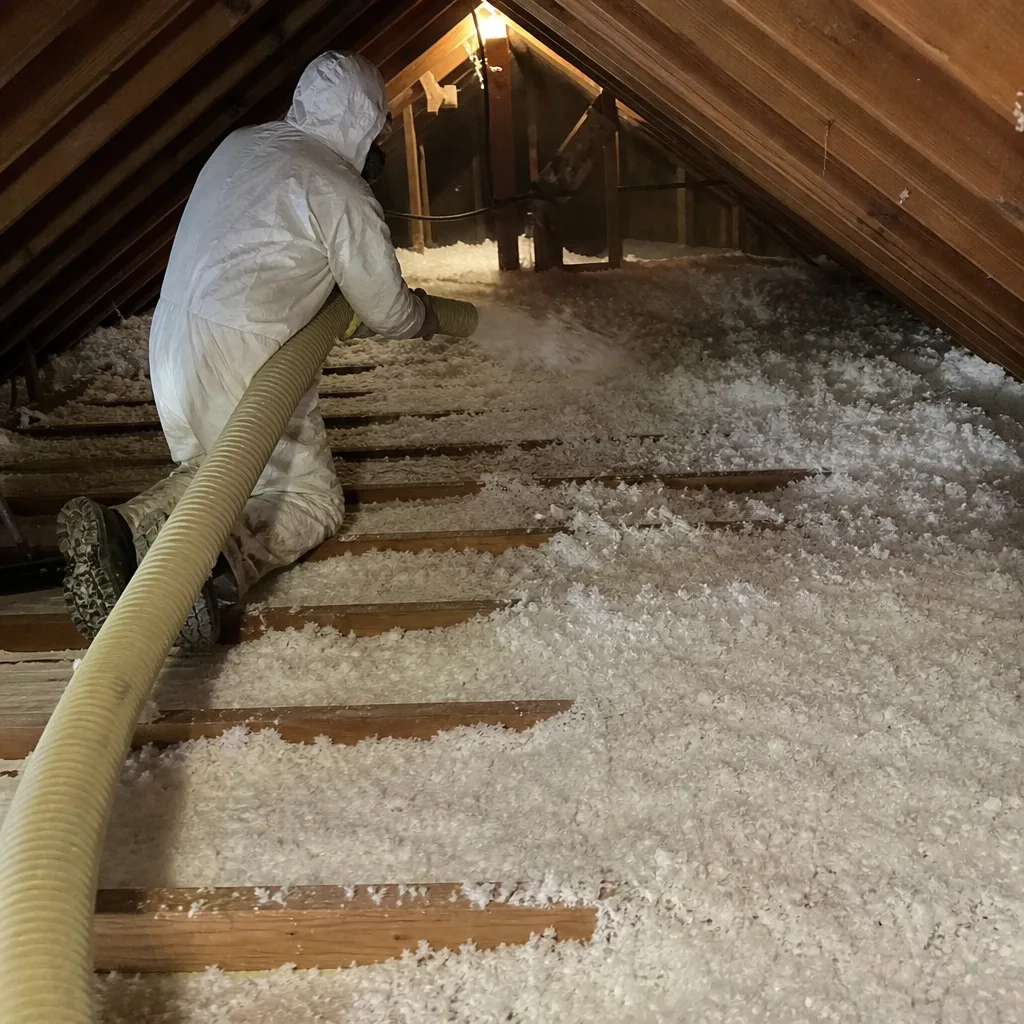
Two Yorba Linda homeowners, same 1,800 square foot house, same R-38 blown insulation spec: one paid $1,650, one paid $3,100. The cheaper job had no air sealing, no depth verification, and no documentation. The $3,100 job included 11 bypass seals, a pre- and post-blower-door test, and a written record. The cost difference was $1,450. The performance difference, measured in ACH50 - air changes per hour at 50 pascals of pressure - was 3.8. That gap, in a Yorba Linda summer where attic temperatures hit 140°F, translates to roughly $340-$480 in annual cooling costs.
This guide breaks down what insulation actually costs in Yorba Linda for 2026, line by line, alongside related more guides & resources. You’ll learn why bids for the same scope vary by 40-60%, what each component should cost, and how to compare proposals on outcomes rather than square footage.
Quick Answer
Most complete attic insulation jobs in Yorba Linda run $2.20-$4.10 per square foot for blown fiberglass or cellulose at R-38, including air sealing, blower-door testing, and documentation. A 1,800 square foot home typically totals $2,400-$3,800 depending on bypass count, access difficulty, and whether existing insulation requires removal. Jobs priced below $2.00 per square foot generally omit air sealing, skip verification testing, or use outdated material pricing that doesn’t reflect 2026 supply costs.
Table of Contents
- Why Insulation Bids in Yorba Linda Vary by 40-60% for the Same Scope
- Line-Item Cost Benchmarks for 2026: Materials, Labor, and Equipment
- What Air Sealing Should Cost as a Standalone Line Item
- Blower-Door Testing: Cost, Time, and Why It Belongs in the Base Scope
- The Variables That Legitimately Change Your Price
- How to Compare Bids on Cost-Per-Verified-Outcome
- Yorba Linda-Specific Factors: Climate, Code, and Neighborhood Patterns
- Common Mistakes to Avoid
- When to Call a Professional
- Frequently Asked Questions
- The Bottom Line
Why Insulation Bids in Yorba Linda Vary by 40-60% for the Same Scope
The 40-60% bid spread we see across Yorba Linda isn’t random. It tracks to four specific decisions contractors make about scope transparency:
- Air sealing labor is itemized or hidden. Some contractors bury sealing hours inside a generic “insulation” line. Others omit it entirely, knowing most homeowners won’t crawl the attic to check. A proper seal on a 1,800 square foot tract home takes 4-7 hours and accounts for $480-$840 in labor at 2026 rates.
- Blower-door testing is included, upsold, or absent. The test takes 2-3 hours including setup, depressurization, and thermal imaging while the house is under pressure. Contractors who skip it save $200-$350 in labor and equipment time. Those who upsell it as “energy audit” often charge $450-$600 for the same procedure.
- Material pricing reflects current supply costs or an outdated margin. Fiberglass and cellulose prices shifted significantly in 2024-2025 due to binder chemistry changes and freight surcharges. Contractors updating their bids quarterly show different numbers than those running annual price books.
- Haul-off and disposal are specified or assumed. Removing 6-10 inches of old fiberglass runs $0.45-$0.85 per square foot in Yorba Linda, plus dump fees at the Olinda Alpha Landfill or a permitted transfer station. Bids that say “remove and dispose” without a line item often mean “leave it if it’s inconvenient.”
We’ve reviewed competitor quotes brought in for our free second opinion service. The most common omission: no mention of top plate sealing or can light covers. In a 1980s Yorba Linda tract home, that’s typically 8-14 bypasses, each a direct path for conditioned air to escape into the attic.
Line-Item Cost Benchmarks for 2026: Materials, Labor, and Equipment
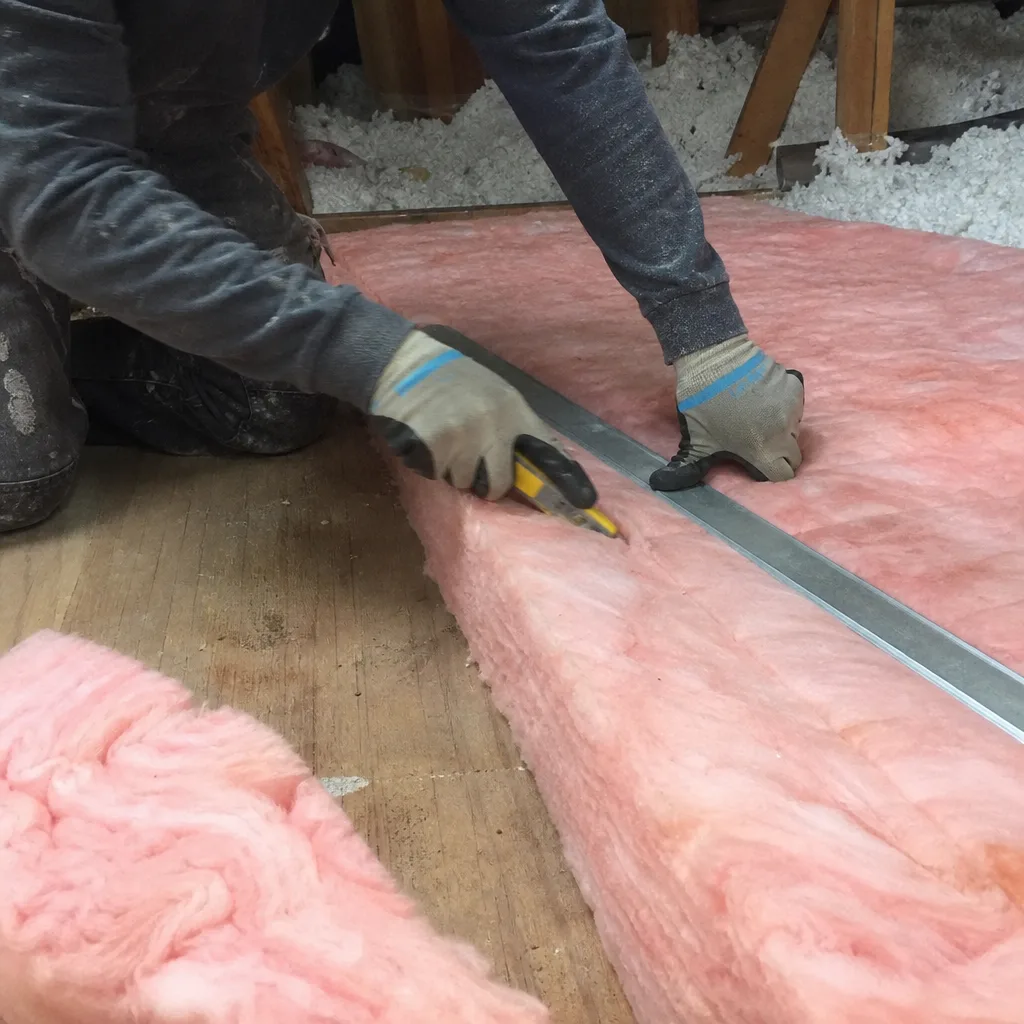
Here’s what each component costs in Yorba Linda at current rates, broken out for a standard 1,800 square foot attic with R-38 blown insulation:
Blown Fiberglass (Owens Corning AttiCat or equivalent)
- Material: $0.72-$0.89 per square foot at R-38 (11.5-12 inches settled depth)
- Labor: $0.85-$1.10 per square foot (blowing, depth verification, cleanup)
- Equipment: $0.18-$0.25 per square foot (blower rental/depreciation, hoses, P100 respirators)
- Subtotal: $1.75-$2.24 per square foot
Blown Cellulose (GreenFiber or equivalent)
- Material: $0.58-$0.74 per square foot at R-38 (10-11 inches settled, higher density than fiberglass)
- Labor: $0.95-$1.20 per square foot (heavier material, more physical handling, requires borate treatment verification)
- Equipment: $0.22-$0.30 per square foot (higher-capacity blower, fire-rated drop cloths)
- Subtotal: $1.75-$2.24 per square foot
The material cost convergence is real. Cellulose is cheaper per bag but requires more labor and denser application. Fiberglass is lighter to handle but costs more per R-value unit. For most Yorba Linda homes, the installed difference is under $150 total.
What the complete job adds:
| Component | Cost Range | Notes |
|---|---|---|
| Air sealing labor | $480-$840 | 4-7 hours at $120/hour; includes top plates, penetrations, dam construction |
| Blower-door test (pre/post) | $280-$420 | 2-3 hours; includes printed ACH50 report, thermal imaging |
| Can light covers (fire-rated) | $18-$32 each | Typical home needs 4-8; IC-rated fixtures may not require |
| Attic access tent/dam | $85-$140 | Required by Title 24 for pull-down stairs or scuttle holes |
| Insulation removal (if needed) | $810-$1,530 | 1,800 sq ft at $0.45-$0.85/sq ft |
| Haul-off and disposal | $140-$260 | Weight-dependent; cellulose is heavier than fiberglass |
Complete job range for 1,800 sq ft in Yorba Linda: $2,400-$3,800 with air sealing, testing, and documentation. Jobs below $2,200 typically omit one or more of these.
What Air Sealing Should Cost as a Standalone Line Item
Air sealing is not “included in the insulation.” It’s a separate trade with separate materials and verification requirements. Under our approach, we seal first, then insulate - never the reverse. Blowing insulation over an unsealed attic floor buries the leaks permanently and makes future access nearly impossible.
Per-bypass pricing for common penetration types in Yorba Linda homes:
- Top plate gaps (wall-to-attic junction): $12-$18 per linear foot. A typical 1,800 sq ft home has 140-180 linear feet of top plate. Many 1970s-1990s Yorba Linda tracts have continuous gaps from framing shrinkage.
- Recessed can lights (non-IC rated): $45-$75 each for fire-rated cover installation plus foam seal. Covers must be rated for direct contact with insulation. We see 4-8 per home in East Lake and Travis Ranch areas built 1985-2005.
- Plumbing chases and vent stacks: $25-$40 each. These run from kitchens and baths into the attic and often have 1-2 inch annular gaps.
- HVAC platform and flex duct penetrations: $65-$120 each. The platform itself needs a plywood dam; flex boots need mastic and foam.
- Wire penetrations and electrical boxes: $8-$15 each. Simple foam seal for wires; caulked covers for open boxes.
- Chimney chase and flue: $140-$220. Requires fire-rated sealant, metal flashing, and clearance verification.
Reasonable total bypass count for a 1,600-2,200 sq ft Yorba Linda tract home: 18-35 individual seals. We’ve documented 47 on a 2,100 sq ft home in Bryant Ranch with original 1989 construction - the builder had left every top plate open and used unsealed can lights throughout.
At $480-$840 total, air sealing represents 20-30% of a complete job’s cost. Contractors who quote $1,650 for “insulation” are not absorbing this; they’re omitting it.
Blower-Door Testing: Cost, Time, and Why It Belongs in the Base Scope
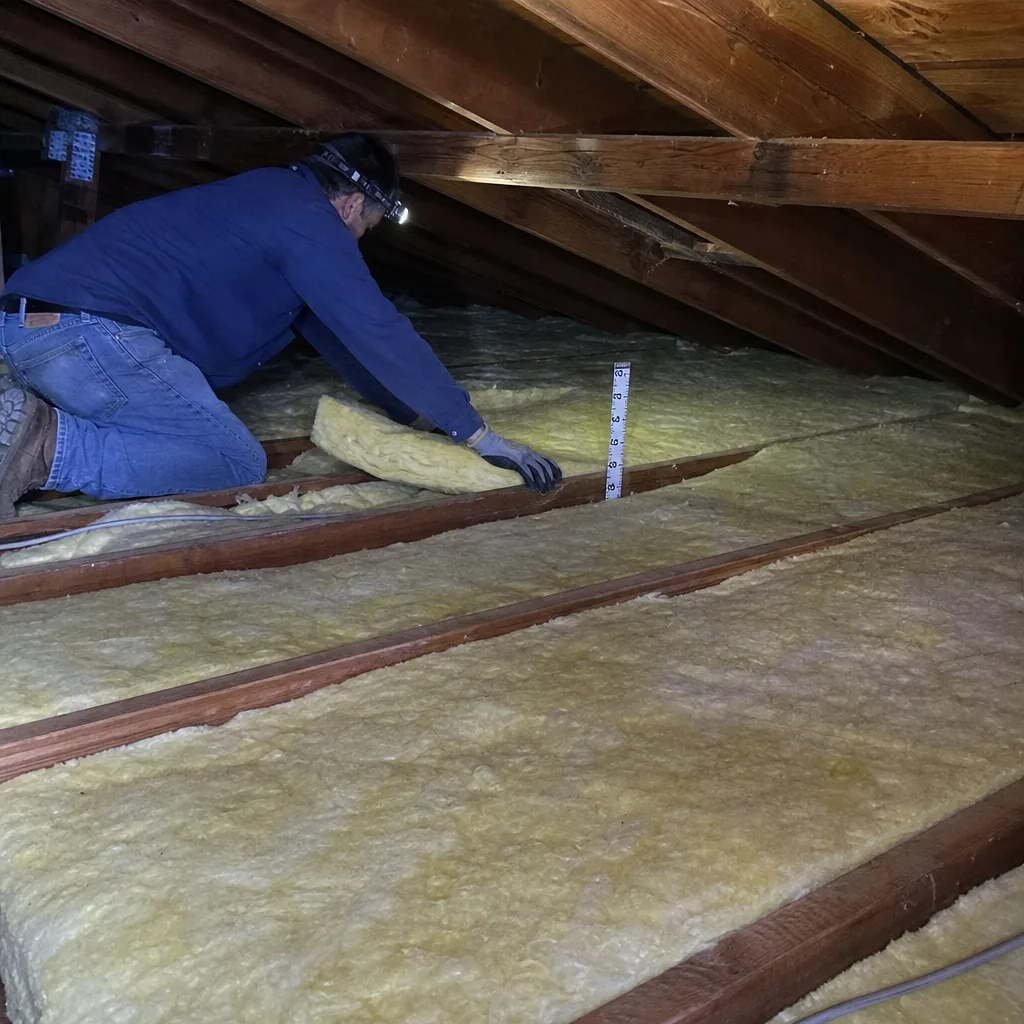
A blower-door test - a pressurization reading that shows, in one number, how much air your building envelope is losing - takes 2-3 hours including setup, testing, and thermal imaging. It produces a printed ACH50 (air changes per hour at 50 pascals) that becomes the baseline for every decision that follows.
What the test costs:
- Standalone energy audit: $450-$650 in Yorba Linda
- Included in insulation scope: $280-$420 (shared mobilization, crew already on site)
- Omitted entirely: $0, and no verification that sealing worked
What the test produces:
- Pre-sealing CFM50 reading - total cubic feet per minute of air leakage at test pressure
- Post-sealing CFM50 reading - same measurement after air sealing completion
- Calculated ACH50 - air changes per hour, the standard metric for envelope tightness
- Thermal images under pressure - reveals insulation gaps invisible to visual inspection
- Printed report with both numbers, dated, for your records
What that number is worth in utility savings math:
In Yorba Linda’s climate zone (CZ-10, hot-dry), each 1 ACH50 reduction saves approximately $90-$140 annually in combined heating and cooling for a 1,800 sq ft home. A typical sealing job drops ACH50 from 8.5 to 5.2 - a 3.3 point reduction worth $300-$460 per year. At that rate, the incremental cost of proper sealing and testing pays back in 18-30 months.
We publish before-and-after blower-door numbers on every applicable job. The homeowner receives the printed report; we keep a copy for warranty reference. Without this test, a contractor can claim “we air sealed” and never prove it. Under Haven Standard Clause 1, if it’s not documented, it didn’t happen.
The Variables That Legitimately Change Your Price
Not every price difference is hidden scope. These factors move the needle predictably:
Existing insulation removal and haul-off
Old insulation comes out for three reasons: contamination (rodent activity, water damage), compression below recoverable R-value, or incompatible material (urea-formaldehyde foam, vermiculite with asbestos concern). Removal runs $0.45-$0.85 per square foot in Yorba Linda, with cellulose at the high end due to weight. Haul-off adds $140-$260 depending on volume and whether the material qualifies as hazardous.
Pre-1980 homes require asbestos testing before disturbance. A bulk sample analysis by a CAL-OSHA-certified lab runs $85-$140 per sample; most attics need 2-3 samples. Positive results trigger abatement protocols that start at $3.50-$5.00 per square foot. We’ve encountered this in original construction near Yorba Linda Boulevard and in the older sections of town.
Attic access difficulty
Full-height attic with permanent stairs: no access premium. Kneewall or scuttle access: $180-$320 additional for confined-space work, material hoisting, and extended setup time. We’ve worked attics in Hidden Hills and Kerrigan Ranch where the only access was a 16×24 inch scuttle over a closet - crew time increased 40%.
Decking and storage platforms
Existing plywood storage needs lifting, sealing underneath, and relaying: $2.20-$3.50 per square foot of deck. New storage platforms over insulated attics require raised framing: $4.50-$6.50 per square foot.
Conditioned attic conversion
Moving the thermal boundary to the roofline with spray foam insulation runs $4.50-$7.50 per square foot for open-cell Icynene or Demilec products, or $6.50-$10.50 for closed-cell. This is not a standard insulation job; it’s a building envelope redesign requiring engineering review in most cases.
How to Compare Bids on Cost-Per-Verified-Outcome
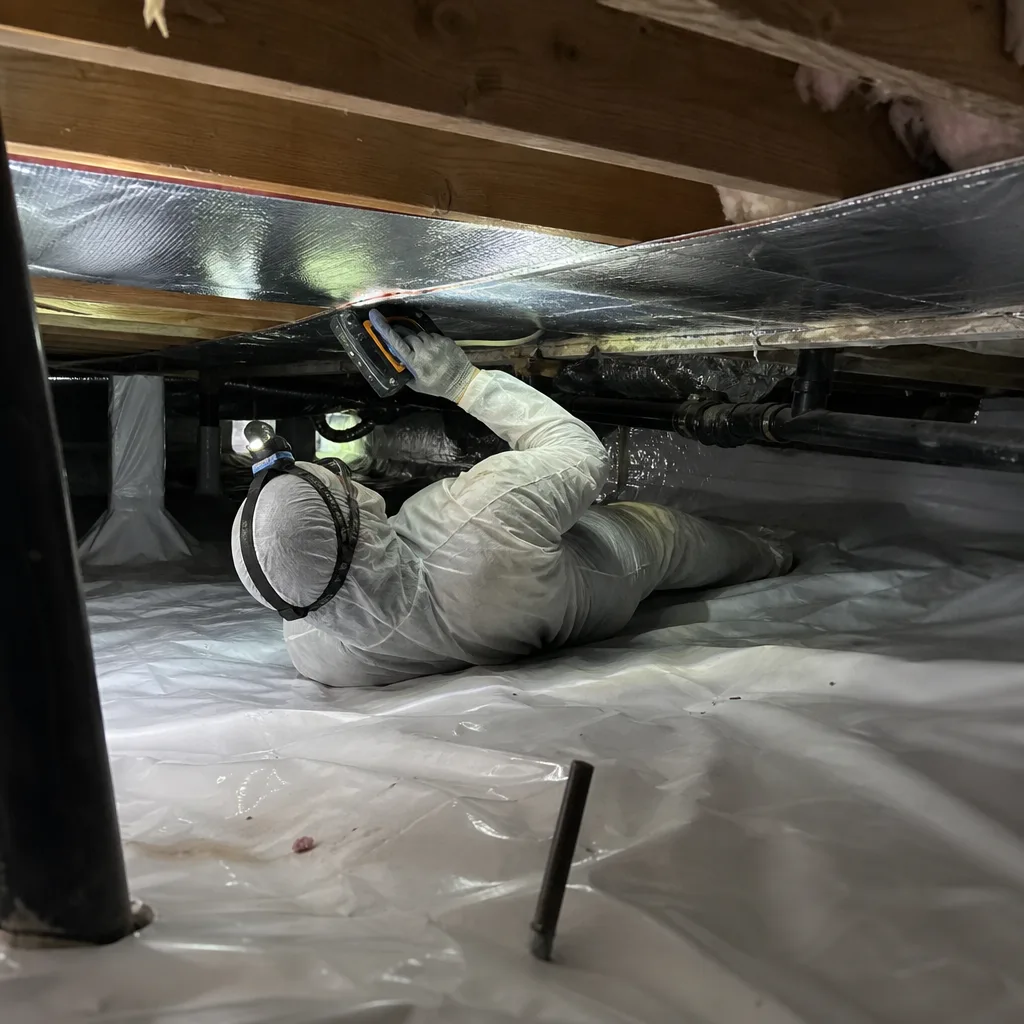
Cost per square foot is the wrong metric. It rewards thin coverage, skipped sealing, and missing documentation. Use this framework instead:
| Comparison Column | What to Ask For | Why It Matters |
|---|---|---|
| R-value delivered | Settled depth verification, not bag count | Bags don’t insulate; inches at settled density do. Request a depth map with 10+ measurement points. |
| Air changes reduced | Pre- and post-blower-door ACH50 | The only number that proves sealing worked. A 30% CFM50 reduction is minimum acceptable. |
| Documentation provided | Written scope, written warranty, photo record, blower-door report | These are your proof if performance doesn’t match promise. Under Haven Standard, you get all four before anyone leaves. |
Simple spreadsheet method:
- List each bid in rows.
- Column A: Total price
- Column B: Verified R-value (not spec, but verification method)
- Column C: Air sealing included? (Y/N) and bypass count estimated
- Column D: Blower-door test included? (Y/N)
- Column E: Documentation items (scope, warranty, photos, report)
- Column F: Cost per verified outcome = A / (B x D x E items)
A $3,100 bid with full verification scores lower cost-per-outcome than a $1,650 bid with none. The $1,650 job isn’t cheaper; it’s incomplete.
Yorba Linda-Specific Factors: Climate, Code, and Neighborhood Patterns
Yorba Linda sits in California climate zone 10, hot-dry, with cooling-degree days that dominate heating demand. Attic temperatures in July and August routinely reach 130-145°F. This changes insulation economics:
R-value targets are higher than national averages. Title 24-2022 requires R-38 minimum for attics in this zone; we specify R-49 for homes with aging HVAC systems or south-facing roof planes. The incremental material cost is $0.15-$0.22 per square foot, typically recovered in 3-4 cooling seasons.
Radiant barrier interaction matters. Many Yorba Linda homes, particularly in East Lake Village and Travis Ranch, have existing radiant barrier decking or foil-faced sheathing. Adding insulation without addressing radiant barrier condition - torn, dusty, or improperly installed - reduces effective performance by 15-25%. We inspect and document this before quoting.
Wind patterns affect attic ventilation. Santa Ana events pressurize attics and can reverse natural ventilation flow. Proper baffle installation at eaves, verified during insulation work, prevents wind-wash that strips R-value from exposed fiberglass. We’ve found baffles missing or crushed in roughly 30% of Yorba Linda homes built 1985-2005.
Neighborhood construction eras show predictable patterns:
- Pre-1980 (original town center, near Yorba Linda Boulevard): Minimal original insulation, frequent asbestos concerns, balloon framing with continuous wall cavities. Budget for testing and potential abatement.
- 1985-1995 (Bryant Ranch, Hidden Hills): R-19 fiberglass batts, often improperly installed with compression gaps; unsealed can lights common. Typical bypass count: 22-35.
- 1995-2010 (Travis Ranch, Kerrigan Ranch): Better initial insulation but frequent HVAC platform leaks and missing fire blocking at dropped soffits. Typical bypass count: 15-28.
- 2010-present (newer infill): Generally code-compliant at build but often missing final air sealing verification. Blower-door testing at resale frequently reveals ACH50 of 6-8 despite “energy efficient” marketing.
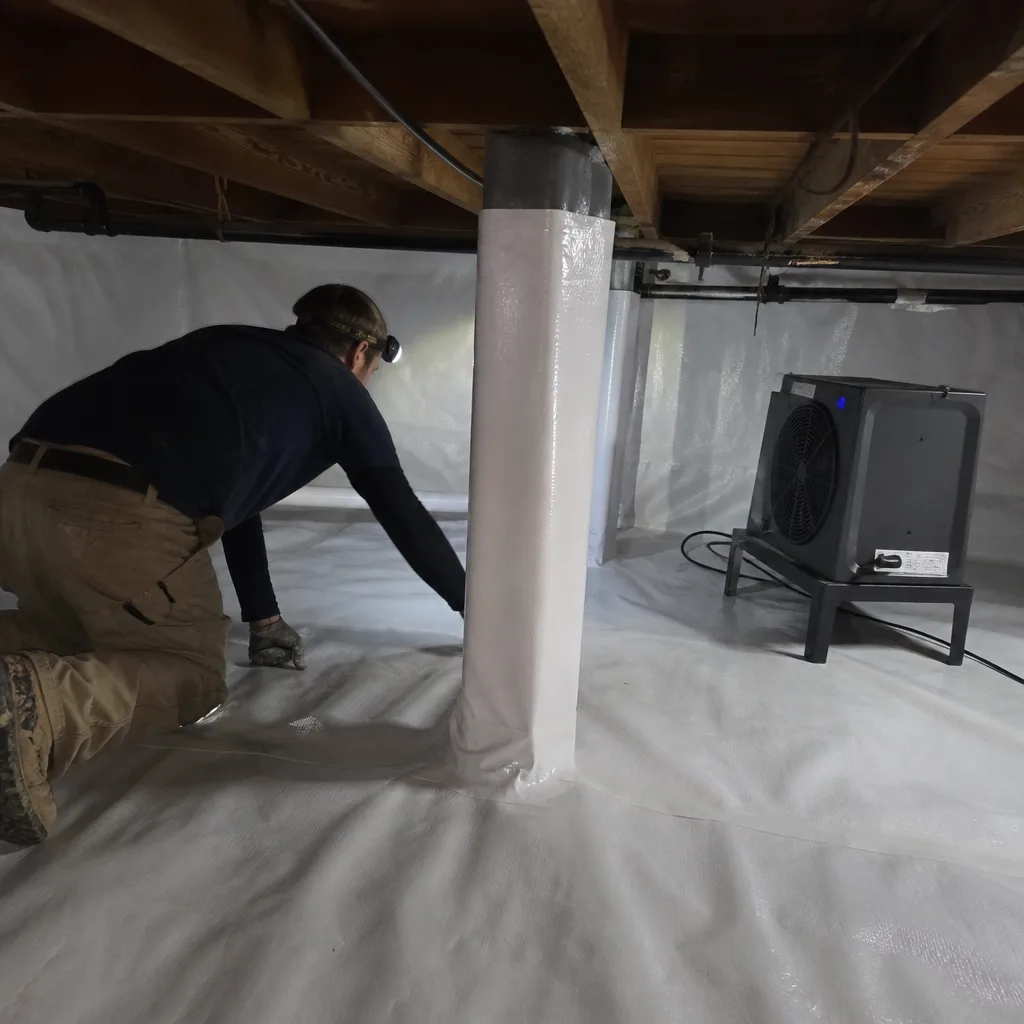
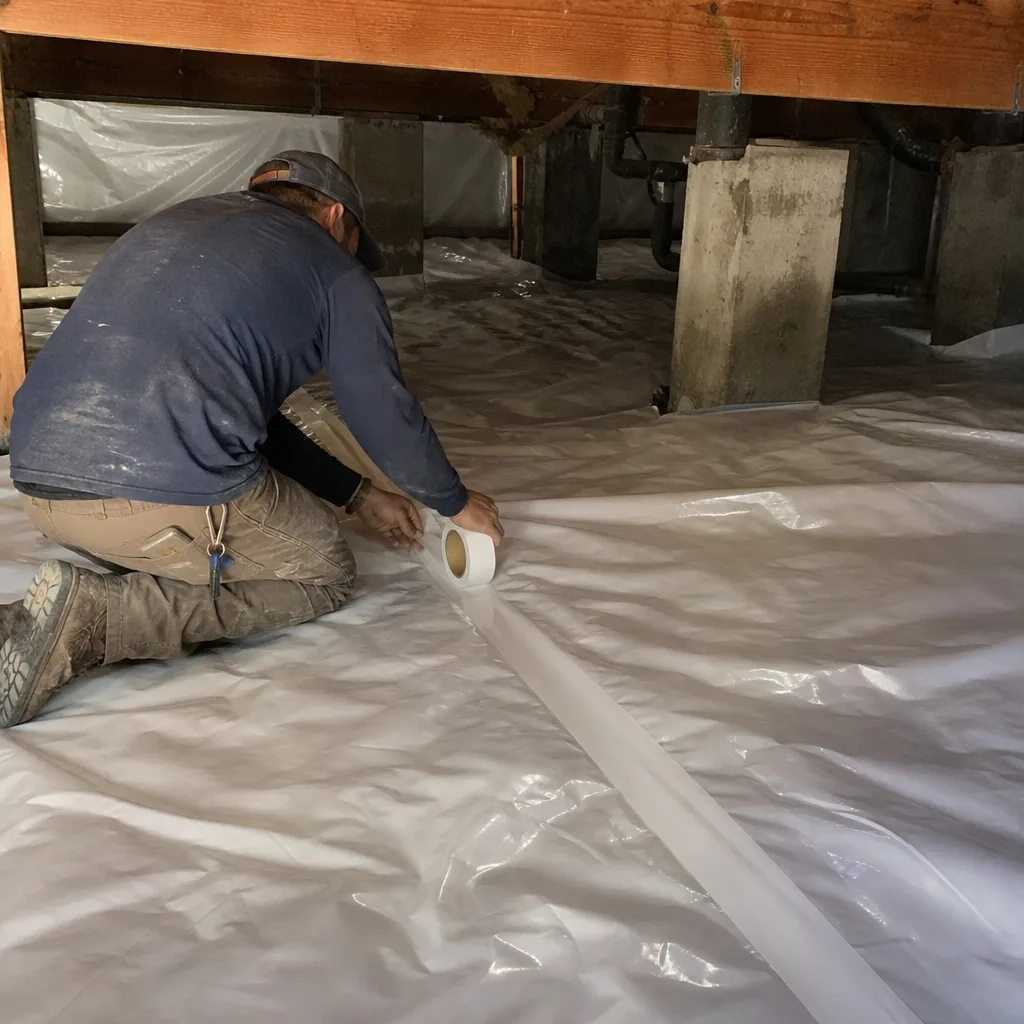
Crawl space encapsulation is worth evaluating in tandem with attic work for homes with raised foundations, common in the older hillside sections. A complete envelope approach - attic, walls, and crawl space together - typically reduces total energy use 25-35% versus attic-only treatment.
Common Mistakes to Avoid
- Accepting a bid without line-item air sealing. “Includes air sealing” in the description is not enough. Request a bypass count estimate and per-bypass pricing. In Yorba Linda’s competitive bid environment, vague language hides $500-$900 in omitted labor.
- Skipping the blower-door test to save $300. You won’t know if sealing worked, and you’ll have no baseline for future improvements. The test is verification, not luxury.
- Comparing bag counts instead of settled depth. A “20 bags” spec is meaningless without coverage area and settled density. Owens Corning AttiCat settles to 0.5-0.6 lbs/sq ft at R-38; GreenFiber cellulose settles to 1.0-1.3 lbs/sq ft. The correct metric is inches at settled depth, verified with a ruler at multiple points.
- Ignoring access difficulty in bid comparison. One contractor quotes assuming full attic access; another prices the kneewall reality. The lower bid may carry a change order once crew arrives.
- Failing to verify material brand and type. “Blown insulation” could mean fiberglass, cellulose, or reclaimed denim with wildly different performance. Specify and verify: we use Owens Corning, GreenFiber, and other named brands with published R-value per inch.
- Not requesting documentation before payment. Under Haven Standard, you receive written scope, written warranty, photo record, and blower-door report before final invoice. Any contractor resisting this structure has something to hide.
- Insulating over wet or contaminated insulation. In Yorba Linda, roof leaks from Santa Ana wind damage or failed flashing often soak existing material. Insulating over it traps moisture, breeds mold, and voids most manufacturer warranties. We remove and inspect first.
When to Call a Professional
Call when your attic insulation is below R-30, when you feel temperature stratification between rooms, or when summer cooling bills exceed $280 monthly for a home under 2,500 square feet - or consult our Insulation Warning Signs: A Yorba Linda Homeowner’s Reference Guide first. Call if you’ve had rodents, roof leaks, or if your home was built before 1995 and never had air sealing verified. Call if you’re comparing bids and can’t reconcile a 50% price spread - we’ll read competing quotes with you at no charge.
Topside Attic Insulation Yorba Linda offers free estimates in Yorba Linda with written pricing before any work starts. A live person answers calls 24/7 at (909) 323-1675. Every estimate includes a documented photo record and, for applicable jobs, before-and-after blower-door numbers so you can verify the result you paid for.
Frequently Asked Questions
Most complete attic insulation jobs in Yorba Linda run $2.20-$4.10 per square foot for blown fiberglass or cellulose at R-38, including air sealing, blower-door testing, and documentation. A typical 1,800 square foot home totals $2,400-$3,800. Call (909) 323-1675 for a written estimate specific to your home - estimates are free and include line-item pricing.
Repair is rarely cost-effective for compressed or contaminated insulation. Adding new material over old achieves marginal R-value gains and buries existing problems. Full removal and replacement with verified air sealing typically costs 15-25% more than overlay but delivers 40-60% better performance. We provide both options in writing so you can compare on cost-per-outcome.
No - and any contractor who can hasn’t done proper assessment. We measure, photograph, and blower-door test before quoting. The written price arrives within 24 hours; scheduling typically follows within 3-5 business days. Same-day work skips verification and violates Haven Standard Clause 1.
Every home built before 2010 in Yorba Linda needs air sealing before insulation. The question is extent, not whether. A blower-door test reveals the leakage rate; thermal imaging under pressure shows bypass locations. We won’t quote insulation without sealing if the test shows ACH50 above 7.0 - the performance penalty is too severe.
Our photo record includes pre-condition images, bypass locations marked, sealing in progress, settled depth measurements at 10+ points, and post-completion overview. You receive these digitally within 48 hours of job completion. They’re your warranty documentation and your proof of work quality. Included on every job, not available on request.
Yes - typically 2.5-3.5x more for open-cell spray foam at the roofline, and 3.5-5x for closed-cell. Spray foam is specified for conditioned attics, irregular framing, or severe allergy concerns where fiberglass dust is problematic. For standard vented attics, blown fiberglass or cellulose at R-38 to R-49 is the cost-optimized solution. We quote both when appropriate, with no proprietary product lock-in - materials from Icynene, Demilec, Owens Corning, and GreenFiber as the application requires.
The Bottom Line
Insulation cost in Yorba Linda is not mysterious. The 40-60% bid spread traces directly to four decisions: whether air sealing is itemized and performed, whether blower-door testing verifies results, whether material pricing reflects 2026 supply costs, and whether documentation proves what was done. A complete job - sealed, insulated, tested, and documented - runs $2,400-$3,800 for a typical 1,800 square foot home. Anything significantly below that range omits something that matters.
Compare bids on verified outcomes: R-value delivered, air changes reduced, and documentation provided. The lowest square-foot price is often the most expensive choice over the life of the home.
Written by Wes Okafor, Owner at Topside Attic Insulation Yorba Linda, serving Yorba Linda since 2016.