
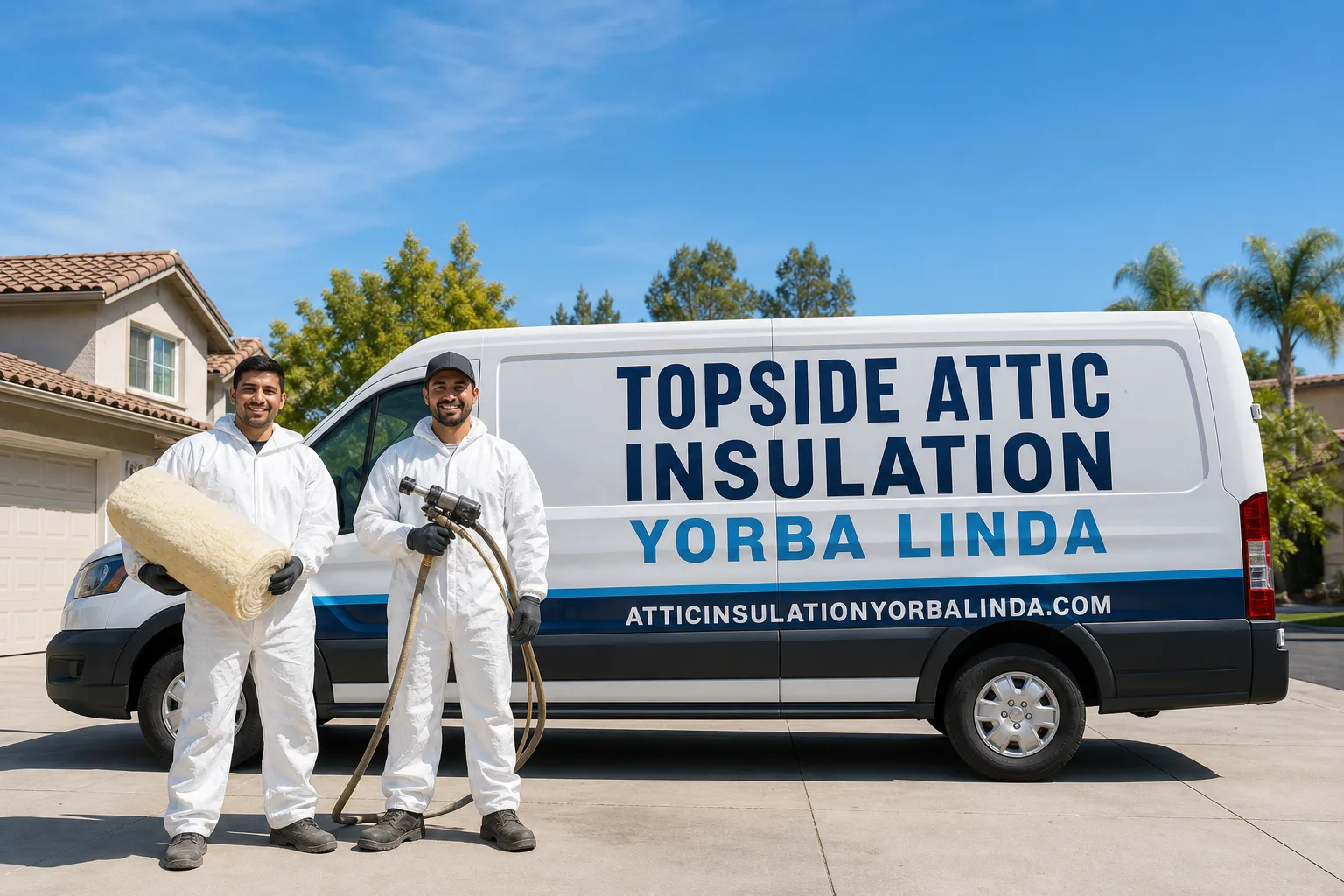
How Much Does Insulation Cost in Anaheim?
Most insulation projects in Anaheim, CA run between $1,200 and $4,800 depending on the type of insulation, the area being treated, and whether air sealing is done first. Attic insulation is the most common job and typically lands between $1,400 and $3,200 for a single-story home in the 1,400-2,000 sq ft range that dominates neighborhoods like Anaheim Hills and the Platinum Triangle corridor. Spray foam and crawl space work push the top of that range higher; blown-in cellulose or fiberglass in a straightforward attic sits toward the lower end.
Every price on this page reflects the 2026 Anaheim market. Written prices – flat, itemized, before any work starts – are a firm requirement under the Haven Standard. If you have a competing quote already, we’ll read it with you before you commit to anything.
Insulation Cost Breakdown (2026)
Insulation pricing in Anaheim breaks down by type and location. The table below shows what homeowners in Anaheim are typically paying in 2026. These are installed costs, not material-only estimates.
| Service | Typical Installed Cost (Anaheim, 2026) | Notes |
|---|---|---|
| Attic blown-in insulation (fiberglass or cellulose) | $1,400 - $3,200 | Most common job; price scales with attic sq ft and current R-value |
| Attic air sealing + blown-in (combined) | $1,800 - $3,800 | Air sealing of top plates, can lights, and penetrations completed first |
| Spray foam insulation (open-cell) | $2,200 - $5,500 | Crawl spaces, rim joists, tight cavities; Icynene and Demilec sourced |
| Spray foam insulation (closed-cell) | $3,500 - $7,500 | Higher R-per-inch ratio; used where depth is limited |
| Wall insulation (blown-in retrofit) | $1,600 - $4,200 | Price varies with siding type; stucco exteriors common in Anaheim add complexity |
| Radiant barrier installation | $900 - $2,000 | Stapled to rafters; relevant in Anaheim given high attic temps in summer |
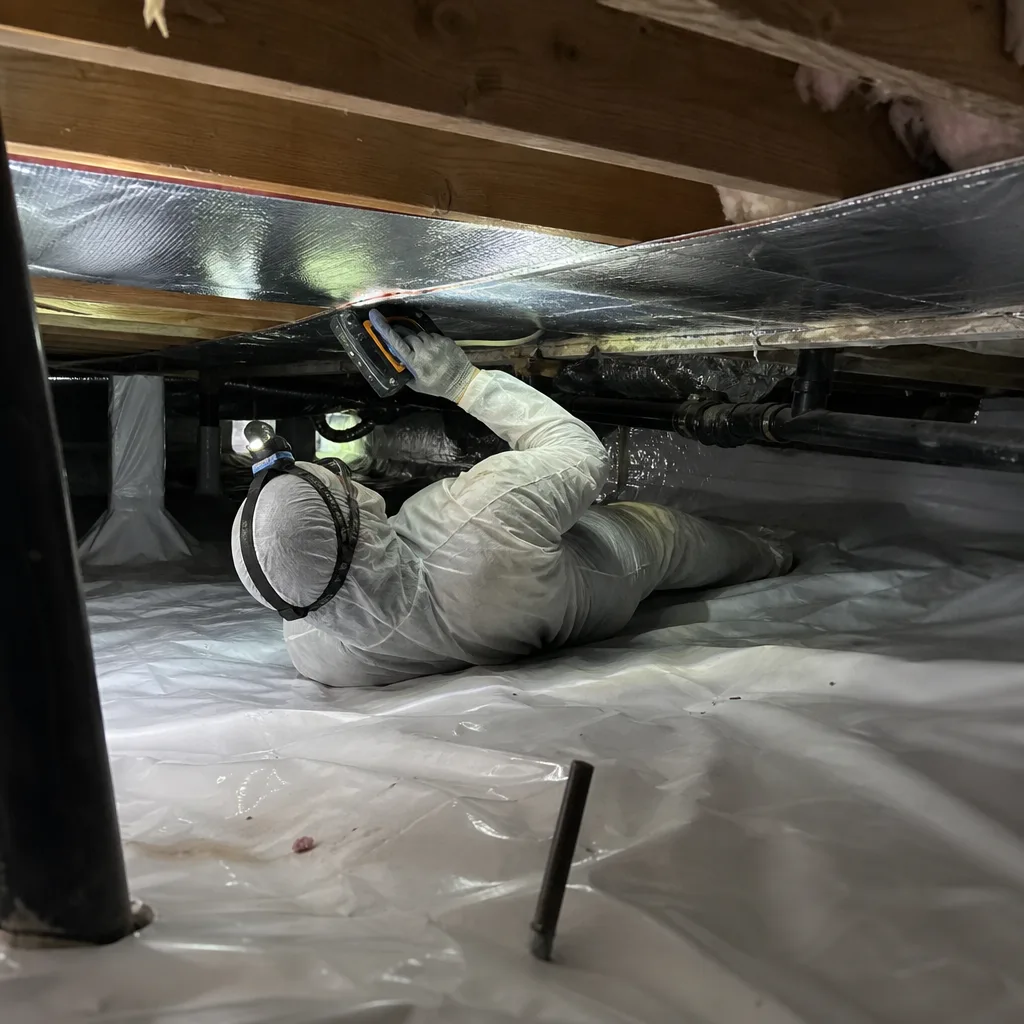
| Crawl space encapsulation + vapor barrier | $2,800 - $6,500 | Older homes in West Anaheim and the flatlands often need this |
| Insulation removal and replacement | $1,800 - $5,500 | Rodent-contaminated or settled insulation; documented photo record provided |
| Attic cleaning and rodent proofing | $600 - $2,200 | Often paired with removal; exclusion points sealed before new material goes in |
| Home energy audit (blower-door test) | $300 - $600 | Before-and-after blower-door numbers published on applicable jobs |
What Pushes the Price Up or Down
The single biggest variable in Anaheim is square footage of the treated area, but it is not the only one. Older homes built before Orange County’s 1978 energy code adoption often have no insulation in interior walls and inadequate depth in attics – sometimes as little as R-11 where the current California code minimum for an Anaheim attic is R-38. Bringing a 1960s home up to code and above takes more material than topping off a 2010 build that just needs a refresh.
Accessibility matters too. Homes in Anaheim Hills with steep-pitched rooflines or limited attic clearance require more crew time. Stucco-clad homes throughout Anaheim’s older neighborhoods add cost to wall insulation because the drilling and patching process is more involved than with wood siding.
Air sealing adds to the invoice but it also protects the investment. Blowing insulation over unsealed top plates, can lights, and utility penetrations is a known performance failure – the insulation traps heat in winter but the conditioned air escapes through gaps the insulation cannot cover. Envelope Insulation Co. does not skip air sealing. It is treated as a prerequisite, not an optional add-on, which is why the combined line item exists in the table above.
Material choice is the third lever. Cellulose, sourced from GreenFiber, typically costs less per square foot than fiberglass batts from Owens Corning or Johns Manville, and open-cell spray foam (Icynene, Demilec) costs less than closed-cell. The right material depends on the application – not on which product has the highest margin. Written scopes spell this out line by line before any work starts, Haven Standard Clause 1.
What Affects Insulation Pricing in Anaheim
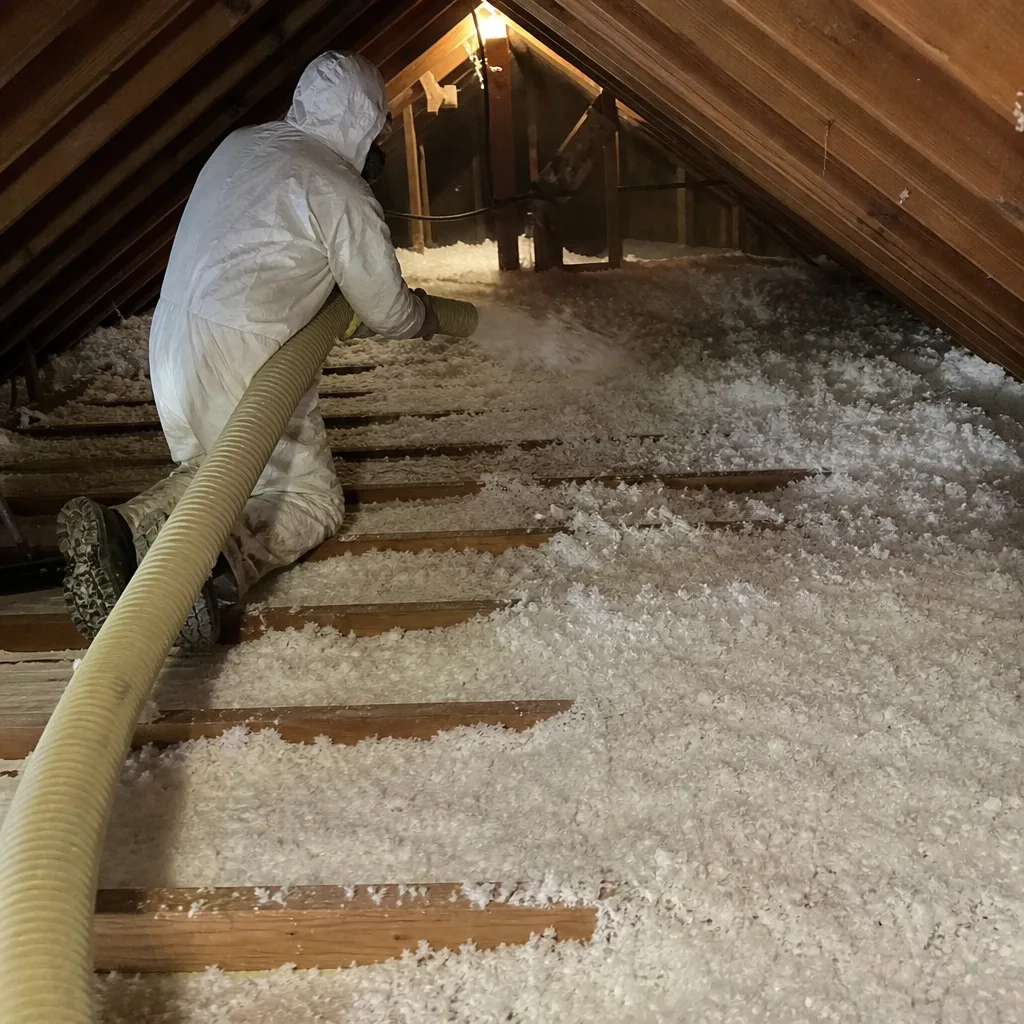
- Home size and attic square footage: A 1,200 sq ft single-story home in the Colony Historic District will cost less to insulate than a 2,800 sq ft two-story in Anaheim Hills, even at the same R-value target. Installers price by the square foot of treated area, so larger homes pay more in total even when the per-square-foot rate is the same.
- Current R-value and existing insulation condition: California’s Title 24 requires R-38 in Anaheim attics. Many homes built before 1990 have R-11 to R-19 of compressed, settled fiberglass that no longer performs at its rated value. Removing degraded material adds cost but so does ignoring it – you cannot reliably add R-value on top of rodent-contaminated or moisture-damaged insulation.
- Anaheim’s climate zone (IECC Zone 3B): Anaheim sits in California Climate Zone 8-9, which means summer attic temperatures regularly exceed 150°F. That load drives demand for radiant barriers in addition to mass insulation. The thermal gain through a poorly insulated attic in August in Anaheim is measurably worse than in a coastal city twenty miles west, so insulation decisions that would be optional elsewhere are worth the investment here.
- Accessibility and attic configuration: Flat-roofed commercial-style homes and homes with low-slope rooflines, more common in West Anaheim’s postwar stock, have restricted attic access that increases labor time. Anaheim Hills properties with high-pitch cathedral ceilings sometimes require spray foam rather than blown-in because depth is constrained and the cathedral cavity is inaccessible by a blower hose.
- Air sealing scope before insulation: The number of penetrations – can lights, plumbing stacks, HVAC chases, electrical boxes – determines how long air sealing takes. A home that was renovated with recessed lighting throughout the ceiling (very common in 1990s and 2000s Anaheim remodels) has more leakage points to seal than an original, un-modified home from the same era.
- Permit requirements: Orange County and the City of Anaheim may require a permit for insulation work that is combined with electrical work or structural changes. Straightforward attic blown-in and air sealing typically does not require a permit in Anaheim, but crawl space encapsulation that involves drainage or HVAC re-routing can. A written scope from any contractor should address permit responsibility clearly – ours do.
Anaheim-Specific Considerations Worth Knowing
Anaheim’s housing stock is unusually diverse for a Southern California city. You have post-war ranch homes in West Anaheim built between 1945 and 1965 with minimal original insulation, 1970s-1980s tract development throughout the flatlands between the 91 and 5 freeways, upscale custom homes in Anaheim Hills built from the mid-1980s onward, and an increasing number of newer infill developments near the Platinum Triangle and Angel Stadium area.
Each era has its own insulation profile. Post-war homes frequently have no wall insulation at all – just a stucco shell, an air gap, and interior drywall. The 1970s-1980s homes often have R-11 batts in the walls and R-19 in the attic, both of which fall short of current code. Anaheim Hills homes from the 1990s sometimes have adequate original insulation but failing air sealing at can lights and attic hatches – the insulation looks fine until a blower-door test reveals a building envelope that leaks like a screen door.
In Anaheim, the blower-door test is not a luxury diagnostic. It is the only way to confirm that what you paid for is working. We publish before-and-after CFM50 readings on every applicable job – CFM50 being the cubic feet of air per minute escaping the building envelope at a standardized pressure differential. A home that reads 4,800 CFM50 before sealing and 2,400 after has demonstrably cut its air infiltration in half. That is a number you can hold us to. A vague claim about “improved efficiency” is not.
We also see a pattern specific to Anaheim Hills: homes built on sloped lots with bonus rooms above the garage tend to have poorly insulated garage ceilings and knee walls. Residents in those homes often describe a room above the garage that is always too hot or too cold – that is almost always an insulation and air sealing problem at the garage ceiling, not an HVAC sizing problem. A home energy audit will confirm which it is before anyone spends money on the wrong fix.
How to Save on Insulation in Anaheim
1. Get a blower-door test before you decide on scope
A home energy audit that includes a blower-door test runs $300-$600 in Anaheim and tells you exactly where the air is moving, which walls have insulation voids, and what the actual R-value of your attic floor is. That information lets you prioritize. Some homes need air sealing far more urgently than they need additional insulation depth. Some need both. Spending $1,400 on blown-in insulation before finding out your attic floor has 14 unsealed can lights is the most common way homeowners waste insulation dollars in Anaheim.
2. Combine services when the crew is already set up
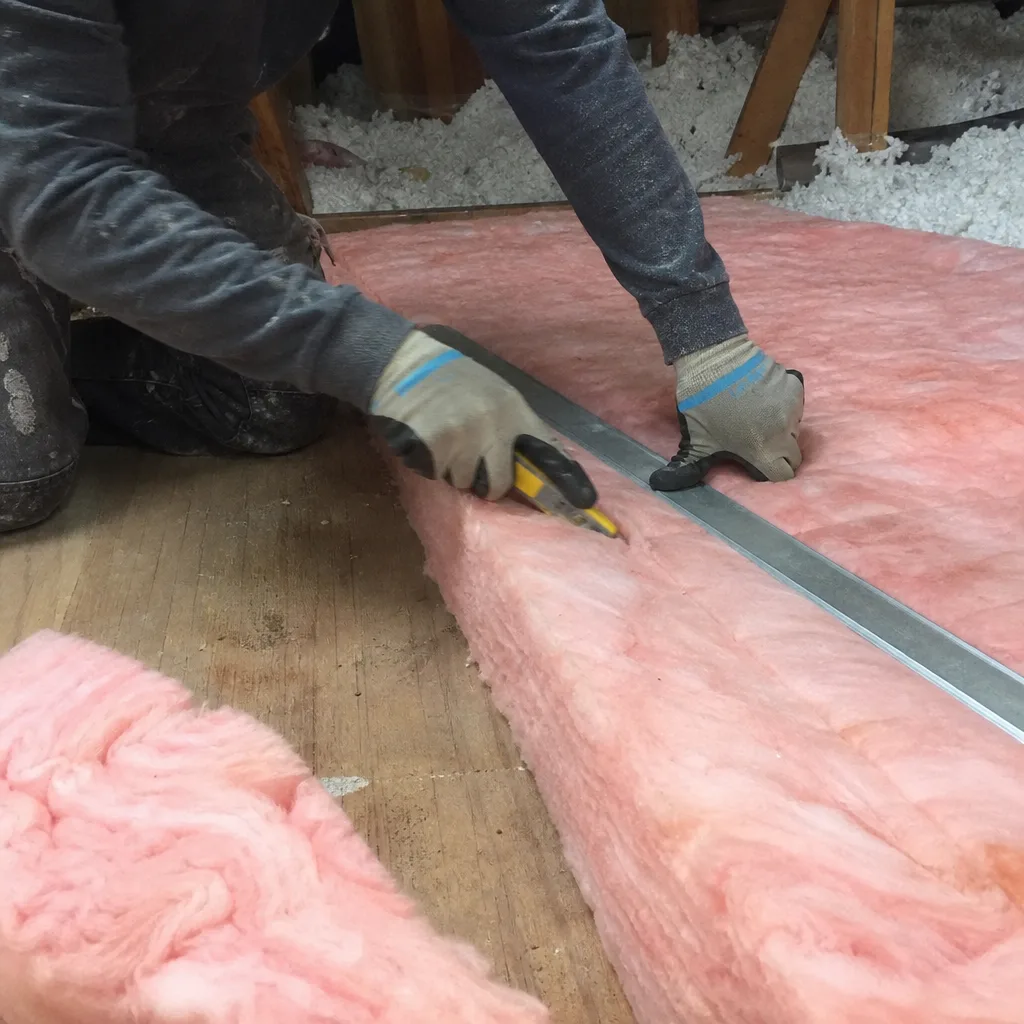
Air sealing plus blown-in insulation completed in one mobilization costs less than two separate jobs. If your attic also has aging rodent-damaged insulation, removing it at the same visit as the replacement avoids a second setup charge. The cost table above separates services for pricing clarity, but combining them is standard practice and is reflected in the written quote.
3. Check for California and utility rebates
Southern California Edison and SoCal Gas both operate rebate programs for qualifying insulation upgrades in Anaheim. The amounts change year to year, but as of 2026 homeowners can typically claim $0.10-$0.20 per square foot for attic insulation upgrades that meet minimum R-value thresholds, plus additional rebates for air sealing work verified by a blower-door test. A proper home energy audit – the kind that produces a written report, not just a walkthrough estimate – is usually required documentation for rebate claims. Ask for that documentation before the crew leaves; it is part of the Documented Photo Record we provide on every job.
4. Use the free second opinion before signing
If you have a written quote from another Anaheim insulation contractor, bring it to us. We read competing quotes line by line – checking material specs, R-values, air sealing scope, and whether the quote is itemized or just a lump sum. A lump-sum quote that does not specify material type, R-value target, or whether air sealing is included is not a quote; it is a number on a page. Under Haven Standard, every written price we issue is itemized before anyone lifts a tool. Call (909) 323-1675 to schedule a second-opinion review – there is no charge for it.
5. Don’t over-specify material for the application
Closed-cell spray foam at $3.50-$5.50 per square foot installed is the right call for a rim joist, a crawl space ceiling, or a roofline cavity where depth is constrained. It is not the right call for an open attic floor where blown-in cellulose at $0.60-$1.00 per square foot (installed) achieves the same R-38 target at a fraction of the cost. A contractor who quotes spray foam for an open attic floor without explaining why is either specifying by habit or by margin. Ask why the material was selected; the answer should refer to the application, not to brand preference.
FAQs – Insulation Cost in Anaheim, CA
How much does attic insulation cost in Anaheim in 2026?
Attic insulation in Anaheim typically runs between $1,400 and $3,200 for a single-story home in the 1,400-2,000 sq ft range, installed with blown-in fiberglass or cellulose to R-38 – the current California code minimum for this climate zone. If the job includes attic air sealing before the blown-in material is added, which it should, budget $1,800 to $3,800. Homes with degraded or rodent-contaminated insulation that needs removal first will land at the higher end or above it. Call (909) 323-1675 for a written price specific to your Anaheim home’s square footage and current condition – the estimate is free and the price is written before any work starts.
Is spray foam insulation worth the cost in Anaheim?
Open-cell spray foam runs $2,200-$5,500 installed in Anaheim; closed-cell runs $3,500-$7,500. For specific applications – crawl space ceilings, rim joists, roofline cavities in Anaheim Hills homes with cathedral ceilings, and garage ceilings below bonus rooms – spray foam is often the correct material because it provides both thermal resistance and air sealing in a single application. For an open attic floor where blown-in cellulose can achieve the same R-value at one-third the cost, spray foam is usually not the right call unless there are specific moisture or pest concerns. The answer depends on the application, and a proper written scope will specify why one material was chosen over another. Call (909) 323-1675 to have that conversation before committing.
Does insulation require a permit in Anaheim, CA?
Straightforward attic blown-in insulation and air sealing in Anaheim typically does not require a City of Anaheim building permit. Crawl space encapsulation involving drainage modifications, insulation combined with electrical panel work, and projects that alter the structure can trigger permit requirements. Orange County jurisdiction applies in unincorporated areas near Anaheim’s edges. The written scope you receive before any work starts should address permit responsibility explicitly – ours does, every time. If a contractor does not mention permits in their written agreement, ask directly.
How long does attic insulation last in Anaheim’s climate?
Well-installed blown-in fiberglass or cellulose in a properly sealed Anaheim attic typically maintains effective R-value for 20-30 years. The main failure modes are settling (which reduces depth and R-value over time), moisture intrusion from roof leaks or condensation, and rodent activity – all three are more common in Anaheim’s older housing stock than in newer builds. Radiant barriers, which block radiant heat gain from Anaheim’s intense summer sun rather than resist conductive heat flow, can last the life of the roof when properly stapled to the rafters. A before-and-after blower-door test at installation gives you a performance baseline so you know when a re-test a decade later shows degradation.
Is it cheaper to repair or replace old insulation in Anaheim?
If existing insulation is compressed but uncontaminated – just aged and settled – topping it off with blown-in material is usually the more economical path, typically $800-$1,600 for a standard Anaheim attic. If the insulation is rodent-damaged, urine-soaked, or mold-affected, removal and replacement is the only responsible approach; trying to add clean material on top of contaminated insulation is a documented health risk and does not restore performance. Removal plus replacement in Anaheim runs $1,800-$5,500 depending on depth, access, and contamination extent. The written scope you receive before we start will specify which condition applies and why, with photos. Call (909) 323-1675 – the initial assessment is part of the free estimate process.
What R-value does Anaheim require for attic insulation?
California Title 24 and the current IECC energy code require a minimum of R-38 in attic assemblies for Anaheim’s climate zone. Most insulation contractors in Anaheim target R-49 to R-60 on jobs that start from bare or near-bare attic floors, because the marginal cost of additional depth on an initial installation is low and the long-term performance gain is measurable. Existing homes that were built to code at the time of construction may have R-19 or R-30 from a prior code era – that is legal for the original installation date but worth upgrading when the opportunity arises. A blower-door test combined with a thermal scan will show whether the R-value deficiency is causing a meaningful air infiltration problem or just a conductive loss issue; the remediation is different for each.
Why the Air Sealing Step Cannot Be Skipped
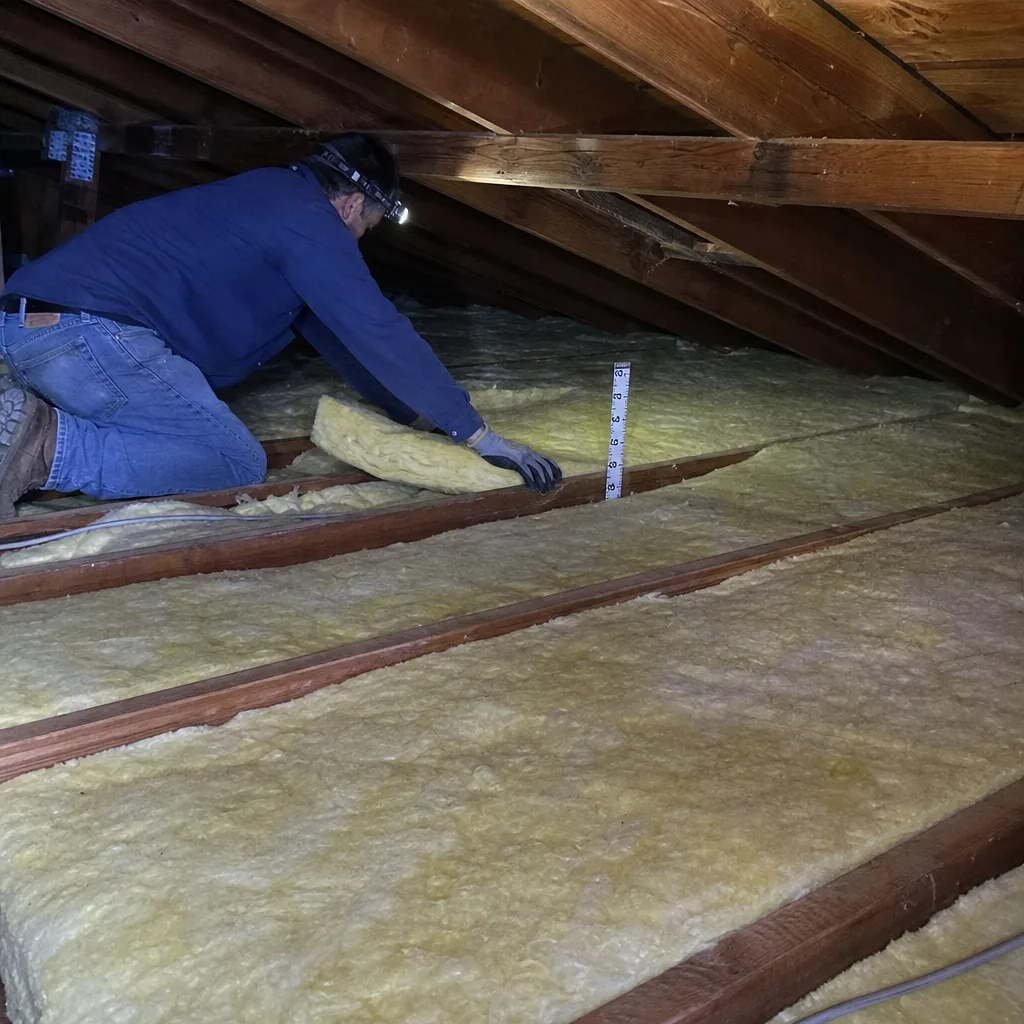
This point comes up in almost every Anaheim estimate we write, so it is worth explaining directly. Insulation resists conductive heat flow – heat moving slowly through a material. Air sealing stops convective loss – conditioned air moving through gaps at high speed. The two mechanisms are different and neither substitutes for the other.
A home with R-49 blown-in insulation and unsealed can lights loses conditioned air through those fixtures every time the pressure differential between inside and outside changes – which is every time the HVAC system cycles, every time wind hits the building, every time a door opens. The insulation sitting a few inches above those fixtures does not stop that airflow. It sits there and looks fine while the cooling system works harder than it should.
Envelope Insulation Co. does not blow insulation over an unsealed attic floor. Air sealing of top plates, penetrations, and can lights is completed first, verified, and documented before any insulation material is added. That sequence is not a sales pitch; it is the reason before-and-after blower-door readings show a real change rather than a marginal one. On applicable jobs, those CFM50 readings – the cubic feet of air per minute escaping the building envelope at 50 Pascals of pressure differential – are published as part of the job documentation. You see the number before and after. The performance change is yours to verify.
If you’ve already received a quote from another Anaheim contractor that does not mention air sealing, ask them specifically: is air sealing of can lights and top plates included in this scope, and if not, why not? The answer will tell you a great deal about how the job is going to perform.
What You Receive When the Job Is Done
Under the Haven Standard, every completed job at an Anaheim home includes:
- A written scope and flat price delivered before any work starts – Haven Standard Clause 1. No work begins until you have seen and agreed to the written price.
- A Documented Photo Record of the attic, crawl space, or wall cavity before and after – included on every visit, not available on request.
- Before-and-after blower-door CFM50 readings on applicable jobs, so performance is documented, not assumed.
- A written warranty delivered before the crew leaves, backed by the 365-Day Done Right Promise: if it is not done right, we make it right.
- Documentation suitable for utility rebate claims when the scope qualifies.
Materials are sourced from Owens Corning, Johns Manville, Knauf, Rockwool, CertainTeed, Icynene, Demilec, and GreenFiber – selected for the application, not for vendor margin. There is no proprietary product lock-in.
Wes Okafor leads the Envelope Insulation Co. operation and has been doing this work in Anaheim and the surrounding Orange County market since the company’s founding in 2016. More than 9,000 homes have been sealed and insulated under that written-price-before-work-starts standard. The documented record exists for every one of them.
Key Takeaways
- Attic insulation in Anaheim runs $1,400-$3,200 installed; combined air sealing plus insulation runs $1,800-$3,800.
- California Title 24 requires R-38 minimum in Anaheim attics; many pre-1990 homes fall well short of that.
- Air sealing must be completed before insulation is added – blowing insulation over unsealed penetrations is a documented performance failure.
- Before-and-after blower-door numbers are published on every applicable job so you can verify the result, not just accept a claim.
- Anaheim Hills homes with steep pitches and cathedral ceilings often require spray foam rather than blown-in; West Anaheim post-war homes frequently need full removal before replacement.
- Southern California Edison and SoCal Gas rebates can reduce net cost; a proper energy audit with a written report is typically required documentation.
- Every written quote from Envelope Insulation Co. is flat, itemized, and in writing before any work starts – no exceptions.
Get a Written Price for Your Anaheim Home
If you are ready for a specific number rather than a range, call (909) 323-1675. The estimate is free, the price will be written and itemized, and no work starts until you have agreed to it in writing. If you already have a quote from another insulation contractor in Anaheim, bring it. Wes Okafor and the team at Envelope Insulation Co. will read it with you, line by line, before you commit to anything. The Free Second Opinion on any written estimate is a standing offer, no conditions attached.
Anaheim homeowners who want to start with a home energy audit and blower-door baseline – especially useful for Anaheim Hills homes, older West Anaheim properties, and any home where HVAC performance has felt off for years – can book that as a standalone service or as the first step of a combined audit-and-insulation project. Either way, the written price comes before the work, and the documented record comes when the crew leaves.
Pricing reflects the Anaheim market as of 2026. Written by Wes Okafor, Owner at Envelope Insulation Co., serving Anaheim and Orange County since 2016. Topside Attic Insulation Yorba Linda offers free estimates – call (909) 323-1675.
What Our Customers Say
"The winter gas bill dropped by about a third. They had estimated a quarter, so they under-promised."
- Genevieve R."They photographed rodent damage in the old insulation that we had no idea about, and priced the exclusion work separately so we could decide."
- Harriet N."Two other companies quoted to blow more insulation on top of what was there. These were the only ones who said the existing material had to come out first, and explained why."
- Clifford E.