
Rockwool Vapor Barrier Installation: The Yorba Linda Owner’s Guide
Rockwool vapor barrier installation in Yorba Linda typically runs $1,800-$3,400 for a full attic or crawl space application, depending on square footage and whether the substrate needs prep work. We stock Rockwool Comfortboard, Comfortbatt, and AFB-compatible vapor barrier membranes on our trucks, and most jobs in the Savi Ranch area and east toward Bastanchury Road can be scheduled same-day or next-day. Most homeowners discover the problem when they pull back insulation and find dark spotting on the kraft facing, or when their energy auditor flags a failed blower-door test that traces back to vapor drive through an unsealed thermal envelope.
Which Rockwool Models This Applies To
Rockwool’s stone wool products are hydrophobic, meaning they don’t absorb liquid water, but they still require a vapor barrier on the warm-in-winter side of the assembly to stop moisture from condensing inside the cavity. In Yorba Linda’s climate zone 3B, that typically means a Class I or Class II vapor retarder installed on the interior face of exterior walls or over the attic floor before Comfortbatt is laid.
We work with three Rockwool product lines regularly. Comfortbatt, the semi-rigid batts, uses a kraft facing that acts as a vapor retarder in some R-values but not others; unfaced Comfortbatt always needs a separate poly or smart membrane. Comfortboard 80 and 110, the rigid boards used for exterior continuous insulation, require a fluid-applied or self-adhered vapor barrier on the interior side when used in above-grade walls. AFB (Acoustical Fire Batts), common in multifamily work near the Metrolink corridor, ships unfaced and needs a dedicated retarder in any exterior application.
The compatibility gotcha: Rockwool’s kraft facing is not a vapor barrier in the technical sense; it’s a vapor retarder with a perm rating around 1.0. In Yorba Linda’s dry climate that’s usually sufficient for attic floors, but in hillside homes with conditioned crawl spaces off Lakeview Avenue, we’ve seen moisture accumulate where the facing meets the rim joist. We check the product stamp - a four-digit code printed on the batt edge - to confirm whether you’re getting faced or unfaced material. For OEM-spec jobs, we source Rockwool’s own membrane; for most retrofits, we use a compatible 6-mil poly or CertainTeed MemBrain where drying potential matters. Topside Attic Insulation Yorba Linda is an independent service provider, not affiliated with Rockwool.
Signs Your Rockwool Vapor Barrier Installation Is Failing
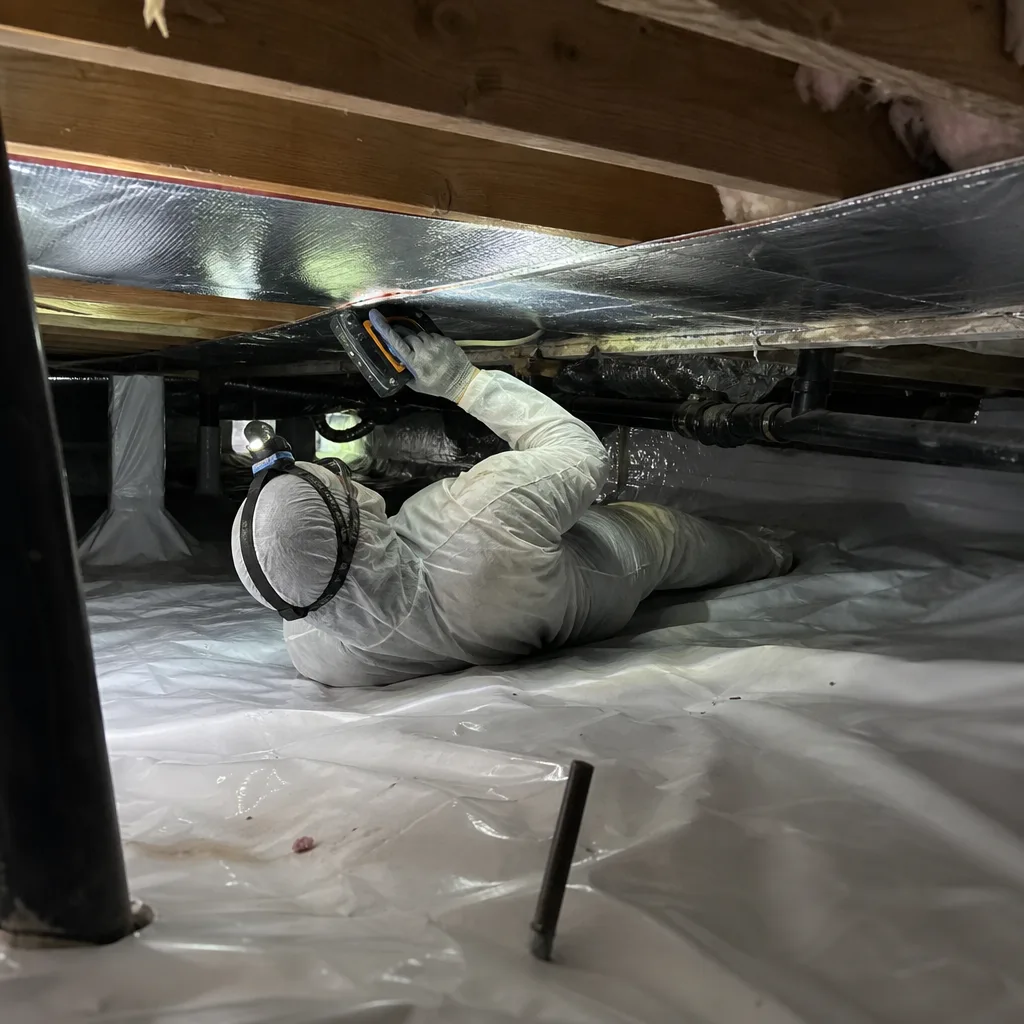
- Dark streaking or mold on the kraft facing. This means warm, moist interior air is reaching a cold surface and condensing. In Yorba Linda, we see this most often in homes built 1985-2005 where the original builder-grade poly has pulled away from the top plates, letting attic air migrate behind the insulation.
- Insulation that feels damp or clumps when compressed. Rockwool itself won’t hold water, but if the vapor barrier is missing or torn, the cavity air can reach dew point against the drywall. We find this in second-story additions where the original contractor stuffed batts without sealing electrical penetrations first.
- Peeling paint or bubbling drywall on exterior walls. This is vapor drive working inward during our rare cold snaps, usually in north-facing rooms. The barrier was either omitted, installed on the wrong side, or compromised during a prior electrical or plumbing retrofit.
- Higher-than-expected blower-door numbers after insulation was added. We test a lot of homes in the Travis Ranch area where a previous contractor blew fiberglass over unsealed top plates; the insulation reads full R-value on paper but the air leakage nullifies the thermal benefit. A proper vapor barrier installation includes sealing first, then insulating.
- Musty odor in conditioned spaces during Santa Ana wind events. The dry desert air drops interior humidity fast, which can cause hygroscopic materials to release moisture they’ve stored. If your vapor barrier is doing its job, this shouldn’t happen; if it’s compromised, you get a cyclical damp smell that air fresheners won’t fix.
Replacement Cost & What’s Included
Most Rockwool vapor barrier installations in Yorba Linda fall between $1,800 and $3,400. The low end covers a straightforward attic floor redo in a 1,200-square-foot home: remove compromised material, air-seal top plates and can lights, install new 6-mil poly sealed at all seams, then relay Rockwool batts. The high end involves crawl space work with limited access, remediation of rodent-damaged poly, or switching to a smart vapor retarder like MemBrain in a home with mixed vapor drive conditions.
What drives the range: square footage, accessibility, and whether we’re working over finished space. A vaulted ceiling in the hillside homes near Carbon Canyon requires scaffolding and careful sequencing; a standard flat attic over a single-story tract home in Eastlake Village is faster. Every quote includes the written scope, the vapor barrier membrane, acrylic tape for seams, mechanical fastening at perimeter walls, and our 365-Day Done Right Promise. We also stock Reflectix radiant barrier products for jobs where the homeowner wants to address both vapor control and radiant heat gain.
Before-and-after blower-door numbers are included on every job where we touch the air barrier. You’ll get a printed report showing CFM50 before we start and after we finish. Seal the leaks first. Then insulate. The numbers will tell you whether it worked.
DIY or Call Us?
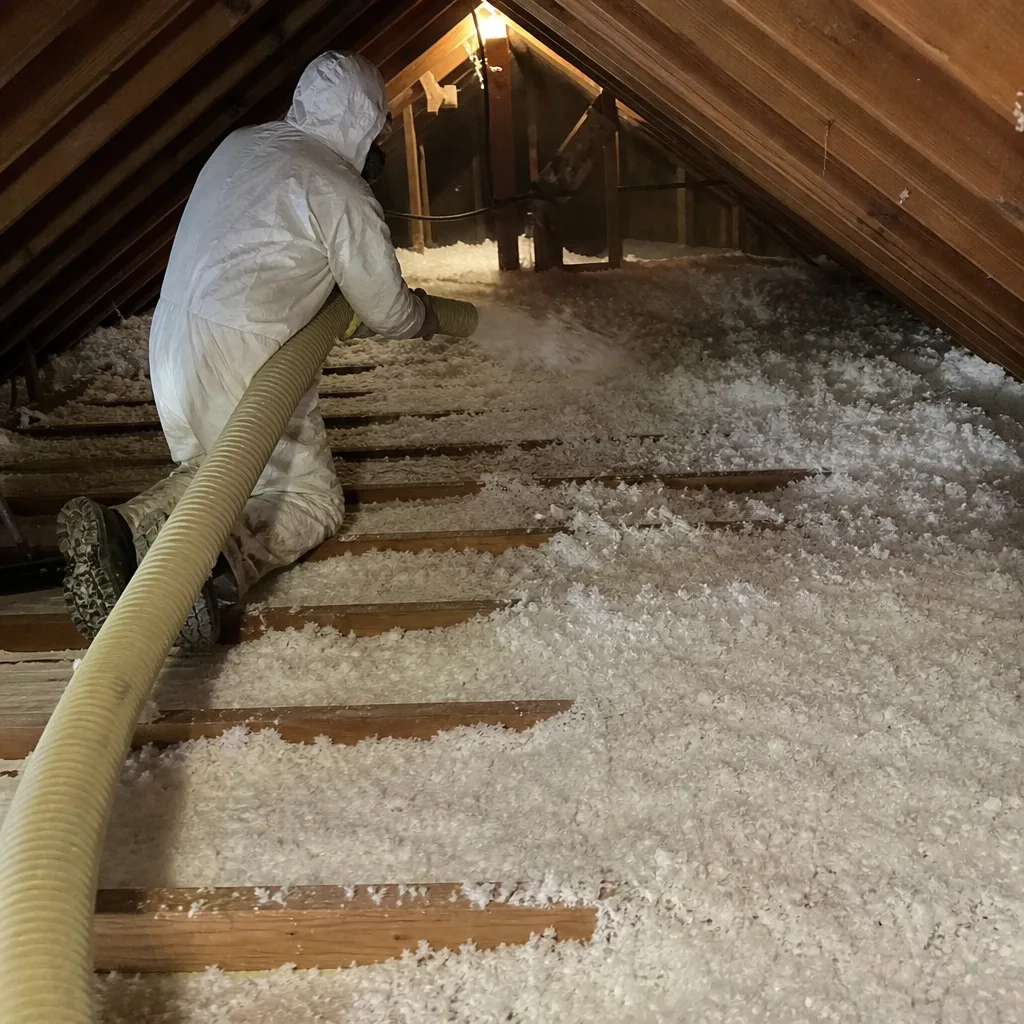
There’s a safe middle ground here. A homeowner can pull back insulation in an attic and visually inspect for torn poly, disconnected seams, or missing barrier at the eaves. You can also check the product stamp on existing Rockwool to see if it’s faced or unfaced. What you shouldn’t do: work in a crawl space with active moisture, disturb vermiculite or old loose-fill without testing, or try to install a vapor barrier over finished drywall from the interior side. The sequencing matters - vapor barrier goes in before the insulation, or as part of a full removal and replacement.
The real risk in Yorba Linda isn’t the vapor barrier itself; it’s what you find when you start looking. We’ve opened attics in the Bryant Ranch area and found disconnected bathroom fan ducts dumping moist air directly into the insulation, or poly that was never sealed at the chimney chase. Fixing the barrier without fixing the source is a temporary patch. If your inspection turns up anything more than a clean tear in accessible poly, call (909) 323-1675 and we’ll walk through what we found on similar jobs.
FAQs
In our climate, a properly installed 6-mil poly vapor barrier should last 20-30 years if undisturbed. We see premature failure at 8-12 years when the original installer didn’t seal seams or when rodents have accessed the attic. The kraft facing on Comfortbatt degrades faster if attic temperatures stay above 130°F for extended periods, which happens in Yorba Linda’s unvented attics during July and August. Call (909) 323-1675 for an exact quote - estimates are free.
Patching works for isolated tears smaller than a square foot in otherwise intact poly. We use acrylic vapor-barrier tape rated for the application. If the barrier is brittle, extensively damaged, or missing at critical junctions like top plates and penetrations, partial repair creates more problems than it solves - you’ll have discontinuous air sealing and hidden moisture paths. We don’t quote patch jobs on compromised full installations; the labor to do it right approaches replacement cost, and the result is inferior. Call (909) 323-1675 for an exact quote - estimates are free.
Most residential jobs in Yorba Linda take one day for attics and one to two days for crawl spaces, depending on whether we need to remove existing material first. We air-seal in the morning, install the barrier through midday, and verify with a blower-door test before we leave. You’ll get the documented photo record and the written test results before the crew packs up. Call (909) 323-1675 for an exact quote - estimates are free.
We stock 6-mil poly, acrylic seam tape, acoustic sealant, and smart membranes like MemBrain on every truck. For Rockwool-specific jobs, we source Comfortbatt and Comfortboard through our regular suppliers and can typically have it on-site within 24 hours if we don’t have the exact R-value in our Yorba Linda warehouse. We don’t stock every thickness of every product, but we’ve never lost a job to material lead time. Call (909) 323-1675 for an exact quote - estimates are free.
Ready to get this handled? Call (909) 323-1675 for a free estimate with a written price before any work starts. We serve Yorba Linda and nearby areas including Anaheim Hills, Placentia, and Brea.
Written by Wes Okafor, Owner, Topside Attic Insulation Yorba Linda at Topside Attic Insulation Yorba Linda, serving Yorba Linda and nearby areas.