
Knauf Attic Insulation: The Yorba Linda Owner’s Guide
We stock and install Knauf EcoBatt and Jet Stream blown-in fiberglass insulation for Yorba Linda homes, with most attic insulation jobs running between $2,800 and $5,400 depending on square footage and whether the attic floor needs air sealing first. Same-day installation is available when we have your square footage and access type confirmed by phone. Homeowners usually discover their Knauf insulation is failing when upstairs rooms won’t cool below 78°F despite the AC running nonstop, or when they find compressed, discolored batts that have settled below the ceiling joists.
Which Knauf Models This Applies To
Knauf’s attic line breaks into two families: EcoBatt, the formaldehyde-free batt insulation with the brown tone and ECOSE binder, and Jet Stream, the loose-fill blown fiberglass designed for open attic floors. EcoBatt comes in standard widths - 15 inches for 16-inch on-center joist bays, 23 inches for 24-inch framing - and R-values from R-13 to R-38. Jet Stream is specified by bag count per R-value target; a typical Yorba Linda home aiming for R-38 in Climate Zone 3 needs roughly 12 to 16 bags for 1,000 square feet of attic, though compressed existing insulation changes that math.
Here’s the compatibility gotcha: Knauf EcoBatt batts marked “R-30” in the 2009-2016 production runs used a slightly denser mat that measured 9.5 inches thick. Current R-30 EcoBatt runs 8.25 inches. If you’re matching existing insulation, measure the compressed height, not the label. Mixing the two densities in the same bay creates thermal bridging at the seam.
We’re an independent service provider - not affiliated with Knauf - and we source EcoBatt and Jet Stream through standard HVAC supply channels alongside Owens Corning, Johns Manville, and Rockwool. No proprietary lock-in. If your home was originally insulated with Knauf and you want to match the binder chemistry for consistency, we can do that. If you want to switch brands entirely, we’ll note that in the written scope.
Signs Your Knauf Attic Insulation Is Failing
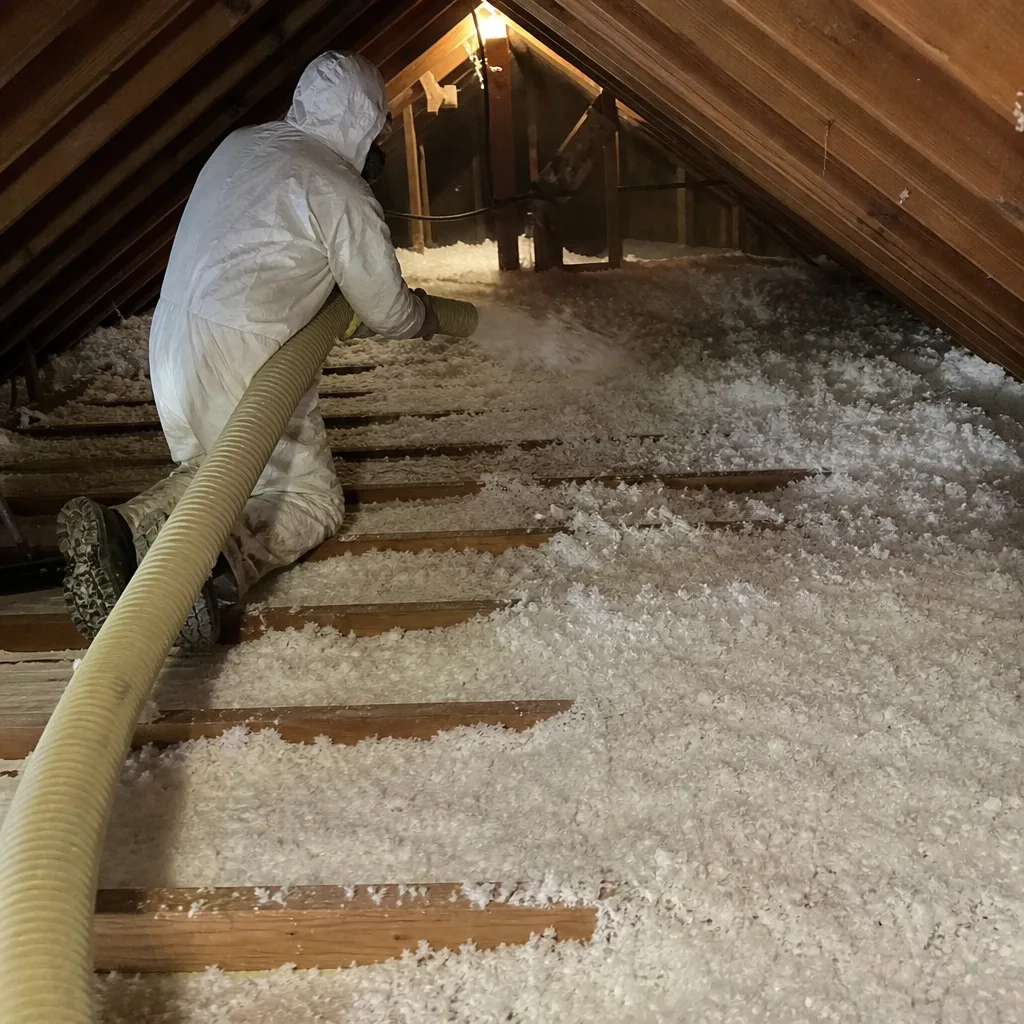
- Uneven temperatures room-to-room. Knauf Jet Stream can shift over years of attic traffic and ductwork vibration, creating thin spots near the attic hatch and piles against the far eaves. The underlying cause is gravity and disturbance, not product defect - but the result is the same: your master bedroom reads 6°F warmer than the hallway below.
- Insulation sitting below the joist tops. EcoBatt batts settle 10 to 15 percent over the first five years, which is normal. What isn’t normal is finding them compressed to 4 inches where they started at 12. That usually means someone walked the attic repeatedly, or stored boxes directly on the batts, crushing the air pockets that do the actual insulating.
- Discoloration or dark streaks on the facing. Brown or gray streaks on Kraft-faced EcoBatt indicate air leakage - conditioned air carrying dust and humidity is moving through the batt from below. The insulation isn’t the problem; the bypass at the top plate or can light is. Blowing new insulation over this without sealing the leak first is like replacing a wet carpet without fixing the pipe.
- Visible moisture or mold on the rafter bays. Yorba Linda’s July attic temperatures hit 140°F regularly, especially in the hillside homes off Bastanchury Road where roof pitch and sun exposure compound the heat. If your Knauf insulation is wet, the vapor drive is wrong - either a bathroom fan dumping into the attic or inadequate ventilation at the ridge. Fiberglass doesn’t rot, but it becomes a sponge.
- Energy bills climbing year-over-year with no rate change. We see this in the Savi Ranch corridor homes built 1985-1999: original R-19 or R-22 Knauf batts, still in place, still labeled correctly, but thermally irrelevant against current code. R-value doesn’t degrade chemically in fiberglass, but real-world performance degrades when the house around it leaks more air than it did when new.
Replacement Cost & What’s Included
Most Knauf attic insulation replacements in Yorba Linda run $2,800 to $5,400 installed. The low end covers a straightforward Jet Stream top-off over existing insulation in a 1,200-square-foot attic with good access and no removal needed. The high end includes full EcoBatt removal, attic floor air sealing at all top plates and penetrations, and new R-38 Jet Stream blown to full depth in a 2,400-square-foot space with limited hatch access.
What drives the range: square footage, existing insulation condition, attic access type (scuttle, pull-down stairs, or exterior gable), and whether we need to install baffles at the eaves to protect vented soffits. Every quote includes the written scope, the written warranty, and the Documented Photo Record. On jobs where we’re air sealing, you’ll also get before-and-after blower-door numbers - the pressurization reading that shows, in one figure, how much conditioned air your home was losing before and after the work.
We don’t start without a written price. Haven Standard Clause 1.
DIY or Call Us?
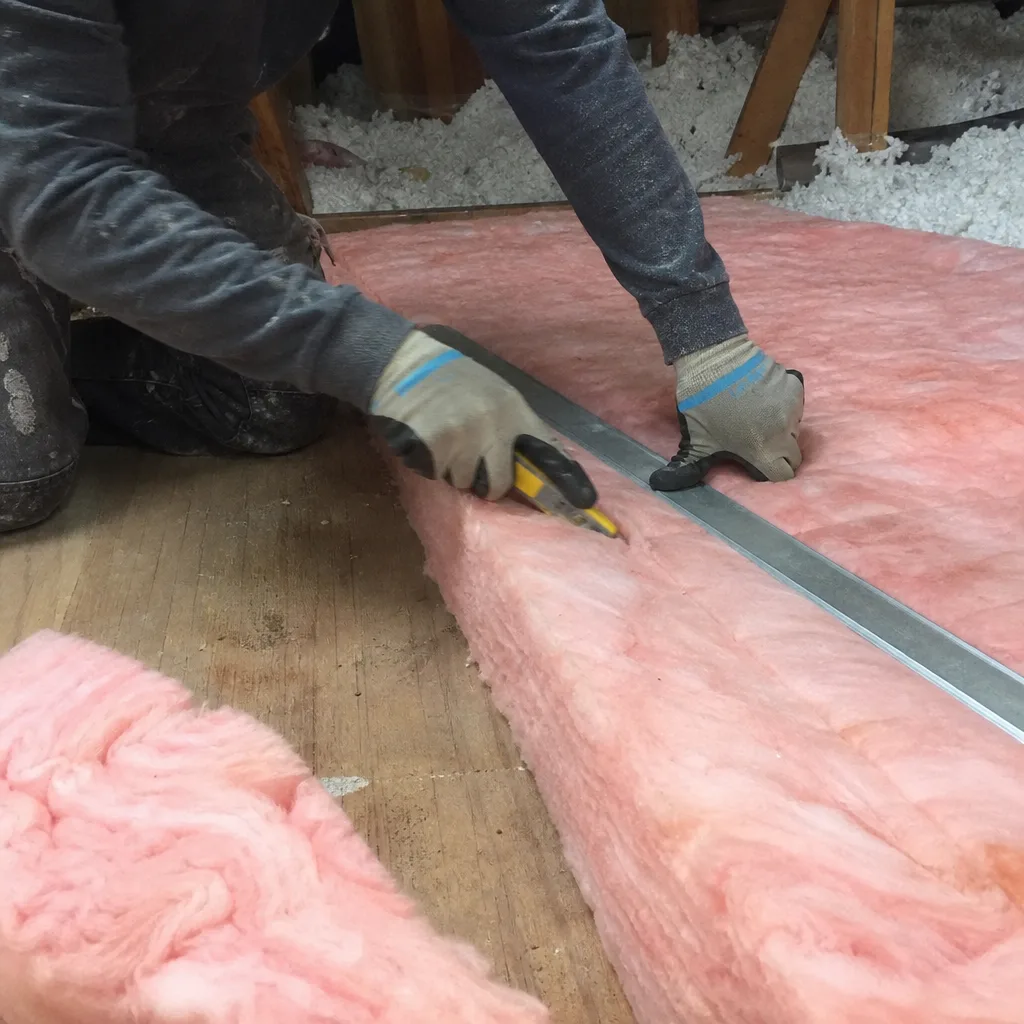
What you can safely check yourself: measure your attic square footage, note the joist spacing with a tape measure, and photograph any labels visible on existing batts. If you can access the attic hatch safely with a sturdy ladder, look for the symptoms above - but don’t walk the joists unless you know the load path. Falling through a ceiling is expensive and embarrassing.
Where DIY goes wrong: Knauf Jet Stream requires a blowing machine calibrated to the material density, and the operator needs to maintain consistent hose height to avoid compression. Too low and you lose R-value; too high and the material stratifies. More critically, most Yorba Linda attics need air sealing at the top plates - the horizontal framing member where interior walls meet the ceiling - before any new insulation goes in. Skipping this step and blowing Jet Stream over leaky plates is the most common mistake we correct. The insulation performs; the house still leaks.
We’re background-checked, uniformed, and we answer calls with a live person. Call (909) 323-1675 for a written price before any work starts.
FAQs
Knauf fiberglass insulation itself doesn’t chemically degrade; we’ve removed EcoBatt batts from 1980s Yorba Linda homes that still tested near their labeled R-value. The real lifespan question is whether the building envelope around it stays sealed. In our climate, with 140°F attic peaks and seasonal Santa Ana wind pressure, air sealing at the top plates typically needs attention every 15 to 20 years. Call (909) 323-1675 and we’ll assess whether your insulation or your sealing is the actual problem - estimates are free.
Localized damage - a section crushed by storage, a wet spot from a one-time roof leak - can be spot-repaired with matching Knauf product if the surrounding insulation is dry and uncompressed. Widesome settling, discoloration from chronic air leakage, or any moisture history means replacement. We won’t top off over compromised material; the new layer just inherits the old problems. Bring us a competing quote and we’ll give you a free second opinion.
Most Yorba Linda homes finish in one day: removal in the morning, air sealing and baffles through midday, Jet Stream blow or EcoBatt install in the afternoon. Large homes or those with multiple attic zones may need a second day. We don’t charge by the hour; the written price is the price.
We stock Knauf Jet Stream and common EcoBatt sizes at our warehouse, with same-day availability for standard R-30 and R-38 orders in Yorba Linda. Less common widths or specialty densities - the high-density R-21 EcoBatt for 2×6 walls, for instance - typically arrive next business day. We’ll confirm stock when you call so we’re not burning your time.
Written by Wes Okafor, Owner, Topside Attic Insulation Yorba Linda at Topside Attic Insulation Yorba Linda, serving Yorba Linda and nearby areas.