
Demilec Attic Insulation: The Yorba Linda Owner’s Guide
We stock and install Demilec-compatible open-cell and closed-cell spray foam insulation for Yorba Linda attics, with most residential jobs running between $2,800 and $5,400 installed depending on board feet and whether the existing material needs removal. Same-day assessment is available, and we carry Demilec Heatlok HFO Pro and Demilec Sealection 500 specifications on our trucks for matching existing installs. Most homeowners discover their Demilec insulation is compromised when they notice hot second-floor rooms in July despite the AC running nonstop, or when a roof leak reveals crumbling, water-saturated foam that has separated from the roof deck.
Which Demilec Models This Applies To
Demilec produces two primary lines relevant to Yorba Linda attics: Heatlok, a closed-cell medium-density foam rated at R-6 per inch, and Sealection, an open-cell low-density product at roughly R-3.6 per inch. The product label, usually found on a tag stapled to a rafter or printed on the foam itself, will show the series name, the install date, and the applicator’s certification number. If your attic was insulated between 2010 and 2018, you likely have Heatlok XT or Sealection 500; post-2018 installs in California increasingly shifted to Heatlok HFO Pro to meet updated VOC regulations.
The OEM-versus-aftermarket question matters less with spray foam than with mechanical parts, because Demilec is a manufacturer-applied system, not a homeowner-installed batt. What we match is the density, the R-value per inch, and the ignition barrier requirement - California Title 24 requires an intumescent coating or ignition barrier over exposed foam in habitable attics, and not every contractor applied this correctly during the original install. We also stock Reflectix radiant barrier for hybrid systems where the original installer combined foam with reflective sheeting.
Topside Attic Insulation Yorba Linda is an independent service provider with no affiliation to Demilec. We source material through authorized distributors and match specifications rather than branding.
Signs Your Demilec Attic Insulation Is Failing
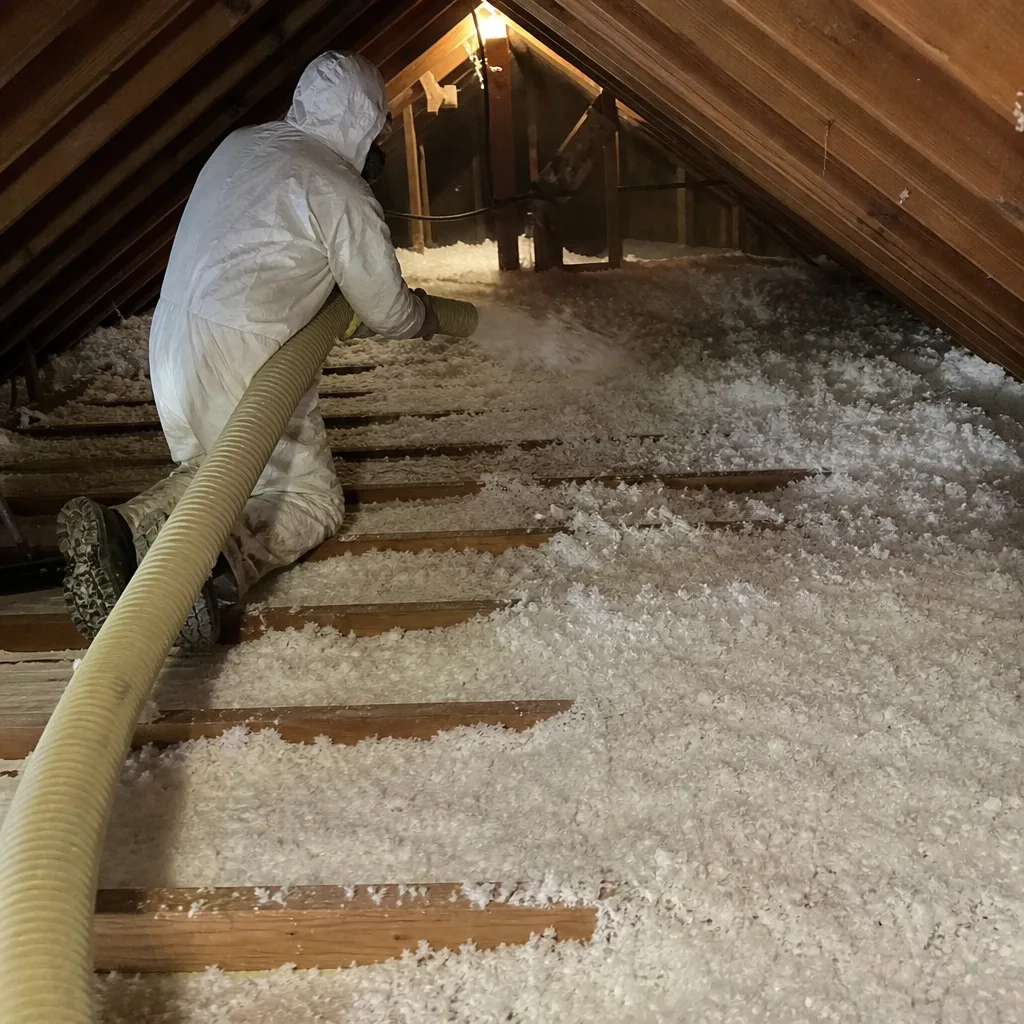
- Hot spots on the ceiling below the attic in summer. Open-cell Demilec can absorb moisture over time if the roof deck above it leaks, and once waterlogged, the foam’s R-value drops by 30 to 50 percent. In Yorba Linda, where Santa Ana winds drive dust and occasional rain into compromised roof flashing, this shows up first in the rooms facing northeast.
- Crumbly or powdery foam when touched. UV degradation attacks exposed Demilec foam that was never covered with an ignition barrier or thermal barrier. Attic hatches and knee-wall access doors are the usual failure points, because homeowners or prior contractors left the foam exposed to light and air circulation.
- Musty odor that intensifies when the HVAC runs. Closed-cell Heatlok is vapor-impermeable, but if the original installer skipped air sealing at the top plates - the horizontal framing members where interior walls meet the ceiling - humid attic air still migrates into conditioned space. The foam itself isn’t failing; the building envelope is. We find this constantly in the older tract homes near Yorba Linda Boulevard and Kellogg Drive.
- Ice damming or condensation on roof nails in winter. This sounds counterintuitive in Orange County, but January mornings in the canyon neighborhoods off Santiago Canyon Road can drop into the high 30s. If Demilec foam was applied too thin at the eaves or missed the heel truss entirely, cold bridging occurs and condensation forms on metal fasteners.
- Visible gaps between foam and framing members. Spray foam shrinks as it cures; Demilec’s closed-cell products are formulated to minimize this, but poor substrate temperature during application or application during high humidity can cause separation. Gaps as narrow as a quarter inch become convection highways that nullify the insulation value.
Replacement Cost & What’s Included
For a typical Yorba Linda single-story home with 1,200 to 1,800 square feet of attic floor or roof deck, Demilec spray foam removal and replacement runs $2,800 to $5,400. The low end applies to partial remediation - spot removal of failed sections and reapplication with matching density foam. The high end covers full removal of degraded material, mechanical abrasion of the substrate, reapplication of two inches of closed-cell or five and a half inches of open-cell, plus the required ignition barrier coating.
What drives the range: accessibility (cathedral ceilings with no attic floor add labor), the condition of the existing foam (saturated material requires HEPA containment and bagged disposal), and whether we find unsealed top plates that should have been addressed in the original install. Every quote is a written price before any work starts, per Haven Standard Clause 1. The 365-Day Done Right Promise covers adhesion, coverage, and the published blower-door result.
DIY or Call Us?
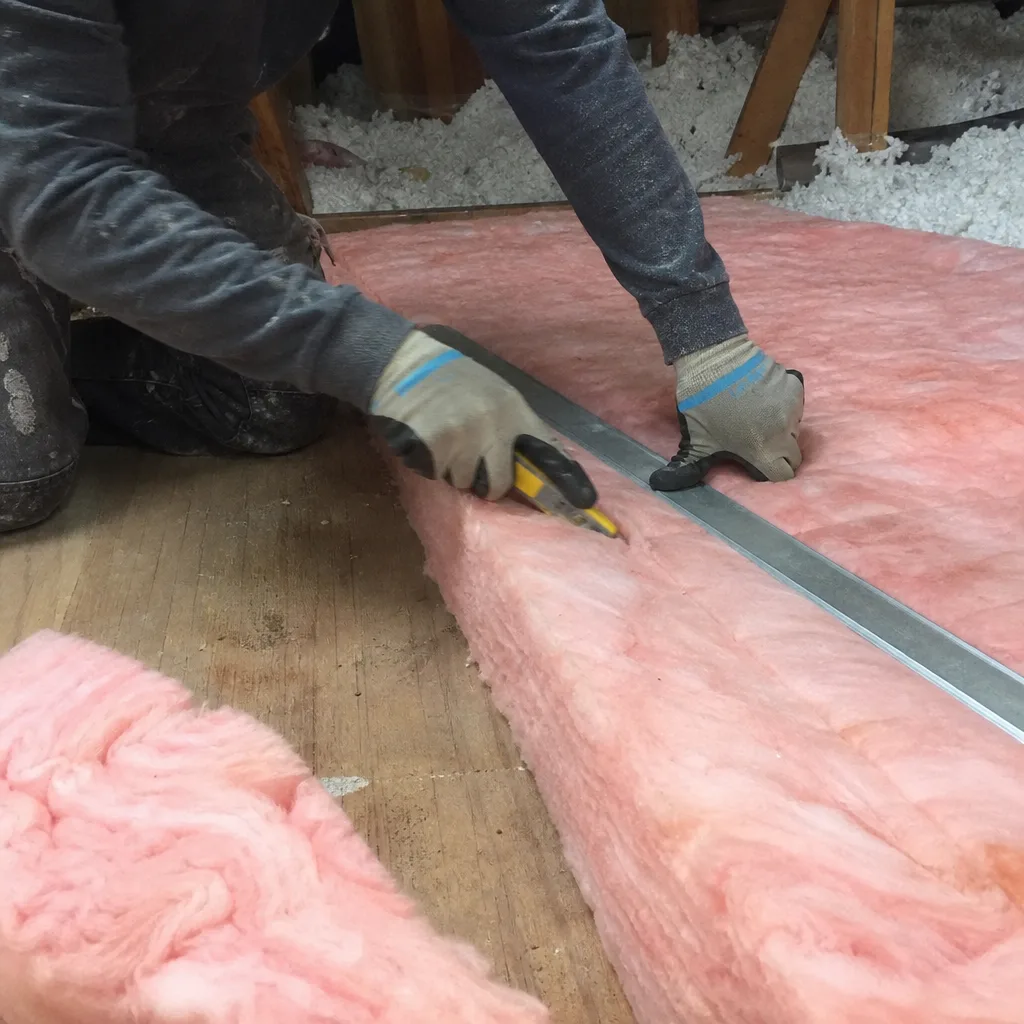
Here’s what you can safely check yourself: read the product label on your existing foam, photograph any visible gaps or crumbling sections from a stable attic floor or hatch, and note which rooms correlate with temperature problems. Do not attempt removal. Spray foam bonds aggressively to substrate; mechanical removal requires specialized abrasive equipment and respiratory protection against isocyanate dust. The confined attic space in most Yorba Linda homes built 1975 to 2005 - typically truss-framed with 24-inch centers and limited headroom - makes this genuinely hazardous work even for experienced DIYers.
We also do not recommend applying new foam over failed old foam. The substrate must be clean, dry, and sound for proper adhesion, and the only way to verify that is visual inspection after removal. Call (909) 323-1675 and we’ll read your situation with you, including any competing quote you’ve received. Free second opinion, no obligation.
FAQs
Properly applied and protected Demilec spray foam should perform for 25 to 30 years, but Yorba Linda’s combination of intense attic heat - we regularly measure 140°F plus in July - and occasional roof leaks from Santa Ana wind damage can cut that to 10 to 15 years if the ignition barrier was skipped or the roof deck was never properly flashed. Call (909) 323-1675 for an assessment of your specific installation.
Small, isolated areas of separated or degraded foam can be trimmed back and refoamed if the substrate is sound and the surrounding material tests dry, but water-saturated or UV-degraded foam must be fully removed because the chemical structure has already broken down. We document the extent with photos before recommending either approach.
Most residential attic jobs in Yorba Linda require one day for removal and surface prep, plus a second day for foam application and curing, with the ignition barrier applied on day three if required by your specific assembly. We provide a written schedule with the price before work starts.
We carry specification samples, density-matching foam from multiple manufacturers including Demilec-compatible formulations, and the ignition barrier coatings required by California code, but the actual foam is mixed on-site from two-part resin components - it cannot be “stocked” as a preformed part. We can assess, match, and install same-week in most of Yorba Linda.
Seal the leaks first. Then insulate. The numbers will tell you whether it worked.
Ready to get the exact condition of your Demilec attic insulation in writing? Call (909) 323-1675 for a free estimate with upfront pricing, a documented photo record, and before-and-after blower-door numbers you can verify yourself.
Written by Wes Okafor, Owner, Topside Attic Insulation Yorba Linda at Topside Attic Insulation Yorba Linda, serving Yorba Linda and nearby areas.