
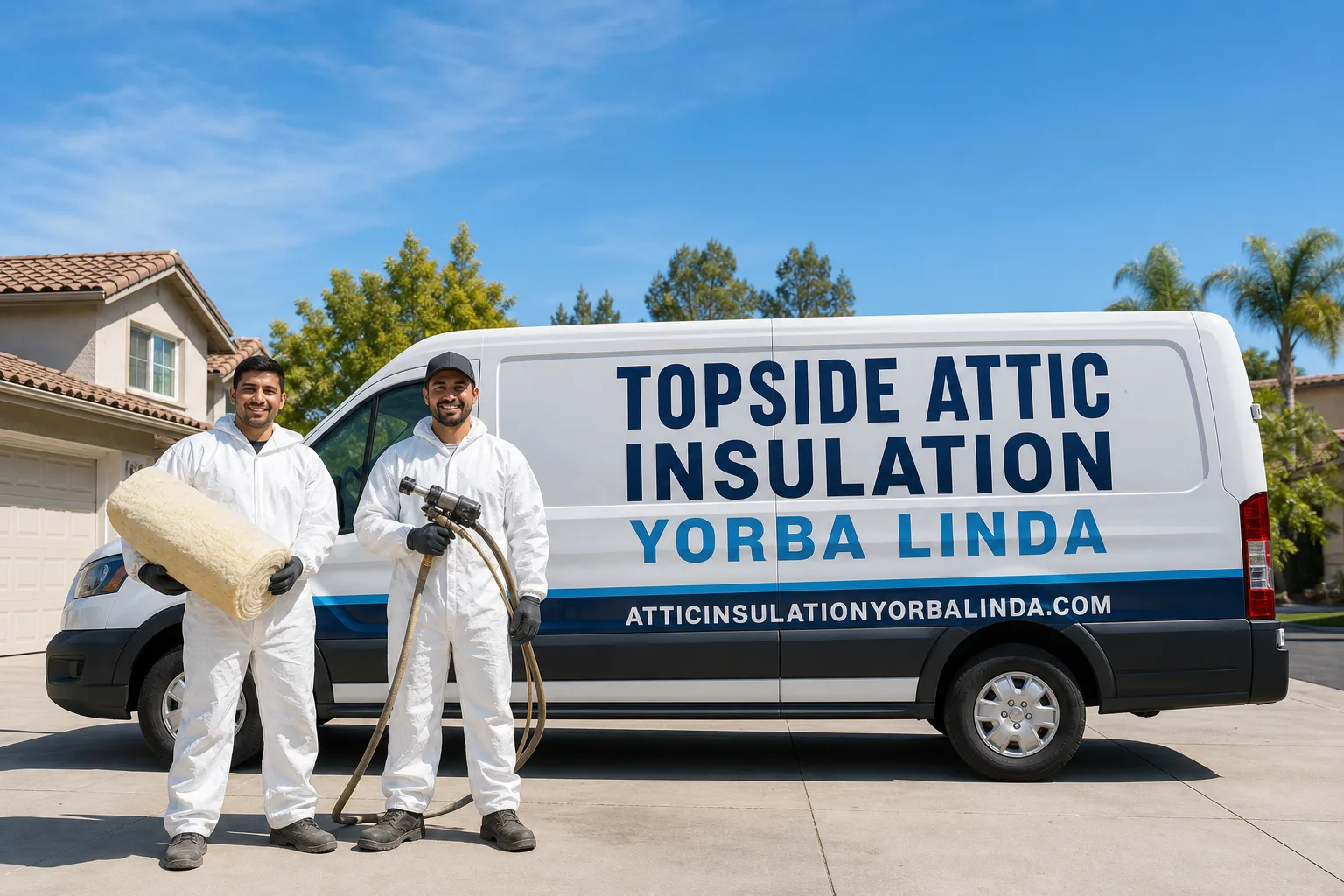
How Much Does Blown-In Insulation Cost in Yorba Linda?
Blown-In Insulation services in Yorba Linda typically cost between $1,800 and $4,200 for a standard attic, with most single-story homes in the 1,800-2,400 sq ft range landing around $2,200-$3,100 when the attic floor is air-sealed before insulation is added. That air-sealing step - top plates, can lights, and penetrations sealed before a single bag of cellulose or fiberglass goes in - is not an upsell here; it is the job, and it is priced into the written scope you receive before any work starts.
Blown-In Insulation Cost Breakdown (2026)
Blown-in insulation in Yorba Linda, CA costs between $0.85 and $2.10 per square foot of attic floor, depending on material, current R-value, depth target, and whether air sealing is included. The table below reflects what Envelope Insulation Co. and comparable contractors are charging in the Yorba Linda market in 2026.
| Scope of Work | Typical Price Range (Yorba Linda, 2026) |
|---|---|
| Blown-in cellulose, attic top-up only (no air sealing), ~1,500 sq ft attic | $900 - $1,400 |
| Blown-in fiberglass, attic top-up only (no air sealing), ~1,500 sq ft attic | $950 - $1,500 |
| Air sealing + blown-in cellulose, ~1,500 sq ft attic (R-38 target) | $1,600 - $2,400 |
| Air sealing + blown-in cellulose, ~2,000 sq ft attic (R-38 target) | $2,000 - $3,100 |
| Air sealing + blown-in cellulose, ~2,500 sq ft attic (R-38 target) | $2,400 - $3,700 |
| Air sealing + blown-in cellulose, ~3,000 sq ft attic (R-49 target) | $3,100 - $4,500 |
| Full removal of degraded insulation + air sealing + re-blow, ~2,000 sq ft | $3,200 - $5,200 |
| Blown-in wall insulation (dense-pack), per room addition or retrofit | $600 - $1,400 per wall cavity section |
A few things worth understanding about those ranges. Yorba Linda sits at roughly 400-1,100 ft elevation across its hillside neighborhoods, and attic temperatures here regularly hit 145-155°F in July and August. That heat load means the California Energy Code minimum of R-30 for Climate Zone 10 (which covers much of Yorba Linda) is, in practice, a floor that most energy-conscious homeowners step above. We typically recommend R-38 for single-story homes and R-49 for homes with tile roofs that trap radiant heat on the sheathing. Moving from R-30 to R-49 adds material cost but the depth difference is roughly three inches of cellulose – not a dramatic jump in price, and it shows up clearly on the blower-door test afterward.
The other number that moves the final price is your starting point. A 1990s Yorba Linda home in East Lake or Fairmont Village that still has the original 3.5 inches of builder-grade fiberglass batt (approximately R-11) needs substantially more material than a 2005 build in Vista del Verde that was put in at R-19 and just needs a top-up. We measure existing depth during the assessment so the written price reflects what is actually there, not a square-footage assumption.
Key Takeaways
- Most Yorba Linda attics in the 1,800-2,400 sq ft range cost $2,000-$3,100 for air sealing plus blown-in insulation.
- Air sealing adds $400-$900 to the project but meaningfully changes the blower-door result – we publish those before-and-after numbers on every applicable job.
- Blown-in cellulose and fiberglass carry similar price tags; the choice between them affects moisture behavior, not primarily cost.
- Insulation removal before re-blowing is a significant line item – budget $800-$1,500 for removal alone on a 2,000 sq ft attic floor.
- Every price is written before work starts. That is not a marketing line; it is Haven Standard Clause 1.
What Affects Blown-In Insulation Pricing in Yorba Linda
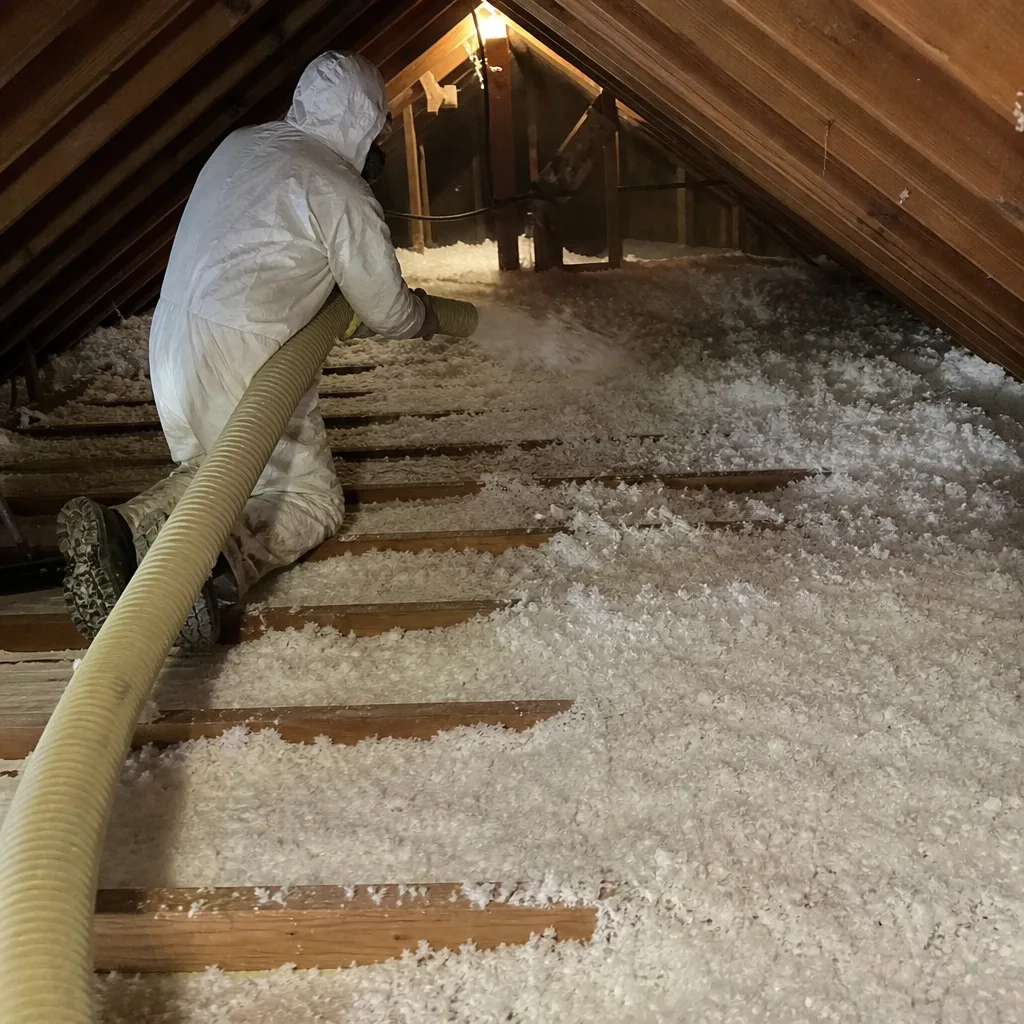
Six variables move the number more than anything else. Understanding them lets you read a competing quote intelligently – or bring it to us for a free second opinion.
- Attic square footage and configuration. A simple open-span attic in a single-story ranch on Fairmont Boulevard prices differently than a multi-level home in the Lomas de Yorba or Rancho Esperanza neighborhoods where framed knee walls, dropped soffits, and multiple attic planes create access challenges. Complex geometry adds crew time, which adds cost. Expect to pay 15-25% more per square foot on a segmented attic compared to a single open plane.
- Current R-value and material already in place. Builder-grade batts from the 1980s and 1990s compress over time and lose R-value. Many homes we assess in the Bryant Ranch and Yorba Linda Country Club areas still have original 3.5-inch batts. If that material is in good condition, blowing over it costs less than a full removal and re-blow. If it is rodent-contaminated or moisture-damaged – which we see in homes near the creek corridors along the Carbon Canyon Road foothills – removal is required before anything goes in.
- Air sealing scope. The number of penetrations in an attic floor – can lights, top-plate gaps, HVAC boots, plumbing stacks – varies a lot by era and builder. Homes built before 1990 in older Yorba Linda neighborhoods often have 60-100+ unsealed penetrations. Homes from the mid-2000s in planned communities like Vista del Verde may have 20-40. Each penetration gets sealed with two-part foam or fire-rated caulk before insulation goes on. More penetrations means more labor, which means a higher quote.
- Material choice: cellulose vs. fiberglass vs. mineral wool. Blown-in cellulose (GreenFiber, for example) and fiberglass (Johns Manville, Owens Corning) are priced within $0.05-$0.15 per sq ft of each other at current material costs. Mineral wool (Rockwool) costs more – typically $0.25-$0.50 per sq ft above cellulose – and is less common in attic blow applications, but it comes up in wall retrofits and specific fire-rating situations.
- Attic access and safety conditions. Some Yorba Linda homes, particularly custom builds on hillside lots in the Kerrigan Ranch area, have attic access hatches positioned directly over stairwells or in closets that require more setup time to protect finishes. Low-pitch roofs with less than 18 inches of clearance at the eaves also add time. These are not surprises on a Haven Standard job – they are noted in the written scope before work starts.
- Removal and disposal. If the existing insulation is contaminated with rodent droppings – a genuine finding in homes near the Santiago Hills open space – it must be HEPA-vacuumed out before re-blowing. This is a separate line item: typically $0.35-$0.65 per sq ft for removal, plus a disposal fee. Some contractors bury this cost in a vague total. We line-item it.
Yorba Linda Climate and Why It Changes the Calculation
Yorba Linda’s Climate Zone 10 classification from California Energy Commission puts it in a category characterized by hot, dry summers and mild winters with occasional cold nights. The practical implication for insulation: the thermal performance loss you suffer from a poorly insulated attic shows up almost entirely in your cooling bill, not your heating bill. SCE (Southern California Edison) territory covers most of Yorba Linda, and summer peak rates on a time-of-use plan can reach $0.55-$0.65 per kWh in the late afternoon hours when attic temps are at their worst.
We have run blower-door tests – a pressurization measurement that shows, in one number, how much air the building envelope is losing – on homes in Yorba Linda that read 4,800 CFM50 before sealing and dropped below 2,400 CFM50 after the attic floor was sealed and re-insulated to R-38. That is a 50% reduction in air leakage. You can feel it the first summer. You can also see it on the energy bill. But the number that matters most is the blower-door reading, because it does not lie – and we publish it.
The Chino Hills fault runs through the eastern edge of Yorba Linda, and while seismic activity does not directly affect insulation performance, it does affect attic geometry over time. We have seen older homes in the eastern neighborhoods where decades of minor settling have opened top-plate gaps wide enough to pass a thumb through. These are exactly the gaps that a blown-in-only approach leaves unsealed. Sealing first, then blowing, closes those gaps regardless of when they opened.
Cellulose vs. Fiberglass: Which Is Better for Yorba Linda Attics?
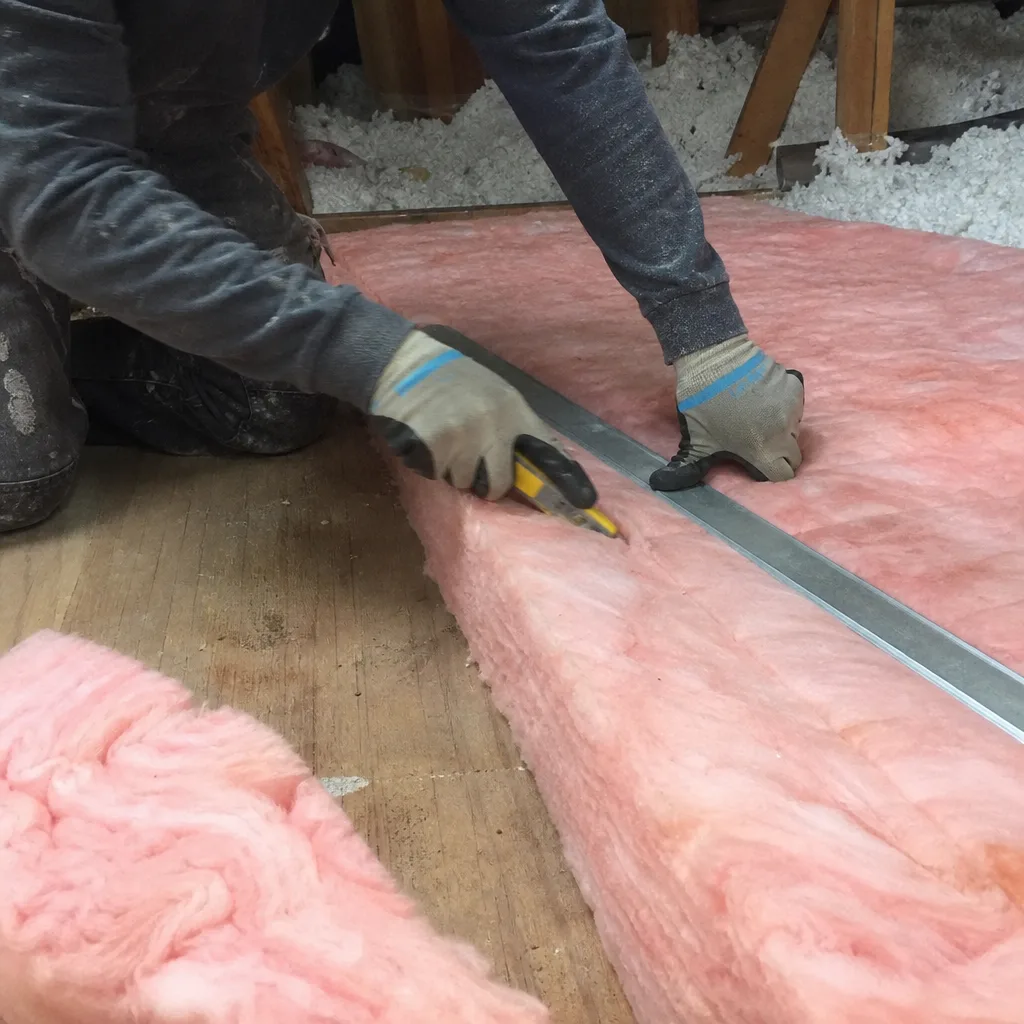
Both blown-in cellulose and blown-in fiberglass perform well in Yorba Linda’s dry climate. The honest answer is that neither is dramatically superior to the other here, but there are real differences worth understanding before you sign a scope.
Blown-in cellulose (we source from GreenFiber and similar producers) is made from recycled paper treated with boric acid for fire and pest resistance. It settles roughly 15-20% over time, which is why installers blow it to a higher initial depth. In Yorba Linda’s low-humidity environment, moisture is rarely a concern with cellulose – but if you have had a roof leak, cellulose can hold moisture against sheathing longer than fiberglass, so the leak history matters.
Blown-in fiberglass (Owens Corning, Johns Manville) does not settle as much and is naturally inorganic, so it handles the occasional attic humidity spike from a failed HVAC condensate line with less risk. In practice, the price difference between the two is minor, and the choice often comes down to personal preference or specific conditions in the attic.
What matters more than the material choice is the air sealing underneath it. An attic with 16 inches of blown-in cellulose over an unsealed floor is still pumping conditioned air into the attic through every gap and penetration. An attic with 12 inches of blown-in fiberglass over a properly sealed floor outperforms it. That is the core of why we treat air sealing as a prerequisite – not an option.
For more on the full service and what the process looks like in Yorba Linda, the Blown-In Insulation in Yorba Linda service page walks through the scope step by step.
How to Save on Blown-In Insulation in Yorba Linda
There are legitimate ways to reduce the final price. There are also ways to reduce the price that cost you more in the long run. Here is the honest version of both.
- Get a free second opinion on any written estimate. If a contractor hands you a quote that you are not sure about, bring it to us. Under the Haven Standard, we offer a free second opinion on any written estimate. We will read it with you, line by line, and tell you what is there and what is not. That is not a sales tactic – it is how a market with transparent pricing works.
- Apply for available utility rebates before the project starts. SCE and SoCalGas both offer rebate programs for qualifying insulation upgrades in Climate Zone 10. The amounts change annually, but in 2025 the SCE residential insulation rebate was up to $250 for attic insulation meeting specific R-value thresholds. Your contractor should know the current program details and be able to flag whether your project qualifies – ask before you sign anything.
- Claim the federal 25C energy efficiency tax credit. The Inflation Reduction Act’s Section 25C credit covers 30% of insulation and air-sealing costs up to a $1,200 annual cap for qualifying improvements. On a $2,500 project, that is $750 back at tax time. Keep the written scope and material documentation – your tax preparer will need them. Envelope Insulation Co. provides a Documented Photo Record on every job, which is useful supporting documentation.
- Combine projects when the crew is already on site. If you are having the attic air-sealed and re-blown, adding a radiant barrier installation or attic cleaning to the same visit costs less than scheduling it separately. Setup, access, and crew mobilization are the expensive parts of any attic job – using that time efficiently reduces the per-project overhead.
- Do not skip air sealing to lower the quote. This is the savings move that costs money. A top-up job without air sealing on a leaky attic floor reduces energy loss by maybe 20-30% of what a sealed-and-blown job achieves. You will pay the price difference in cooling bills over the next five summers. The math works out clearly, and we are happy to show it.
- Ask for the written price before anyone comes out. Under Haven Standard Clause 1, you get a written price before any work starts – no exceptions. Knowing the price in advance lets you compare it clearly against other written quotes, apply rebates accurately, and plan the project on your schedule rather than under pressure.
For a free written estimate on your Yorba Linda home, call (909) 323-1675. We will measure the attic, assess existing conditions, note current depth and R-value, and provide a flat written price with a line-itemized scope. No vague totals.
What the Job Looks Like, Start to Finish
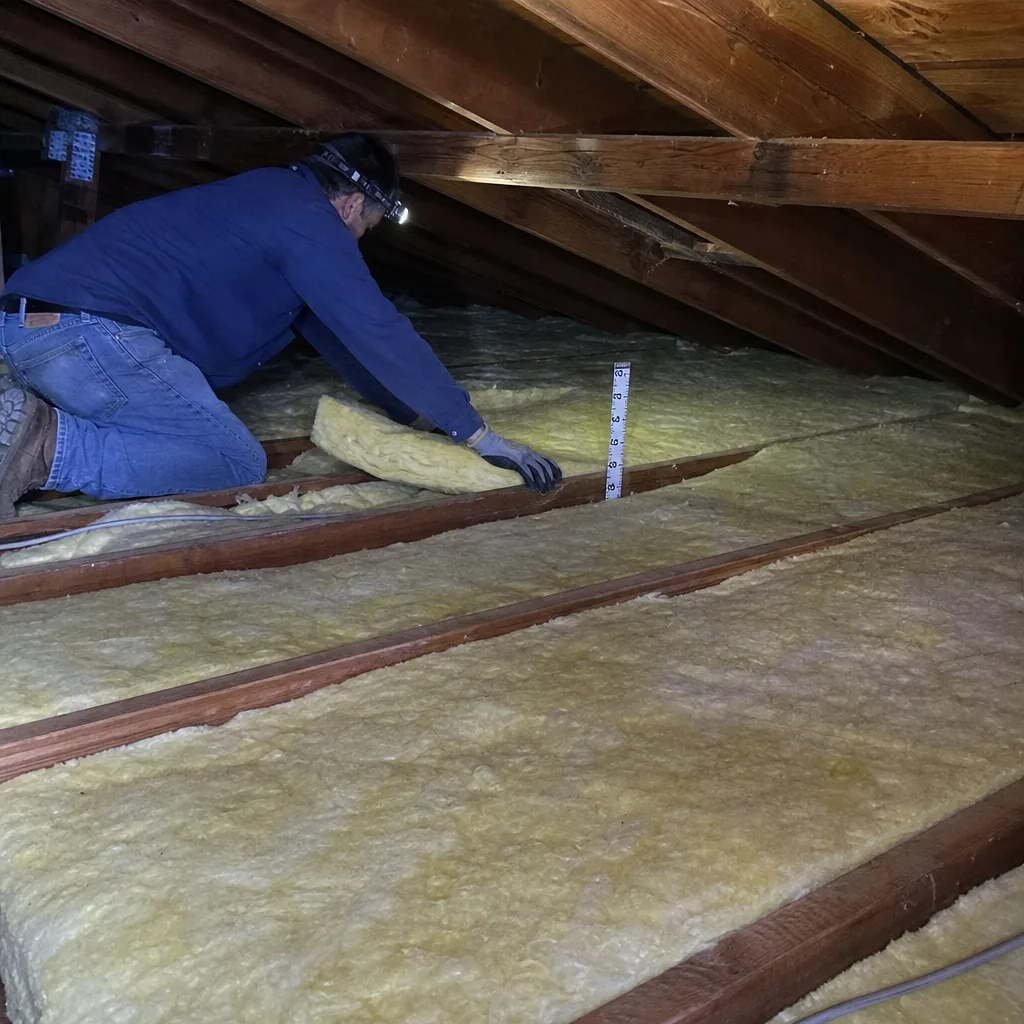
This is what you should expect from a properly scoped blown-in insulation job in Yorba Linda. If a contractor’s process looks significantly different, ask why.
Assessment: A technician accesses the attic and measures existing insulation depth at multiple points (not just one corner), documents current material type and condition, counts and photographs unsealed penetrations, and checks for moisture damage, rodent activity, or HVAC duct issues that would affect the project scope. At Envelope Insulation Co., this visit closes with a written price – not a vague estimate.
Air sealing: Before any insulation is moved or blown, every top-plate gap, can light, plumbing stack, HVAC boot, and wiring penetration in the attic floor is sealed – two-part foam for larger gaps, fire-rated caulk for smaller ones. This step is documented with photos. On applicable jobs, a blower-door test – a pressurization reading that shows, in one figure, how much air the building envelope is losing – is run before sealing so the after number has something to compare against.
Blown-in installation: Insulation is blown to the depth specified in the written scope, checked with depth markers at multiple grid points, and photographed at completion. The crew cleans the attic access area before leaving.
Documentation: You receive a Documented Photo Record of the completed work, the blower-door before-and-after readings (on applicable jobs), and the written warranty. The 365-Day Done Right Promise applies: if it is not right, we make it right.
From the home page you can review the full service line, including crawl space encapsulation, spray foam, and energy audit options that sometimes pair with an attic insulation project.
Blown-In Insulation vs. Batt Insulation in Yorba Linda Attics
Homeowners sometimes ask whether blown-in is worth it compared to fiberglass batts, which some contractors will quote at a lower price point. The short answer: in an existing attic with framing, wiring, and HVAC equipment already in place, blown-in consistently outperforms batts for one reason – it fills the voids. Batts cut around joists and obstructions leave gaps. Blown-in material fills those gaps by definition. In Yorba Linda attics where HVAC runs and junction boxes are already in place, batts rarely achieve their rated R-value in practice. Blown-in cellulose or fiberglass gets much closer to the theoretical number because it conforms to every irregular surface.
The price gap between batts and blown-in has also narrowed considerably. At current material prices, blown-in typically runs $0.10-$0.20 per sq ft more than batts for comparable R-value – a difference of $200-$400 on a 2,000 sq ft attic. The performance difference over five summer cooling seasons is measurably larger than that. It is not a close call for most Yorba Linda homes.
Common Yorba Linda Attic Findings (and What They Mean for Price)
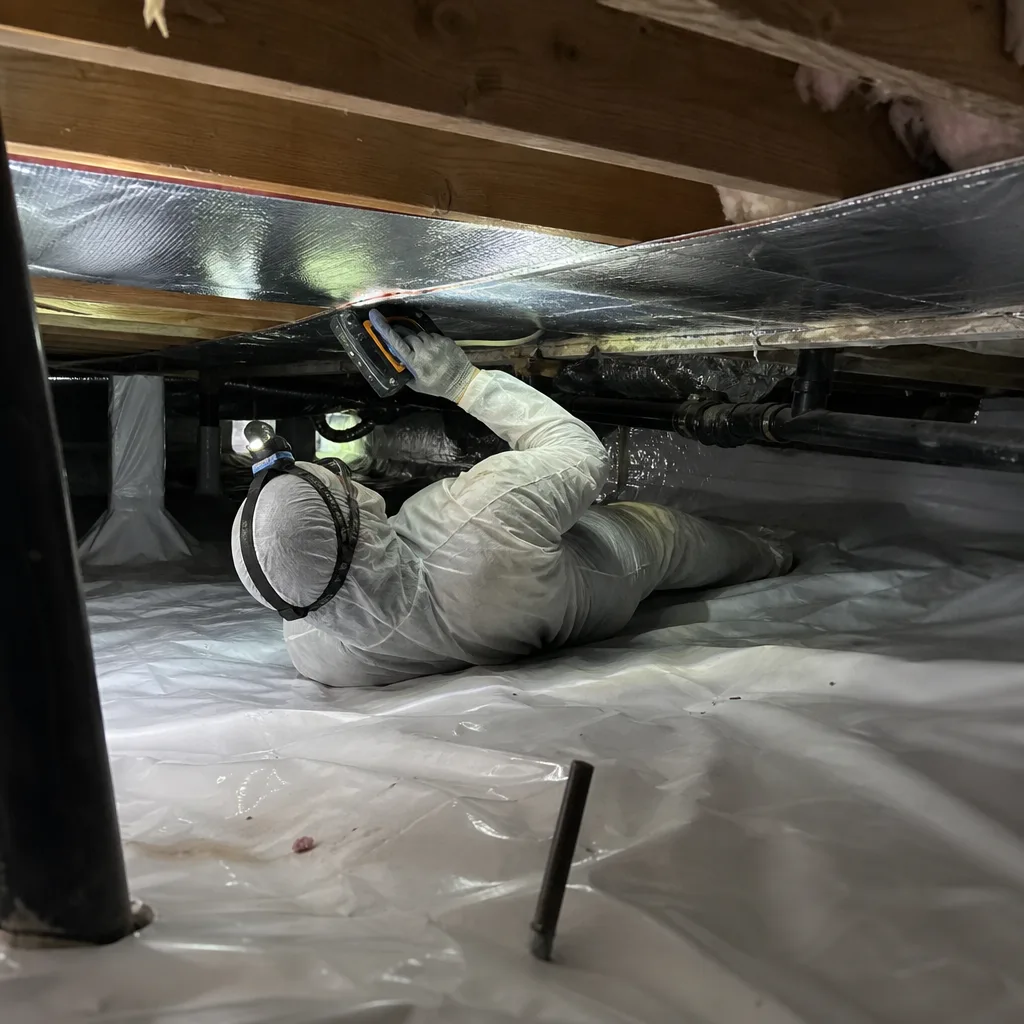
After working in Yorba Linda since 2016 and completing work across East Lake, Fairmont Village, Vista del Verde, Bryant Ranch, Kerrigan Ranch, and the hillside neighborhoods along the Carbon Canyon corridor, we see certain patterns in the attic assessments we run. These are not hypotheticals – they are what we find on a regular basis.
- Builder-grade fiberglass batts from the 1980s: Common in older homes near the original downtown Yorba Linda core. These batts are compressed to R-7 or R-8 in practice, even if they were R-11 or R-13 when installed. Most of these attics have 40-80 unsealed penetrations. A full air-seal and re-blow is almost always the right call – and the price reflects a full scope, not a top-up.
- Rodent activity near open-space corridors: Homes backing the Chino Hills State Park or the Santiago Oaks Regional Park perimeter frequently show rodent evidence in attic insulation. If the material is contaminated, it has to come out. We HEPA-vacuum, treat, and re-seal before any new insulation goes in. This is a line item, not a hidden fee.
- Buried can lights with no covers: Recessed lighting installed before 2005 is often the single biggest air-leakage point in the attic floor. We see homes in Yorba Linda with 30+ un-capped recessed cans that together represent a 2-square-foot hole between conditioned space and the attic. Capping and sealing these before blowing is not optional if the air-sealing step is going to mean anything.
- Compressed insulation from HVAC foot traffic: HVAC contractors and roofers walk on attic insulation. In Yorba Linda homes where the HVAC system was replaced in the last ten years, it is common to find a path of compressed insulation between the access hatch and the air handler. Those spots are at R-5 or less. They need to be topped up specifically, not just part of a general average-depth calculation.
FAQs: Blown-In Insulation Cost in Yorba Linda
How much does blown-in insulation cost for a typical Yorba Linda home?
A typical 2,000 sq ft single-story home in Yorba Linda costs between $2,000 and $3,100 for a full air-sealing and blown-in insulation project targeting R-38. Homes that need removal of old, contaminated insulation first can run $3,500-$5,000 for the same footprint. A top-up only (no air sealing, existing material in good condition) on the same size attic runs $1,200-$1,800. Call (909) 323-1675 for a flat written price on your specific home – we measure before we quote.
Is it cheaper to repair or replace existing blown-in insulation in Yorba Linda?
If the existing material is in good condition (no contamination, no moisture damage, no odor), topping it up costs $0.45-$0.75 per sq ft less than a full removal and re-blow. If the material is rodent-contaminated or moisture-damaged, replacement is not optional – and blowing over contaminated insulation is not something we will do. The assessment determines which path applies to your attic, and the written scope makes it clear before any work starts.
Does air sealing cost extra, and is it worth it in Yorba Linda?
Air sealing adds $400-$900 to the project price depending on attic size and number of penetrations. In Yorba Linda’s Climate Zone 10, where summer cooling is the dominant energy cost, air sealing consistently delivers the clearest return. We run a blower-door test – a pressurization reading that shows, in one figure, how much air the building envelope is leaking – before and after on applicable jobs. On homes we have sealed in the East Lake and Vista del Verde neighborhoods, it is common to see a 40-55% reduction in measured air leakage. Blown-in insulation over an unsealed attic floor does not approach those results.
Can I get a utility rebate on blown-in insulation in Yorba Linda?
Yes. SCE customers in Yorba Linda may qualify for rebates on insulation upgrades meeting Climate Zone 10 R-value minimums – amounts in 2025 ran up to $250 for qualifying attic insulation. The federal Section 25C tax credit covers 30% of qualifying insulation and air-sealing costs up to a $1,200 annual cap. Both programs require documentation of the installed material and R-value – the Documented Photo Record and written scope we provide on every job covers this. Ask about current program availability when you call for your estimate.
How long does a blown-in insulation job take in Yorba Linda?
Most attic air-sealing and blown-in insulation jobs in Yorba Linda take 4-8 hours for a crew, depending on attic size and penetration count. A top-up only, with no air sealing required, typically runs 2-4 hours. Removal jobs add time – a full HEPA vacuum-out of a 2,000 sq ft attic floor adds 3-5 hours before the re-blow begins. The written scope you receive before work starts includes an estimated time frame for the crew’s access window.
Who is responsible for the work at Envelope Insulation Co.?
Wes Okafor leads Envelope Insulation Co., which has operated independently under the Haven Standard since 2016. Wes built the company’s documentation-first model – written price before work, blower-door readings published, photo record on every visit – around the principle that a homeowner should be able to verify what they paid for. That is still the operating standard on every job, including in Yorba Linda.
Why the Order of Operations Matters
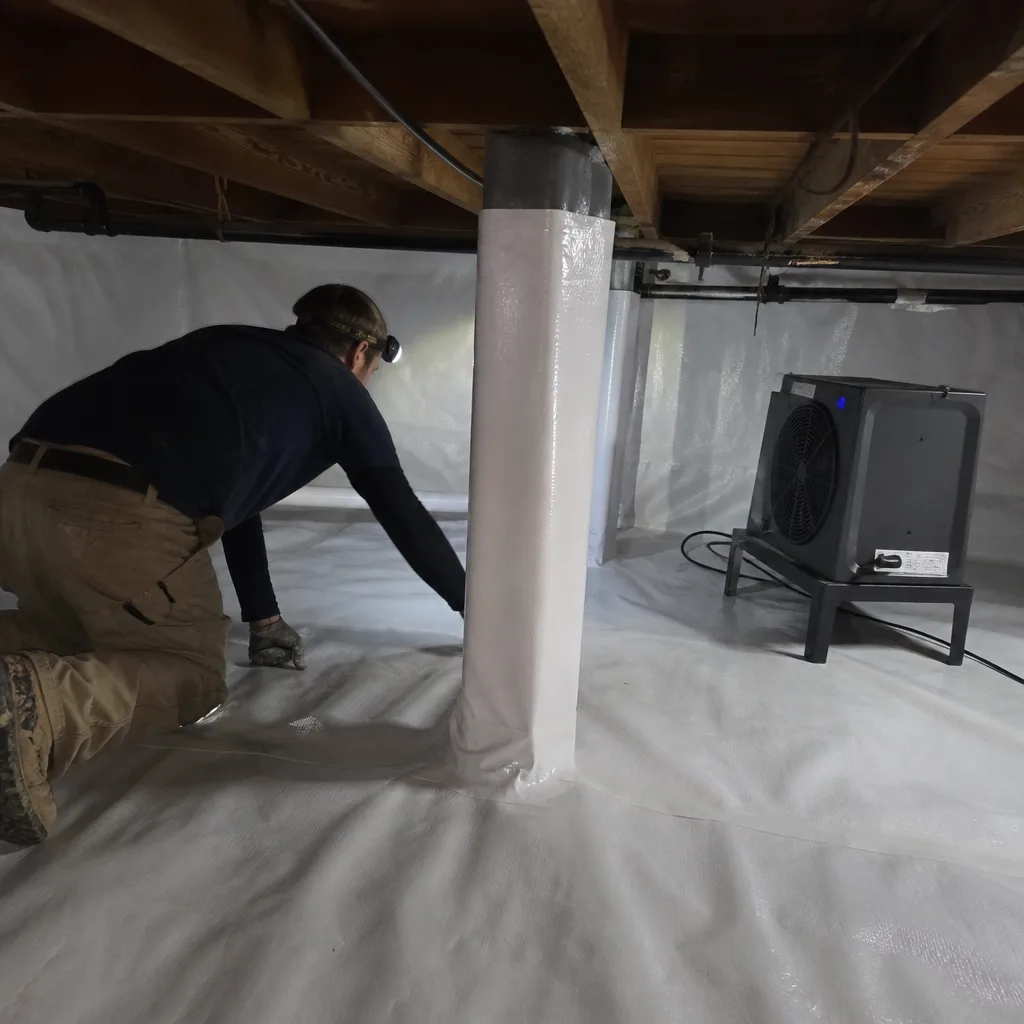
The most common mistake in attic insulation is blowing material over an unsealed floor. It is faster. It costs the contractor less. And it leaves the homeowner with an attic that looks like it was insulated but still loses conditioned air through every gap beneath the new material.
Envelope Insulation Co. will not do it that way. Every job begins with air sealing – top plates, can lights, HVAC boots, plumbing stacks, wiring penetrations – completed and documented before insulation is added. This is not a sales position. It is what a blower-door test proves, every time, in a single number: air leakage before sealing versus air leakage after. We publish both numbers on applicable jobs because there is no cleaner way to show what the work actually accomplished.
If you have a written quote from another contractor that does not include air sealing as a named line item, bring it to us. The free second opinion under the Haven Standard is a real offer. We will read the scope with you and tell you what is there – and what is not.
Get a Written Price for Your Yorba Linda Home
If you are trying to budget a blown-in insulation project in Yorba Linda, the number you need is the one specific to your attic’s square footage, current insulation depth, and penetration count. A technician who has seen the attic can give you a flat, line-itemized written price – not a range with conditions buried in the fine print.
Wes Okafor and the team at Envelope Insulation Co. have been running these assessments and providing written prices across Yorba Linda since 2016. The process is straightforward: we measure, we assess, we write the price, and we do not start until you have it in hand. The 365-Day Done Right Promise backs the completed work, and the Documented Photo Record closes every job.
To get a written estimate for blown-in insulation at your Yorba Linda home, call (909) 323-1675. A live person answers – no voicemail, no callback window measured in business days.
Written by Wes Okafor, Owner at Envelope Insulation Co. (operating as Topside Attic Insulation Yorba Linda), serving Yorba Linda, CA since 2016. Pricing reflects the Yorba Linda market as of 2026. For a free written estimate, call (909) 323-1675.
What Our Customers Say
"Crawl space encapsulation done properly. Photographs of the vapour barrier at every seam, and the damp smell in the hallway is gone."
- Ainsley P."The winter gas bill dropped by about a third. They had estimated a quarter, so they under-promised."
- Genevieve R."They photographed rodent damage in the old insulation that we had no idea about, and priced the exclusion work separately so we could decide."
- Harriet N.