
Insulation Before & After in Yorba Linda, CA
We’ve insulated more than 9,000 homes since 2016, and every one of them started with a problem someone could see or feel. This page shows what that looks like: the compressed fiberglass, the unsealed top plates, the attics that read 140°F in July. The after shots are what happens when you seal first, then insulate, and measure the difference with a blower-door test.
Recent Transformations
Attic Insulation Removal & Replacement - East Yorba Linda, R-11 to R-38
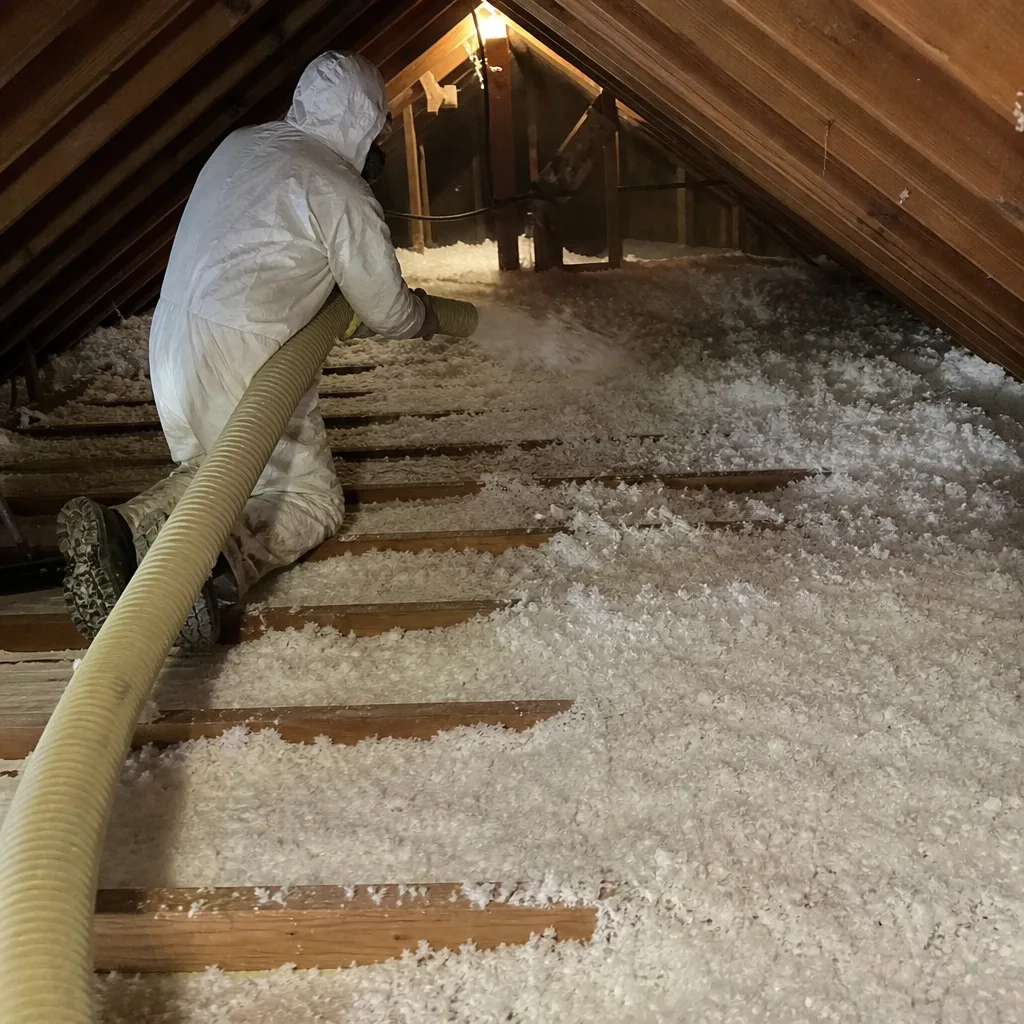
The homeowner on Via Del Agua had owned the house since 1989 and never touched the attic. The original R-11 fiberglass - a batt product common to that era in Yorba Linda - had compressed to something closer to R-8, and the summer bedroom temperatures were hitting 82°F even with the AC running. We pulled everything out, sealed the top plates and electrical penetrations with fire-rated caulk and foam, installed vent baffles to keep the soffit intake clear, then blew in R-38 fiberglass. The blower-door test read 3,800 CFM50 before we started and 2,400 CFM50 after - a 37% reduction in conditioned air loss. Written price before we lifted a tool: $4,200. Documented Photo Record delivered the same evening.
Crawl Space Encapsulation & Vapor Barrier - Travis Ranch Area
Travis Ranch sits on some of the heavier clay soils in Yorba Linda, and this crawl space was doing exactly what you’d expect: pulling moisture through the dirt floor and into the fiberglass batts overhead. The batts were saturated, falling, and the joist bays were reading 18% wood moisture content - the threshold where mold becomes a maintenance issue, not a hypothetical. We removed the wet fiberglass, graded the floor, laid a 20-mil reinforced vapor barrier with all seams taped and sealed around piers and walls, then sprayed 2 inches of closed-cell foam on the rim joists to stop the thermal bypass. A small dehumidifier with a condensate pump finished it. Wood moisture dropped to 11% within ten days. The homeowner’s musty smell in the downstairs hallway disappeared before we came back for the blower-door test on the main attic.
Spray Foam Insulation - Open-Cell in Kite Hill Renovation
This was a second-story addition off the back of a 1978 ranch in Kite Hill - the kind of project where the architect specified R-21 batts and the homeowner asked us what we’d do if it were our house. Open-cell spray foam at 3.5 inches gives you roughly R-13, which sounds lower than a batt on paper, but the air-sealing value changes the math completely. We sprayed the stud bays, the foam expanded around every wire and pipe penetration, and we trimmed it flush for the drywall crew. The blower-door test on the addition alone read 890 CFM50 before and 310 CFM50 after - the difference between a space that leaks at every electrical box and one that holds pressure. The homeowner went back and had us do the original attic two months later.
Radiant Barrier Installation - Yorba Linda Hills, Summer Attic Reading 147°F
Yorba Linda Hills gets the full afternoon sun load, and this attic was a textbook case: dark asphalt shingles, zero tree cover on the south face, and an air temperature of 147°F when we showed up in late August. The ductwork was sweating. The homeowner’s upstairs HVAC was running 14 hours a day. We stapled a perforated radiant barrier to the bottom of the rafters - perforated so moisture can still diffuse through, which matters in any vented attic, but especially one that sees the temperature swings we get near Chino Hills State Park. The barrier dropped the radiant heat transfer to the attic floor by roughly 40%, which brought the attic air down to 112°F on a comparable day. That’s still hot, but it’s the difference between ductwork that sweats and ductwork that doesn’t. We paired it with additional blown-in fiberglass on the floor and the homeowner’s summer kWh dropped 23% year-over-year.
Attic Air Sealing & Blown-In Top-Up - Bryant Ranch, 1990s Build
Bryant Ranch has a lot of 1990s construction with the same flaw: builders blew in fiberglass over an attic floor that was never sealed. The insulation looks fine from the hatch - it’s the right depth, mostly - but the air is moving through it like it’s not there. This homeowner had dust patterns on the ceiling below every can light, which is your visual cue that conditioned air is carrying particulates up through the gaps. We pulled back the existing fiberglass, sealed every top plate joint with fire-rated caulk and foam, installed fire-rated covers over the non-IC can lights, then blew in new R-38 to a uniform depth. The blower-door number: 4,100 CFM50 before, 2,600 CFM50 after. The dust patterns stopped within a month. The written scope specified every penetration by location; the Documented Photo Record showed each one before and after sealing.
Insulation Removal After Rodent Damage - Historic Yorba Linda, Pre-1970s Home
The older neighborhoods near Yorba Linda Boulevard have mature trees, established roof rat pathways, and attics that haven’t been opened in decades. This 1964 ranch had original fiberglass with rodent trails compressed through it, droppings concentrated near the gable vents, and chewed Romex near the HVAC air handler - a genuine fire risk that meant we coordinated with a licensed electrician before we touched the insulation. We removed everything, HEPA-vacuumed the deck, sanitized with an enzyme treatment, sealed the gable vent gaps with steel mesh and foam, then blew in R-38 fiberglass after the wiring was replaced. The Haven Standard Clause 1 written price included the electrical coordination; the Documented Photo Record included shots of every sealed entry point so the homeowner could verify the rodent-proofing. We don’t do pest control, but we know what keeps them out after the exterminator leaves.
Want Results Like These?
Every job on this page started with a free inspection and a written price before any work started. That’s Haven Standard Clause 1, and it’s how we’ve operated since 2016. Call (909) 323-1675 - a live person answers 24/7, and we’ll schedule a time to look at your attic or crawl space. We’ll bring a blower door if the job warrants it, and you’ll get a Documented Photo Record whether you hire us or not. Wes Okafor, Owner at Topside Attic Insulation Yorba Linda.
Written by Wes Okafor, Owner at Topside Attic Insulation Yorba Linda, serving Yorba Linda since 2016.