
GreenFiber Attic Insulation: The Yorba Linda Owner’s Guide
GreenFiber attic insulation installation in Yorba Linda typically runs $2.80-$4.20 per square foot for loose-fill cellulose, with most single-story homes in the 1,400-2,200 sq ft range falling between $3,900 and $6,800 for a complete attic top-off or replacement. We stock GreenFiber Low Dust and stabilized cellulose blends on every truck, and we can usually inspect, price, and begin work same-day if you call before noon. Most homeowners in Yorba Linda realize their GreenFiber insulation is underperforming when upstairs rooms won’t cool below 78°F even after sunset, or when they spot thin, compressed patches near the attic hatch where previous crews walked without fluffing the material back.
Which GreenFiber Models This Applies To
GreenFiber manufactures loose-fill cellulose insulation, not rigid board or batt, so “model” here refers to the product line and application type. The two you’ll encounter in Yorba Linda attics are Low Dust (LD), the standard retrofit blend with added mineral oil for dust suppression, and Stabilized, which includes a water-activated adhesive for sloped applications and wind resistance in vented attics. Check the paper bag label for the product code: LD is printed with a green band, stabilized with a blue band. Both are compatible with standard blowing machines, including the GreenFiber Insulmax and most rental units from Home Depot or Sunbelt.
Here’s where owners get tripped up. GreenFiber’s stabilized cellulose sets up firm after light misting, which is excellent for keeping material in place on a 6:12 pitch, but it also means you cannot add new loose-fill on top of old stabilized without creating a double-density layer that traps moisture. We’ve pulled apart attics in the Eastlake area where a homeowner layered Low Dust over five-year-old stabilized, and the interface was reading 18% moisture content in October, well above the 12% safe threshold for cellulose. The correct fix is removal of the old stabilized layer, air sealing, then fresh installation of a single compatible product.
Topside Attic Insulation Yorba Linda is an independent service provider, not affiliated with GreenFiber. We source GreenFiber through standard distribution channels alongside Owens Corning, Johns Manville, Knauf, and other brands, so we have no product lock-in. If your existing insulation is another cellulose brand, we can match density and R-value without requiring a full brand switch.
Signs Your GreenFiber Attic Insulation Is Failing
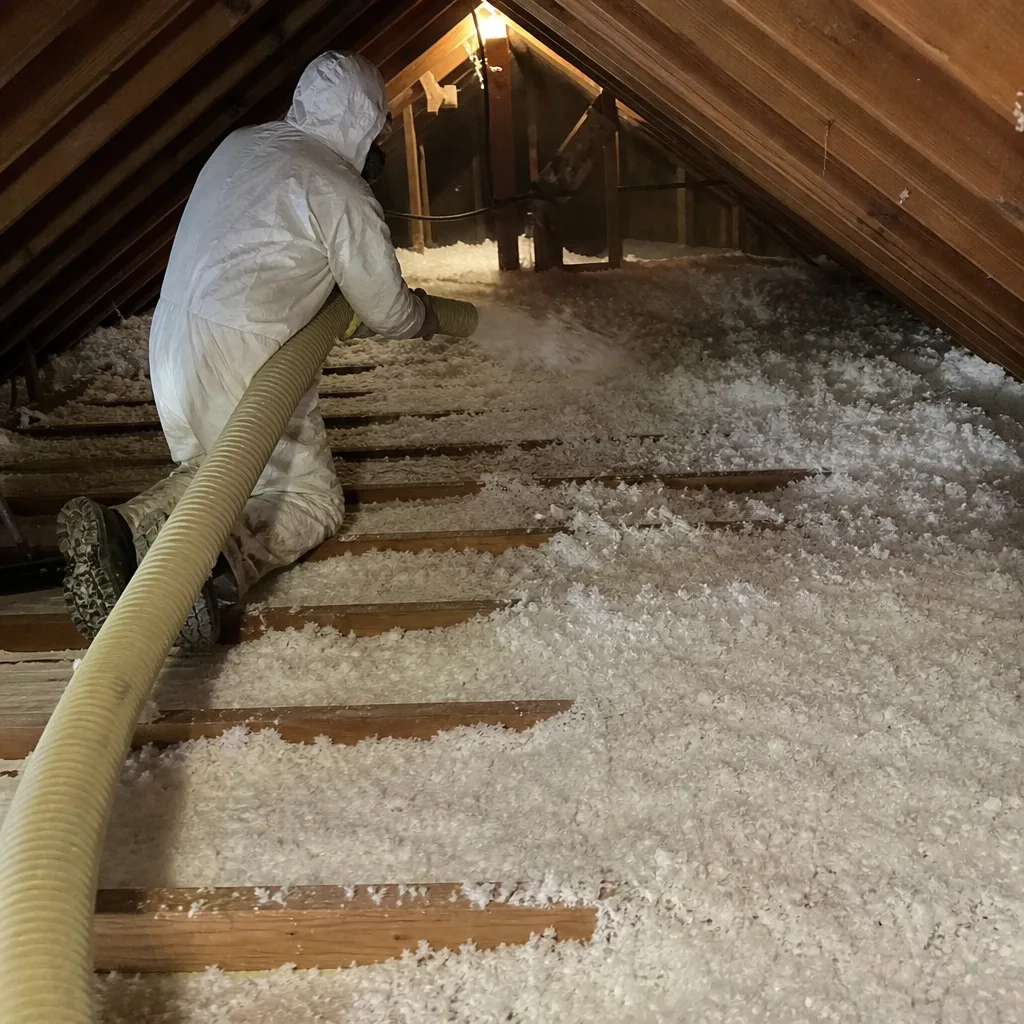
- Uneven temperature distribution between rooms. Cellulose settles over time, and in Yorba Linda’s dry heat, the settling accelerates if the original install didn’t hit the manufacturer’s specified density of 1.5-1.8 lbs per cubic foot for walls, 0.5-0.6 for open attics. You’ll feel it first in rooms farthest from the HVAC air handler, where the duct run is longest and the attic above is thinnest.
- Visible compression or footpath trails in the attic floor. GreenFiber Low Dust is designed to resist settling, but it will compact where technicians, cable installers, or homeowners have walked repeatedly without distributing their weight across plywood or crawl boards. Compressed cellulose loses 30-40% of its R-value; an R-38 install compressed to 6 inches performs closer to R-19.
- Dust accumulation around ceiling registers or can lights. This signals air leakage from the conditioned space into the attic, pulling fine cellulose particles with it. In Yorba Linda, where Santa Ana winds pressurize attic vents, the reverse can also happen: outside air pushing insulation away from eaves and creating bare spots near soffits.
- Moisture staining on ceiling drywall after rare heavy rains. Cellulose absorbs and holds moisture better than fiberglass, which is normally an advantage, but if your roof deck has a slow leak or your bath fan vents into the attic rather than through the roof, saturated GreenFiber will pack into a dense mat that dries slowly and supports mold growth. We’ve found this most often in hillside homes off Bastanchury Road where morning fog lingers.
- Energy bills climbing year-over-year without rate increases. SCE’s tiered rates in Orange County haven’t changed dramatically since 2022, so a 15-20% jump in cooling costs usually means the thermal boundary is degrading. For GreenFiber installed before 2015, the fire-retardant borate treatment may have degraded enough that pests have begun nesting, displacing material and creating voids.
Replacement Cost & What’s Included
Most GreenFiber attic insulation jobs in Yorba Linda fall between $3,900 and $6,800 for a complete removal and replacement on a single-story home, or $2,200-$4,500 for a top-off over existing material that tests dry and clean. The range depends on three factors: attic square footage, current insulation depth and condition, and whether we need to remove old material or can blow new GreenFiber over what’s there.
| Scope | Price Range | What’s Included |
|---|---|---|
| Top-off (existing dry, clean) | $2,200-$4,500 | Air sealing of top plates and penetrations, blower-door test, GreenFiber Low Dust to R-38 or R-49 per IECC Zone 3, documented photo record |
| Full removal + replacement | $3,900-$6,800 | Removal and disposal of old insulation, rodent proofing if needed, air sealing, blower-door test, new GreenFiber Low Dust, photo record, 365-Day Done Right Promise |
| Stabilized cellulose (sloped ceilings) | $4,500-$7,200 | All of above with water-activated adhesive application, required for pitches over 4:12 |
Every job starts with a written price before any work begins, per Haven Standard Clause 1. We don’t charge for the inspection or the blower-door test if you proceed with the work; if you don’t, you still get the written findings and photos at no cost. The 365-Day Done Right Promise covers settling beyond manufacturer spec, installation defects, and any air-sealing failures measurable on a follow-up blower-door test.
DIY or Call Us?
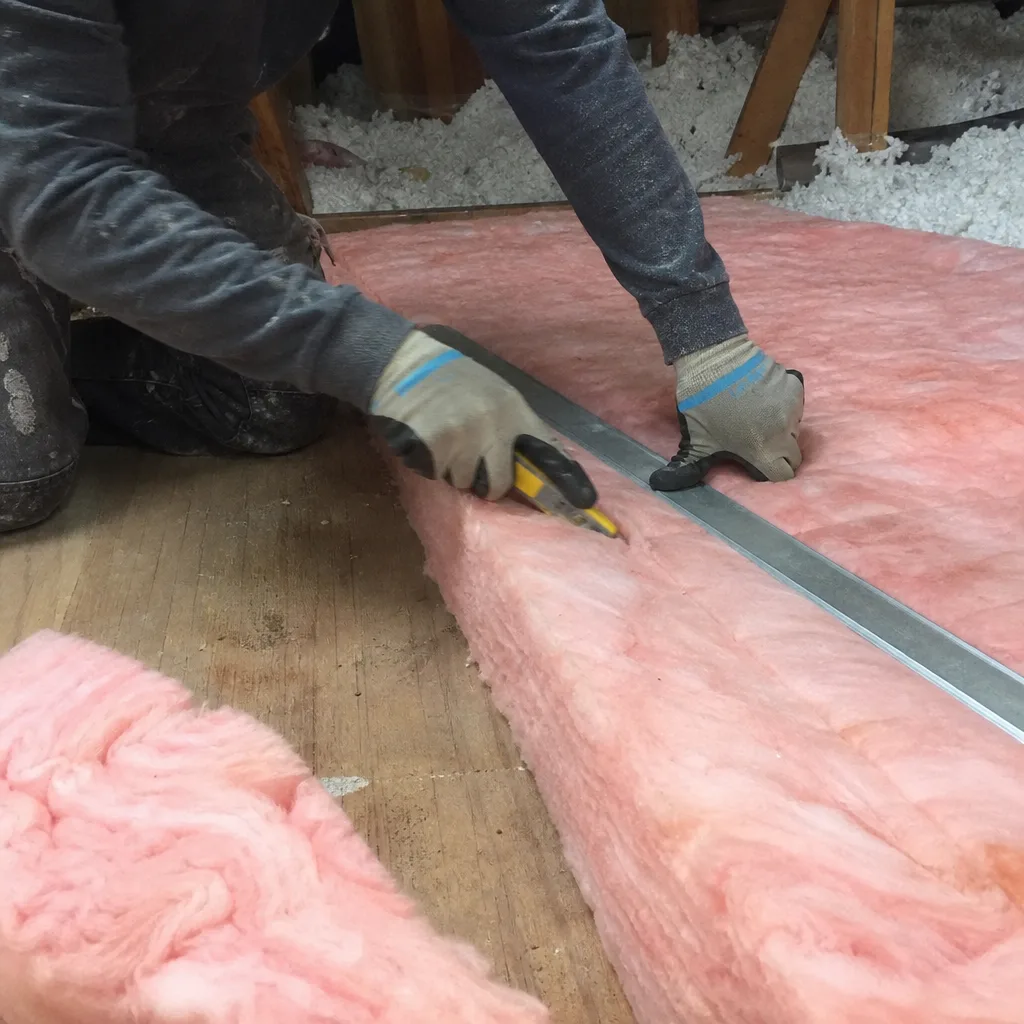
There’s no high-tension danger in handling GreenFiber cellulose, but there are two honest limits to what a homeowner should attempt. First, the dust: even Low Dust cellulose requires a P100 respirator, not a paper N95, and sealed goggles. Second, and more important, you cannot evaluate whether your existing insulation is safe to leave in place without a moisture meter and a borescope inspection of the roof deck underside. We’ve found mold in attics that looked clean from the hatch, and we’ve found chewed wiring in Yorba Linda homes where rodents had burrowed through old cellulose for years.
What you can safely check: measure your current insulation depth with a ruler at three points, photograph any discolored or compressed areas, and verify that your bath fans and kitchen vent actually terminate outside, not into the attic space. If any of those checks raise questions, call us at (909) 323-1675. We’ll read your situation with you, and if you have a competing estimate, we’ll give you a free second opinion in writing.
FAQs
GreenFiber cellulose is rated for the life of the structure when installed to spec, but in practice we see performance degradation after 15-20 years in Yorba Linda’s climate. The borate fire retardant gradually leaches with humidity cycling, and settling reduces R-value by 10-15% over the first decade. If your home was insulated before 2010, it’s worth testing density and depth. Call (909) 323-1675 and we’ll measure it, no charge for the inspection.
Sometimes, but only if the existing material tests below 12% moisture content, shows no pest activity, and is the same product type, not stabilized under loose-fill. Layering incompatible products creates density mismatches that trap moisture. We test with a pin-type moisture meter and borescope before recommending a top-off versus full removal. The written price we give you will specify which path we’re taking and why.
A typical single-story attic in Yorba Linda takes one day for a top-off, or two days for full removal and replacement. Day one is air sealing and blower-door testing; day two is blowing the new GreenFiber and final documentation. We don’t rush the sealing phase, because seal the leaks first. Then insulate. The numbers will tell you whether it worked.
Yes. We carry GreenFiber Low Dust in 25-lb bags and stabilized cellulose in 19-lb bags on every truck, enough for most residential attics up to 2,500 sq ft without a supply run. For larger jobs or same-day starts after noon, we may pull additional bags from our supplier in Anaheim, which adds 90 minutes to the start time. We also stock Reflectix radiant barrier and other brands if your project needs a hybrid approach.
Written by Wes Okafor, Owner, Topside Attic Insulation Yorba Linda at Topside Attic Insulation Yorba Linda, serving Yorba Linda and nearby areas.