
Icynene Attic Insulation: The Yorba Linda Owner’s Guide
Most Icynene attic insulation jobs in Yorba Linda run between $2,800 and $5,400 for a complete removal and reinstall in a typical 1,800-2,400 square foot home, and we stock Icynene open-cell and closed-cell formulations on our trucks for same-day starts when the attic is already cleared. We see the call come in after the homeowner notices their upstairs bedrooms won’t cool below 78°F even with the AC running flat out, or after a pest inspector finds moisture-stained rafters where the Icynene vapor profile no longer matches what the climate demands. Seal the leaks first. Then insulate. The numbers will tell you whether it worked.
Which Icynene Models This Applies To
Icynene produces two primary formulations relevant to Yorba Linda attics: open-cell LD-C-50 (the softer, vapor-permeable foam common in pre-2018 installs) and closed-cell MD-R-200 (the denser, moisture-blocking foam used where roof decks need structural rigidity). The product label is stamped on the foam itself, usually visible where a can light or duct penetration was cut through. LD-C-50 runs roughly 0.5 pounds per cubic foot and compresses under finger pressure; MD-R-200 hits 2.0 pounds per cubic foot and feels like stale bread to the touch. Mixing the two on the same roof deck creates a vapor-profile mismatch that traps moisture against sheathing, especially on north-facing pitches in Yorba Linda’s canyon-adjacent neighborhoods where marine layer lingers into July mornings.
We are an independent service provider with no affiliation to Icynene, though we source factory-direct material through their regional distributor in Santa Fe Springs. For homeowners with partial failures, we match existing density rather than recommending full tear-out unless the substrate is compromised. Aftermarket equivalents exist from Demilec and CertainTeed, but we default to Icynene spec when the original install was code-compliant, because mixing manufacturers on the same thermal envelope voids most written warranties and complicates future inspections.
Signs Your Icynene Attic Insulation Is Failing
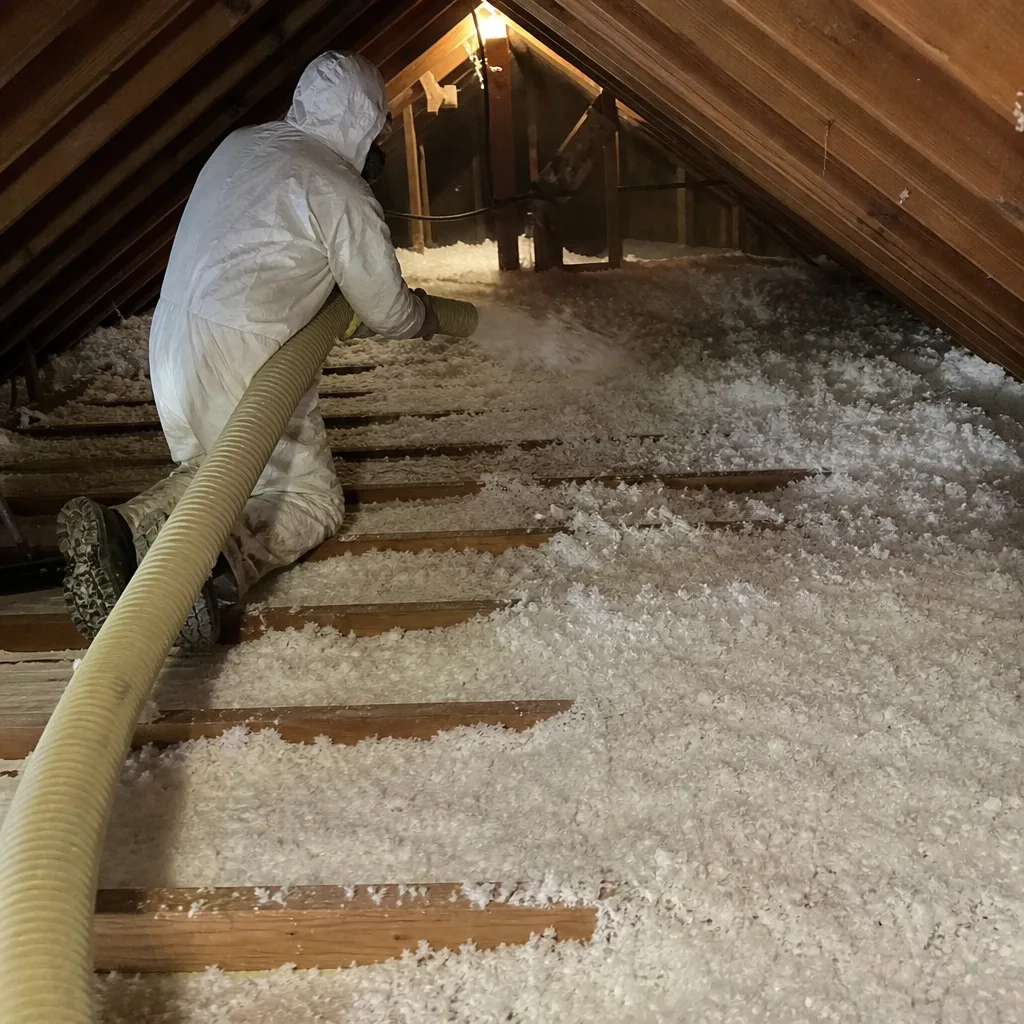
- Temperature stratification between floors. When your downstairs thermostat reads 72°F and upstairs reads 82°F, the Icynene has likely separated from the roof deck at the ridge line or shrunk at the eaves, creating convection channels that bypass the foam entirely. We find this most often in Yorba Linda’s 1980s tract homes off Lakeview Avenue where original R-19 batts were spray-foamed over without proper deck cleaning.
- Musty odor from ceiling registers or attic hatches. Open-cell Icynene is vapor-permeable by design, but if the attic wasn’t sealed at the top plates and can lights before application, humid outside air migrates through the foam and condenses on cooler ductwork. The smell is mold metabolites, not the foam itself, and it means your air barrier has a leak path upstream of the insulation.
- Visible yellowing or powdering of foam surfaces. UV degradation hits any Icynene left exposed in vented attics, turning the surface from cream to mustard in 18-36 months of Yorba Linda sun exposure through gable vents. Powdering indicates advanced photochemical breakdown; the foam is still insulating below the crust, but the degraded layer traps dust and becomes a fire-risk accumulation surface per California Title 24.
- Cracking along stud bays or around penetrations. Icynene cures with some dimensional change, but cracks wider than 1/8 inch usually mean the substrate was too cold (below 60°F) or too moist (above 20% wood moisture content) at application. We see this in hillside homes off Bastanchury Road where attics drop to 45°F on January mornings and previous crews didn’t pre-heat the deck.
- Spiking summer cooling bills with no equipment change. Your Icynene hasn’t disappeared, but if the blower-door number has drifted from 2,200 CFM50 back toward 4,000, the air sealing underneath has failed. The foam is doing its job; the leaks around it are not. This is why we test before we quote.
Replacement Cost & What’s Included
| Scope | Price Range in Yorba Linda |
|---|---|
| Spot repair (1-2 stud bays, localized failure) | $1,200 - $2,100 |
| Partial re-foam (vented attic, 1,000-1,500 sq ft deck) | $2,800 - $4,200 |
| Full removal + reinstallation (2,000+ sq ft, conditioned attic conversion) | $4,800 - $7,600 |
The range moves with three factors: how much existing foam has to be mechanically removed (LD-C-50 scrapes off plywood; MD-R-200 has to be cut with a serrated blade), whether the roof deck needs a moisture-damage inspection, and whether we’re converting a vented attic to conditioned space, which triggers Yorba Linda’s supplemental fire-sprinkler requirement under the 2022 California Residential Code. Every quote includes the blower-door depressurization test - a pressurization reading that shows, in one number, how much conditioned air your house leaks per hour - before any foam goes in, plus a second test after we’re done. You get both readings in writing, with photos of the manometer display, before the crew packs up.
Materials carry the manufacturer’s warranty; our installation carries the 365-Day Done Right Promise. If the blower-door number doesn’t improve, we find the leak we missed and fix it. Written scope, written warranty, before anyone lifts a tool. Haven Standard Clause 1.
DIY or Call Us?
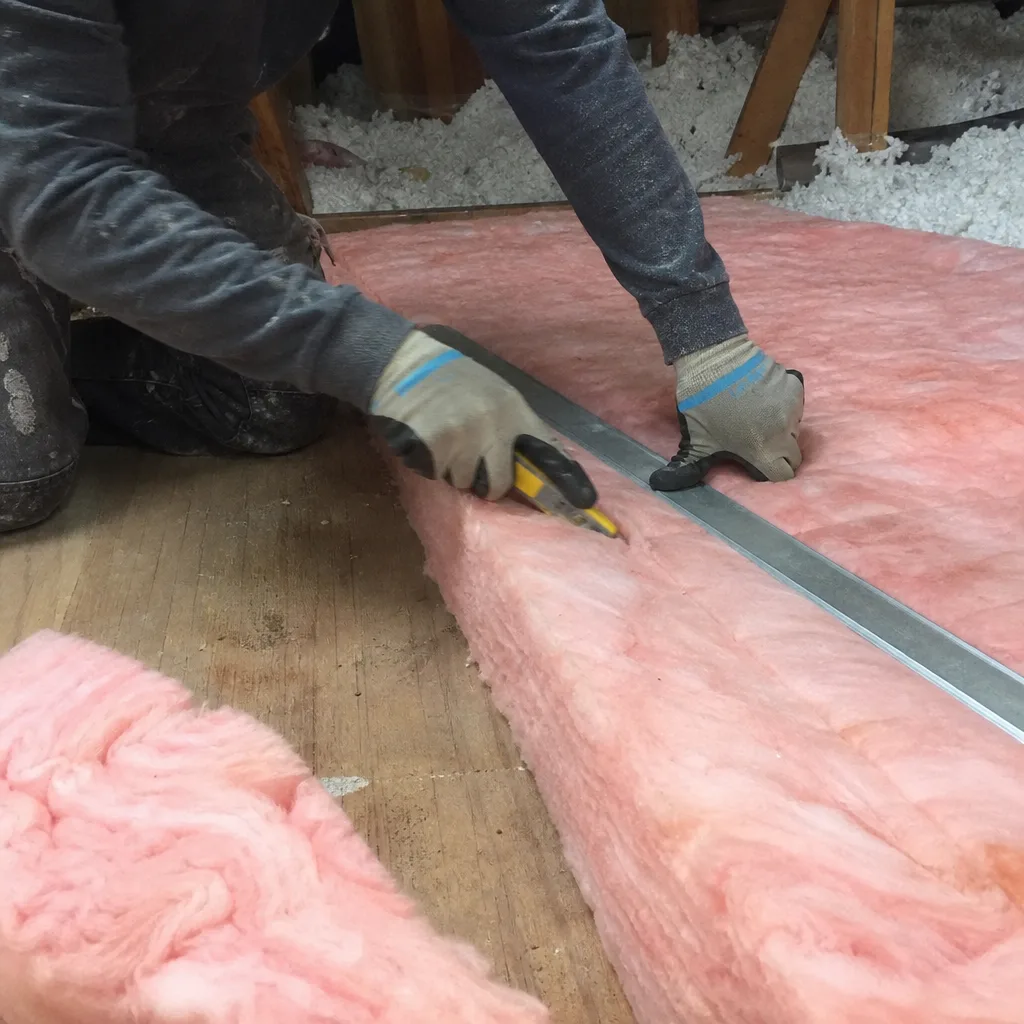
There’s no safe DIY path for Icynene application. The two-component resin and isocyanate mix requires supplied-air respirators, full skin coverage, and controlled ventilation during the 24-hour cure window. Off-ratio foam - too much A-side, too little B-side - produces a sticky, non-curing mess that has to be cut out entirely, and the exotherm reaction can hit 250°F, creating fire risk in confined attics. We don’t say this to alarm; we say it because we’ve been called to fix three Yorba Linda attics in the past two years where a homeowner’s “simple touch-up” triggered an insurance claim.
What you can safely check: look at the foam label if it’s exposed, note any cracks or discoloration, and photograph your HVAC filter dates and energy bills for the past 12 months. That documentation helps us target the failure faster. What you should not do: cut into the foam, spray consumer-grade canned foam over it, or assume the problem is the foam rather than the air sealing underneath. Call (909) 323-1675 and we’ll read your situation with you. Estimates are free, and we bring a blower door to every first visit so you’re not guessing.
FAQs
Factory-rated lifespan is indefinite in a properly sealed assembly, but we see functional degradation in 15-22 years when the attic was insulated before air sealing, because thermal cycling and moisture drive dimensional change. In Yorba Linda specifically, the 140°F July attic peaks accelerate UV exposure on any visible foam, and the Santa Ana wind cycles create pressure differentials that test seal integrity at eaves and ridge vents. Call (909) 323-1675 for a free assessment of your specific assembly.
Localized delamination can be cut back and re-foamed if the substrate is dry and the surrounding foam tests at original density, but we require a moisture-meter reading below 16% wood content and a passing blower-door test on the surrounding envelope before we’ll patch. If the failure is widespread or the original application was over unsealed bypasses, partial repair is false economy. We quote both options with the numbers to back the recommendation.
Most Yorba Linda homes in the 1,800-2,400 square foot range take two days: one day for removal, deck prep, and air sealing, plus a second day for foam application and cure monitoring. Conditioned attic conversions add a third day for fire-sprinkler coordination and mechanical ventilation rough-in. We don’t rush the cure; off-gassing Icynene is not a product you want to encapsulate early.
We stock both LD-C-50 and MD-R-200 in 55-gallon sets, along with Demilec and CertainTeed equivalents for homeowners who need cross-manufacturer matching. Same-day starts are available when the attic is cleared of storage and the roof deck is accessible. We also carry Reflectix radiant barrier for hybrid assemblies where the homeowner wants foam plus reflective performance on south-facing pitches. Call (909) 323-1675 to confirm current stock and schedule.
Written by Wes Okafor, Owner, Topside Attic Insulation Yorba Linda at Topside Attic Insulation Yorba Linda, serving Yorba Linda and nearby areas.