
Rockwool Attic Insulation: The Yorba Linda Owner’s Guide
Rockwool attic insulation installed in a typical Yorba Linda home runs between $2.80 and $4.20 per square foot for batts or loose-fill, with most complete attic jobs landing between $3,200 and $5,800 depending on accessibility and whether air sealing is needed first. We stock Rockwool Comfortbatt, Comfortboard, and Safe’n’Sound on our trucks and can usually install within 48 hours of your written estimate. Most homeowners realize their Rockwool insulation is underperforming when second-floor rooms won’t cool below 78°F despite the AC running nonstop, or when they find compressed, moisture-stained batts in the attic after a Santa Ana wind season.
Which Rockwool Models This Applies To
Rockwool’s residential attic line breaks into three product families, and matching the wrong one to your assembly is a common mistake we correct in Yorba Linda hillside homes.
Comfortbatt R-30 and R-38 are the standard semi-rigid batts, 15.25 inches wide to fit 16-inch on-center joist bays. The facing matters: unfaced for attic floors over conditioned space, kraft-faced only if you’re installing against an open attic knee wall where vapor drive needs managing. We’ve pulled out plenty of kraft-faced batts laid flat on attic floors where they trap summer moisture against drywall.
Comfortboard 80 and 110 are the rigid boards, used for attic hatches, kneewalls, or cathedral ceiling assemblies. Thickness runs 1.5 to 3 inches; R-value per inch is roughly 4.2. The 110 is denser and holds its shape under wind-wash at ridge vents, which matters in the Bastanchury Road corridor where attic ventilation runs aggressive.
Safe’n’Sound is technically an interior wall product, but we find it stuffed into attic floor cavities by DIYers who saw the price and didn’t read the spec sheet. It’s not rated for thermal performance; we replace it with Comfortbatt when we find it.
OEM Rockwool versus aftermarket: for batts, there isn’t a meaningful aftermarket equivalent that matches the density and fire rating. For rigid board, some suppliers carry generic mineral wool, but the compression set under load differs. We source Rockwool direct from the distributor in Santa Fe Springs; no proprietary lock-in, but we don’t substitute without writing it into your scope.
Topside Attic Insulation Yorba Linda is an independent service provider; we are not affiliated with Rockwool.
Signs Your Rockwool Attic Insulation Is Failing
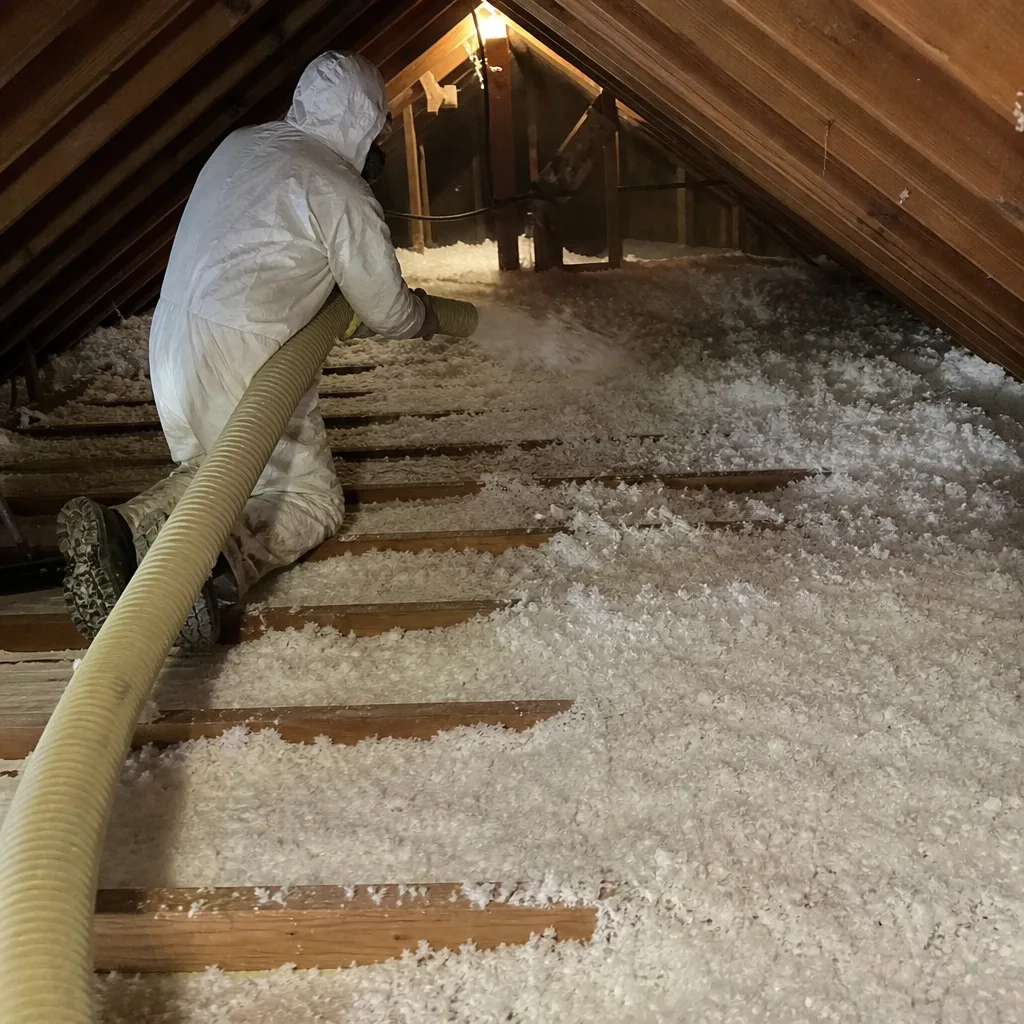
- Uneven temperatures between rooms. Rockwool doesn’t settle like fiberglass, but it compresses if walked on or if storage boards are laid over it without proper decking. Once compressed from 10 inches to 4 inches, your R-38 becomes R-15 and the master bedroom over the garage turns into a sauna by 3 PM.
- Visible moisture or dark staining on batt surfaces. Rockwool is hydrophobic and won’t hold water like cellulose, but it can wick condensation from air leaks at top plates. In Yorba Linda, we see this where recessed can lights weren’t sealed before insulation went in; warm moist air hits the cold ductwork and the batt underneath turns gray.
- Insulation displaced from eave edges. Santa Ana winds pressurize attics through ridge and gable vents. Loose-fill Rockwool, properly installed, resists this better than cellulose, but if the installer skipped baffles at the soffits, the first strong wind season creates bare strips along the eaves where ice damming starts in winter and heat pours in all summer.
- Rodent tunneling or nesting material. Rockwool is mineral fiber and technically unappealing to rodents, but they will burrow through it to reach conditioned space if the air sealing at plumbing and electrical penetrations is incomplete. We find this most often in Savi Ranch area homes built 1985-1995 where original sealant has hardened and cracked.
- Energy bills climbing year-over-year with no rate change. Your Rockwool hasn’t chemically degraded, but if the home envelope has shifted, settled, or been modified, the insulation assembly may no longer contact the framing. Gaps of even 2 percent of surface area can drop effective R-value by 15-20 percent.
Replacement Cost & What’s Included
| Component | Price Range (Yorba Linda) |
|---|---|
| Rockwool Comfortbatt removal and disposal | $0.85 - $1.40 / sq ft |
| Rockwool Comfortbatt R-30/R-38 supply and install | $2.80 - $3.60 / sq ft |
| Rockwool Comfortboard rigid (attic hatch, kneewall) | $4.50 - $6.20 / sq ft |
| Attic air sealing (top plates, penetrations, can lights) | $850 - $1,800 (typical 1,800 sq ft home) |
| Blower-door test (before and after) | Included on all air-sealing jobs |
What moves you up or down in that range: attic height (steep cathedral ceilings require scaffolding), existing insulation condition (wet or rodent-contaminated costs more to remove safely), and whether the attic floor can bear crew weight without supplemental decking. Every estimate we write in Yorba Linda includes a photo-documented attic inspection, a written scope with material specs, and the blower-door numbers if we’re doing air sealing. No work starts without the written price; that’s Haven Standard Clause 1.
The 365-Day Done Right Promise covers all completed work. If the comfort doesn’t match what we scoped, we return and fix it.
DIY or Call Us?
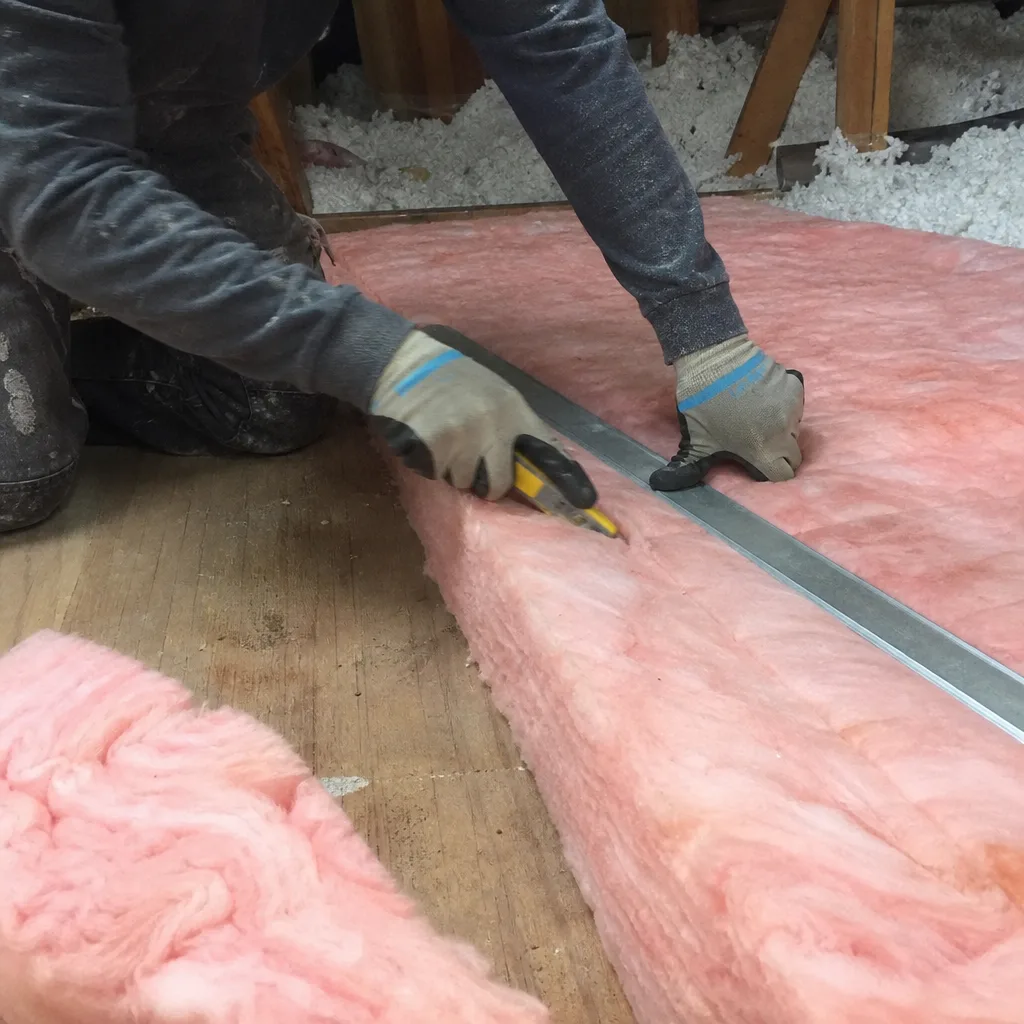
What you can safely check yourself: measure your existing batt thickness against the labeled R-value (R-30 should be roughly 7.25 inches, R-38 roughly 10 inches), look for gaps at the eaves, and verify your soffit baffles are intact. Take photos of any staining or compression. That’s useful information, and we’ll review it when you call.
Where DIY goes wrong with Rockwool: mineral wool fibers are sharper than fiberglass and require proper respirators, not just dust masks. More critically, installing new insulation over unsealed air leaks is throwing money away; the blower-door test exists because your eyes can’t see a 200 CFM50 leak at a top plate. We’ve re-done too many Yorba Linda attics where the homeowner added R-38 over R-19 and saw no comfort improvement because the conditioned air was still escaping at 400 cubic feet per minute.
Seal the leaks first. Then insulate. The numbers will tell you whether it worked.
Call (909) 323-1675 for a written estimate. We stock Rockwool on the truck and can usually inspect within 24 hours.
FAQs
Rockwool mineral wool does not degrade chemically; the fibers are stable for the life of the building. What fails is the assembly around it: air leaks develop, moisture cycles compress batts, or rodents compromise the envelope. In Yorba Linda’s climate, with attic temperatures hitting 140°F in July and winter nights dropping to the low 40s, we see assemblies need reassessment every 15-20 years, not because the Rockwool failed but because the house shifted around it. Call (909) 323-1675 and we’ll inspect what you have; estimates are free.
You can add over existing Rockwool if it’s dry, uncompressed, and uncontaminated. We don’t add over wet, rodent-affected, or oil-stained insulation because it locks in the problem. In Yorba Linda, we most often remove the top layer of old fiberglass that was improperly installed, then air seal and lay new Rockwool over the original mineral wool base. The exact call depends on what we find in your attic; we’ll photograph it and show you before you decide. Call (909) 323-1675 for a free second opinion on any written estimate you’ve already received.
Most Yorba Linda homes between 1,600 and 2,400 square feet take one to two days: half a day for removal and air sealing, half a day for installation and cleanup. If we’re running the blower-door test, add two hours for setup, depressurization, and the written report. Homes with limited attic access hatches or steep pitches may need a third day for safety setup. We text you a named technician and arrival window the morning of; no callback windows measured in business days. Call (909) 323-1675 to schedule.
We keep Comfortbatt R-30 and R-38, Comfortboard 80 in 1.5-inch and 2-inch, and proper attic baffles on our trucks. For larger jobs or specific densities, we pull from our Santa Fe Springs distributor with 24-hour turnaround. We don’t start a job until materials are on-site and verified against the written scope. Call (909) 323-1675; if we can’t get what your assembly needs, we’ll tell you before we write the estimate.
Written by Wes Okafor, Owner, Topside Attic Insulation Yorba Linda at Topside Attic Insulation Yorba Linda, serving Yorba Linda and nearby areas.