
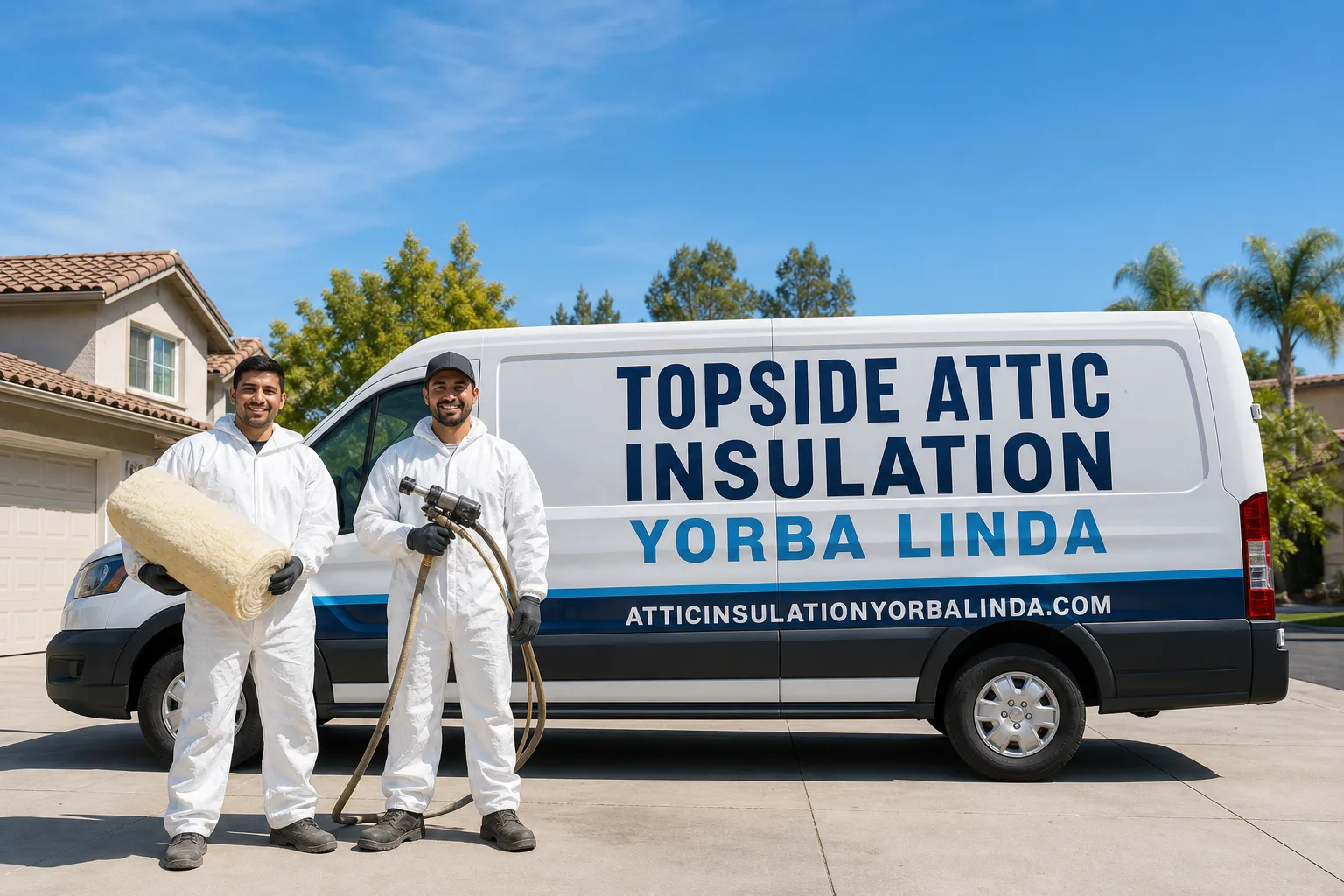
How Much Does Wall Insulation Cost in Yorba Linda?
Our Wall Insulation services in Yorba Linda, CA typically cost between $1.50 and $4.25 per square foot of wall area, depending on the insulation type, wall access method, and the condition of what’s already in the walls. For a single-story Yorba Linda home with roughly 1,200 square feet of exterior wall area, most homeowners pay somewhere between $1,800 and $5,100 for a complete wall insulation project in 2026. That range narrows considerably once we know the wall construction, the R-value target, and whether air sealing needs to happen before the insulation goes in – and it always needs to happen first.
For more detail on what’s included in a full wall insulation project, see our Wall Insulation in Yorba Linda service page, or read on for the full 2026 cost breakdown below.
Wall Insulation Cost Breakdown (2026)
The table below reflects real pricing from jobs we’ve completed in Yorba Linda and the surrounding communities in 2025 and early 2026. These are flat-price ranges – the number on your written scope before anyone lifts a tool, not a post-job surprise.
| Insulation Type / Method | Typical R-Value | Cost per Sq Ft (Wall Area) | Whole-Home Estimate (1,200 sq ft wall area) |
|---|---|---|---|
| Dense-Pack Cellulose (existing walls, no drywall removal) | R-13 to R-15 | $1.75 – $2.50 | $2,100 – $3,000 |
| Dense-Pack Fiberglass (existing walls, no drywall removal) | R-13 to R-15 | $1.50 – $2.25 | $1,800 – $2,700 |
| Blown-In Fiberglass (open stud bays, new construction or renovation) | R-13 to R-21 | $1.25 – $2.00 | $1,500 – $2,400 |
| Batt Insulation – Fiberglass or Mineral Wool (open walls) | R-13 to R-21 | $0.90 – $1.75 | $1,080 – $2,100 |
| Open-Cell Spray Foam (open stud bays) | R-3.5 to R-13 | $1.75 – $3.00 | $2,100 – $3,600 |
| Closed-Cell Spray Foam (open stud bays or partial fill) | R-6 to R-14 | $2.75 – $4.25 | $3,300 – $5,100 |
| Air Sealing (top plates, penetrations, can lights) – standalone or bundled | N/A | $0.35 – $0.80 | $420 – $960 added to any project |
| Drywall Patch and Repair (dense-pack hole patching, per hole) | N/A | $15 – $45 per hole | Varies by access point count |
A few things worth knowing about these numbers. First, the “wall area” figure we measure is the net exterior wall surface – doors and windows come out of that total, so your number will be lower than a raw perimeter calculation. Second, dense-pack jobs in Yorba Linda’s older tracts (homes built in the 1970s and 1980s, particularly in the East Lake and Vista Del Verde corridors) sometimes carry a modest surcharge when we find existing kraft-faced batts that need to be confirmed stable before we drill and pack around them. Third, closed-cell spray foam at the wall cavity is the highest-performance option per inch, which matters in Yorba Linda’s climate zone 8 conditions – the combination of inland summer heat and occasional overnight cold snaps in January and February means moisture management at the wall plane actually does matter here, unlike in milder coastal climates.
Every project at Envelope Insulation Co. begins with a blower-door test – a pressurization reading that shows, in one number, how much conditioned air the building envelope is losing – before any insulation decision is finalized. We don’t sell a product first and measure second. The blower-door reading shapes the air-sealing scope, and the air-sealing scope shapes the insulation recommendation. That sequence is non-negotiable, and it’s documented in writing before anyone touches a wall.
What Affects Wall Insulation Pricing in Yorba Linda
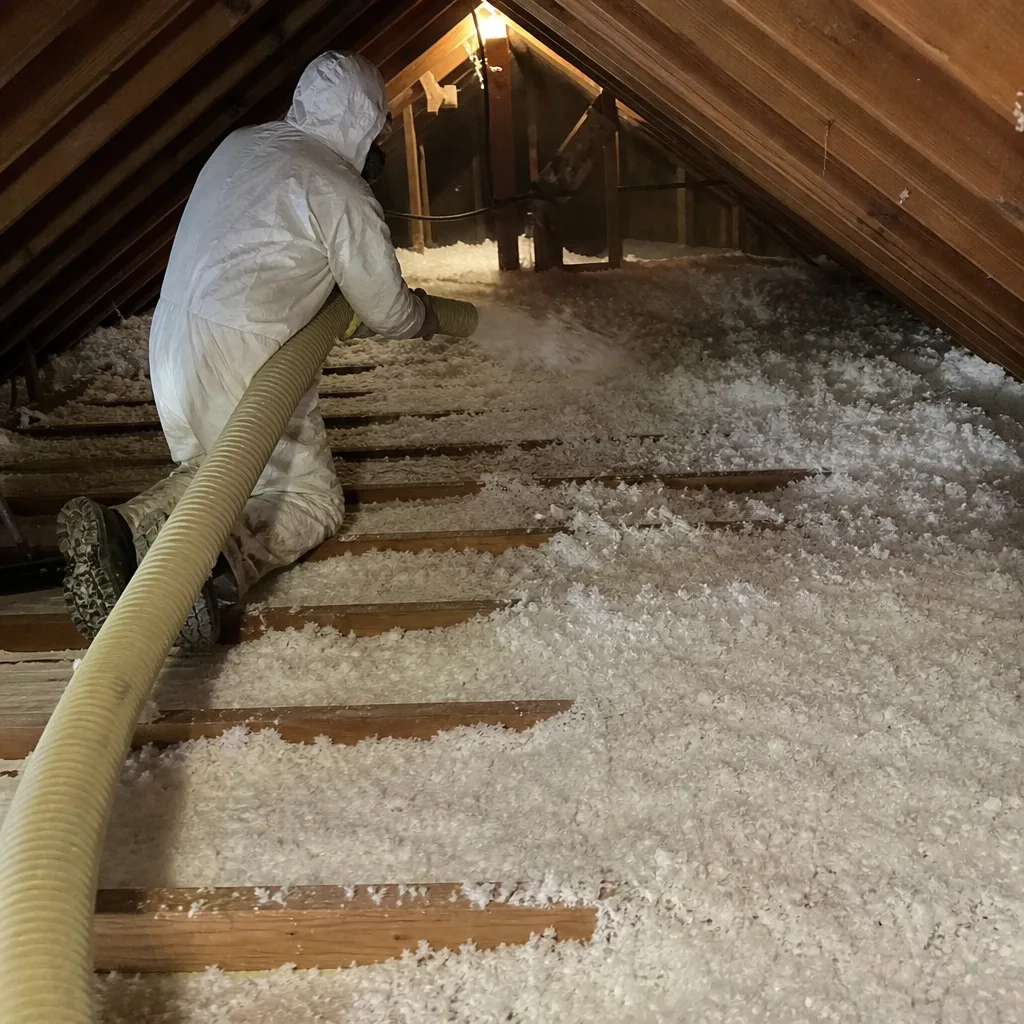
Six variables move the number meaningfully in either direction. If your project lands outside the ranges above, one of these factors is almost certainly the reason.
- Wall access method. Dense-pack through the exterior (drilling small holes through siding or stucco, then patching) costs less in labor than dense-pack through the interior (which requires drywall removal, patching, and sometimes texture matching). Most Yorba Linda homes built before 2000 use stucco exteriors, and stucco drilling is straightforward when done by an experienced crew – but patching stucco to an invisible finish is a craft skill that adds time. Interior access through drywall is more common on newer homes with complex exterior finishes or when a wall is being opened for another reason, like a remodel.
- What’s already in the wall. Many Yorba Linda homes from the 1970s and 1980s were built with minimal R-7 or R-11 batts, and some older homes in the Camino Hills and Lakeview Avenue areas have walls with nothing at all. An empty cavity is the easiest scenario. A cavity with an old, compressed batt requires confirming the existing material won’t block airflow during the dense-pack process, which adds inspection time. In rare cases, we find asbestos-containing duct tape or vapor barriers inside older wall assemblies – that triggers a separate remediation conversation before insulation can proceed.
- Home size and wall configuration. This one is straightforward: more wall area equals more material and labor. But configuration matters too. A two-story home with complex rooflines, bump-outs, and cantilevered sections takes longer to drill, pack, and patch than a simple single-story ranch. Yorba Linda has a healthy mix of both – the hillside custom homes off Fairmont and Carbon Canyon Road tend to have more complex envelopes than the tract homes in the Bryant Ranch or Country Hills areas.
- Climate zone and R-value target. Yorba Linda sits in California Climate Zone 8. The current Title 24 requirement for exterior walls in new construction is R-13 minimum, and in retrofit work we aim for R-15 or better when the cavity depth allows it. If you’re targeting a higher R-value – for instance, if you’re combining dense-pack with exterior rigid foam board as part of a deeper energy retrofit – the material cost increases but so does the long-term performance. We’ll show you the blower-door before-and-after numbers either way so you can evaluate what you actually got.
- Air sealing scope. At Envelope Insulation Co., air sealing is not an upsell. It is a prerequisite. We will not blow insulation into a wall cavity over unsealed penetrations – that sequence wastes money and produces a measurably worse result. The air-sealing cost is listed separately in the written scope so you can see exactly what you’re paying for, but it is never optional. In Yorba Linda’s older housing stock, top plates with multiple unblocked penetrations and can lights that open directly into wall cavities are common, particularly in homes built before 1990. Sealing those properly adds to the project cost but shows up clearly in the post-job blower-door reading.
- Market conditions and material costs in 2026. The Yorba Linda insulation market in 2026 is running slightly higher than 2024 on dense-pack cellulose due to supply chain adjustments on GreenFiber and similar products. Fiberglass batt pricing from Owens Corning and Knauf has stabilized. Closed-cell spray foam from Icynene and Demilec carries a slight premium over 2024 levels due to blowing agent costs. None of these swings are dramatic, but they’re real – and they’re why we publish a 2026 price guide rather than recycling old numbers.
How to Save on Wall Insulation in Yorba Linda
There are legitimate ways to reduce the total cost of a wall insulation project. There are also ways that look like savings but aren’t – and the difference is worth knowing before you sign anything.
Get a written price before work starts – from everyone
This sounds obvious but it’s the most common source of cost surprises in home insulation. A verbal estimate for dense-pack can arrive at a very different place than the final invoice if the crew discovers a different condition inside the wall than was quoted. Under Haven Standard Clause 1, every Envelope Insulation Co. project starts with a flat written price, a written scope, and a written warranty. We extend a free second opinion on any written estimate you’ve received from another contractor – bring us the document and we’ll read it with you, line by line, so you understand what you’re actually comparing.
Bundle wall and attic work when the timing makes sense
If your attic insulation also needs attention – and in most Yorba Linda homes built before 2000, it does – doing both projects in the same mobilization cuts labor cost meaningfully. The blower-door test covers the whole envelope in one reading, the crew is already on site, and the air-sealing work on top plates addresses both the attic floor and the wall top plates simultaneously. We see bundled projects in Yorba Linda run 12-18% less per square foot than each project priced individually.
Use utility rebates from Southern California Edison and SoCal Gas
Southern California Edison and SoCal Gas both offer rebates for qualifying insulation and air-sealing upgrades as of 2026. Eligibility typically requires meeting a minimum pre-retrofit audit and achieving a documented R-value improvement. The exact rebate amounts shift program to program, so check the current schedules directly with each utility rather than relying on a contractor’s quote of the number. What we can tell you is that the documented photo record and before-and-after blower-door readings we provide on every applicable job are exactly the kind of third-party documentation these rebate programs require. You won’t need to chase paperwork after the fact.
Don’t skip air sealing to cut costs
This is the savings that isn’t. Skipping or minimizing air sealing to reduce the project price produces an insulation job that underperforms relative to the R-value installed. Air moves through gaps in the building envelope faster than heat conducts through insulation – a wall packed to R-15 with unsealed penetrations at the top plate will perform closer to R-8 in real-world conditions. The blower-door number before and after the job makes this visible. If a contractor isn’t doing a blower-door test, they don’t have data. And if they don’t have data, they can’t tell you what you actually got for your money.
Ask about the right product for your wall assembly, not the most expensive one
Closed-cell spray foam is the highest-cost option and it is genuinely the right call in specific situations: vapor-sensitive assemblies, very narrow cavities where you can’t achieve adequate R-value with dense-pack, or walls adjacent to unconditioned garages where moisture drive is a concern. But for a standard 2×4 or 2×6 exterior wall cavity in a typical Yorba Linda tract home, dense-pack cellulose or dense-pack fiberglass delivers excellent performance at a lower cost. We’ll tell you which material fits your wall assembly, in writing, before you decide.
To get a written price for your home, call (909) 323-1675. We’ll schedule a site assessment, read the blower-door before any scope is written, and give you a flat number in writing before anyone touches a wall.
Wall Insulation Cost vs. Performance: What the Numbers Show
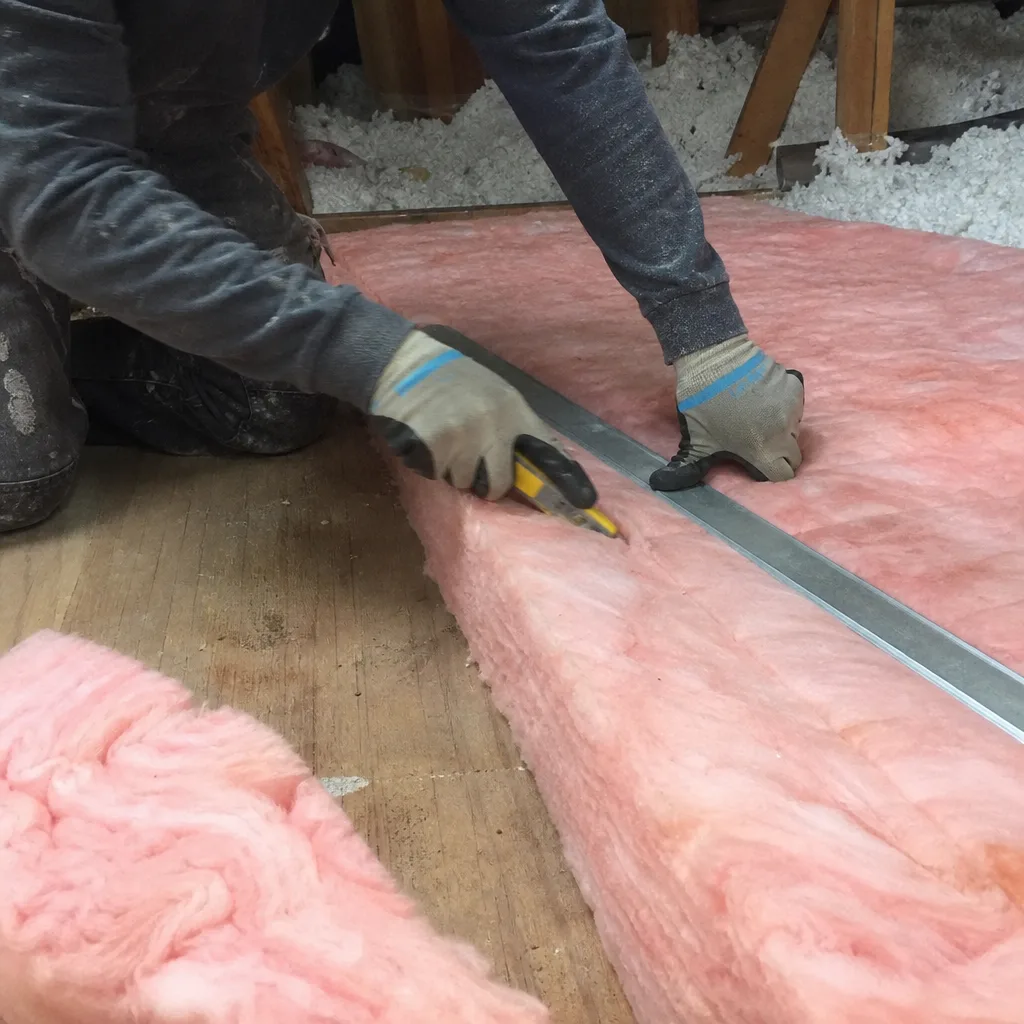
Yorba Linda’s climate presents a specific thermal challenge that’s different from what homeowners deal with in coastal Orange County. Summer afternoons in Yorba Linda regularly push past 95 degrees Fahrenheit, and that heat load sits against your exterior walls for four to six hours at peak intensity. East-facing and west-facing walls take the hardest hit. A wall with no insulation or degraded R-7 batts from 1978 is conducting that heat directly into the conditioned space, and your HVAC system compensates by running longer cycles.
On a representative single-story Yorba Linda home in the Country Hills area – roughly 1,600 square feet of living space, 1,350 square feet of exterior wall area, walls originally insulated with R-11 kraft-faced batts that had settled and compressed over 40 years – we recorded a blower-door reading of 3,800 CFM50 before any work. After sealing top plates, penetrations, and can-light boxes, then dense-packing the walls to R-15 with GreenFiber cellulose, the post-job blower-door read 1,950 CFM50. That’s not a feeling. That’s a pressure measurement, taken with calibrated equipment, that tells you the building envelope is leaking roughly half as much conditioned air as it was before the work. The homeowner has both numbers in writing.
That kind of documented result is why we don’t talk about insulation in terms of how we feel about the job. Evidence comes first.
Wall Insulation in Yorba Linda: Common Scenarios and Typical Costs
Rather than leaving you with only a cost table, here are three scenarios that reflect what we actually see in Yorba Linda most often. These are representative, not guaranteed – your written price will reflect your specific home.
Scenario 1: 1970s Tract Home in East Lake Area, Empty or Badly Degraded Walls
A 1,400-square-foot single-story home with stucco exterior, 2×4 wall framing, and either no insulation or original kraft-faced batts that have settled flat. Dense-pack cellulose through exterior stucco drilling, full air sealing of top plates and penetrations, stucco patching and painting not included in scope. Typical range: $2,800 – $3,800 for the wall insulation and air sealing combined.
Scenario 2: 1990s Two-Story Home in Bryant Ranch, Partial or Inadequate Insulation
A 2,200-square-foot two-story home with wood siding or stucco, 2×6 wall framing on exterior walls (common in California construction from the late 1980s onward), with R-11 batts that don’t fill the cavity. Dense-pack fiberglass to R-21 through exterior drilling, full air sealing, interior patching where access required going through drywall on one side of the garage wall. Typical range: $4,200 – $5,800.
Scenario 3: 2005-Era Custom Home in Vista Del Verde, Open Walls During Renovation
A homeowner in Yorba Linda’s hillside custom home corridor is opening walls for a kitchen remodel. With drywall off the studs, this is the lowest-cost window for wall insulation. Mineral wool batts (Rockwool) in a 2×6 cavity to R-23, full air sealing at top and bottom plates and all penetrations while the wall is open, closed-cell spray foam at any rim joist areas exposed during demo. Typical range for the insulation and air sealing portion only: $1,400 – $2,600, not including drywall reinstallation.
FAQs – Wall Insulation Cost in Yorba Linda
How much does wall insulation cost in Yorba Linda in 2026?
Most wall insulation projects in Yorba Linda run between $1,800 and $5,100 for a complete exterior wall treatment, depending on wall area, insulation type, and whether existing walls need to be drilled or are already open. Dense-pack methods for closed walls average $1.75 to $2.50 per square foot of wall area. Closed-cell spray foam in open walls runs $2.75 to $4.25 per square foot. Air sealing, which is required before any insulation is added, adds $0.35 to $0.80 per square foot and is always included in the written scope as a line item. Call (909) 323-1675 to get a flat written price for your specific home – no work starts without it.
Is it cheaper to insulate walls from the inside or outside in Yorba Linda?
Drilling through the exterior is generally the lower-cost access method in Yorba Linda because most homes here have stucco siding, and stucco drilling with dense-pack equipment is fast and produces small, patchable holes. Interior access requires opening drywall, which adds demo, patching, and texture-matching costs. The exception is when a remodel is already planned – if drywall is coming down anyway, interior access is by far the least expensive window you’ll have for wall insulation. In that case, batts or blown-in fiberglass through open studs costs $0.90 to $2.00 per square foot, which is the lowest range in the cost table above.
What R-value do Yorba Linda walls need to meet Title 24?
California Title 24 sets R-13 as the minimum for exterior wall insulation in new construction in Climate Zone 8, which covers Yorba Linda. In retrofit work on existing homes, R-13 is the practical floor, but we typically target R-15 in 2×4 framing and R-21 in 2×6 framing when the cavity allows it. Dense-pack cellulose achieves approximately R-3.7 per inch, which brings a standard 3.5-inch 2×4 cavity to R-13. Dense-pack fiberglass runs R-4.0 to R-4.2 per inch. If you’re targeting a higher performance level – for instance, as part of a deeper energy retrofit with a SoCal Edison rebate application – we’ll document the pre- and post-job blower-door numbers to support that paperwork. Call (909) 323-1675 and we can walk through the Title 24 requirements for your specific project.
How long does wall insulation installation take in a typical Yorba Linda home?
A single-story Yorba Linda home with roughly 1,200 square feet of exterior wall area takes one to two days for a dense-pack installation through exterior drilling, including air sealing and hole patching. A two-story home with more complex wall configurations typically takes two to three days. Open-wall installations during a remodel are faster – most are complete in one day once the wall framing is clear. The blower-door test happens before and after, adding a couple of hours at the start and end of the job. You’ll have the documented results in writing before we leave.
Will wall insulation lower my energy bills in Yorba Linda?
Yes, and we can put a number on the change rather than just a claim. Yorba Linda’s peak summer heat and the thermal load on west-facing walls specifically makes exterior wall insulation one of the higher-return improvements in this climate. In homes we’ve dense-packed from empty or near-empty walls, the before-and-after blower-door readings typically show a 30-55% reduction in measured air leakage when air sealing is done first. What that translates to in dollars depends on your HVAC system, thermostat behavior, and utility rates – we won’t invent a number we can’t back up. What we will give you is the actual blower-door measurement before and after, so you have documented evidence of the performance change rather than a contractor’s assertion about it.
Why Air Sealing Has to Come First – and What That Means for Your Wall Project
This is the part of wall insulation that most contractors in the Yorba Linda market don’t lead with, and it’s worth explaining plainly. Insulation slows heat transfer by conduction. It does very little to stop heat transfer by convection – warm air physically moving through gaps in the building envelope. If your walls have unsealed top plates, penetrations for electrical and plumbing, or gaps where framing members meet, air is moving through those gaps continuously, carrying conditioned air out and unconditioned air in.
Adding insulation over those unsealed gaps improves the wall’s R-value on paper but underperforms in real conditions. The blower-door test makes this visible before the insulation decision is made. We record the pre-job CFM50 reading – that’s cubic feet per minute of air moving through the envelope at a 50-pascal pressure differential, a standardized measure used across the energy performance industry – then we air seal the identified leak points, and then we install the insulation. The post-job blower-door confirms the result.
In Yorba Linda homes built before 1990, particularly in the Lakeview Avenue and Camino Hills tracts, we regularly find top plates with multiple unblocked plumbing and electrical penetrations, can lights in interior soffits that open directly into unconditioned cavities, and fiberglass batts that were installed without any air barrier behind them. Sealing those points before dense-packing the exterior walls is what produces the performance change. This is not optional at Envelope Insulation Co. It is the job.
Wes Okafor has led this work at Envelope Insulation Co. since 2016, and that prerequisite has never changed: sealed first, then insulated, in that order, with the blower-door numbers to show what the sequence produced.
Key Takeaways: Wall Insulation Costs in Yorba Linda (2026)
- Most whole-home wall insulation projects in Yorba Linda run between $1,800 and $5,100, depending on wall area, access method, and insulation type.
- Dense-pack cellulose or fiberglass through exterior stucco drilling is the most common method in Yorba Linda and typically costs $1.50 to $2.50 per square foot of wall area.
- Closed-cell spray foam costs more ($2.75 to $4.25 per square foot) and is the right call in specific assemblies – not a default upgrade for every wall.
- Air sealing (top plates, penetrations, can lights) costs $0.35 to $0.80 per square foot and is always included in the written scope before work starts – it is not optional.
- Before-and-after blower-door readings are provided on every applicable job so you can see the actual performance change in one number.
- Southern California Edison and SoCal Gas offer rebates for qualifying insulation upgrades; the documented blower-door readings and photo record we provide support those rebate applications.
- Every project starts with a flat written price and ends with a Documented Photo Record – no exceptions, no after-the-fact surprises.
- The 365-Day Done Right Promise applies to all work: if it’s not right, we make it right, in writing.
Get a Written Price for Your Yorba Linda Home
If you’ve been comparing estimates for wall insulation in Yorba Linda, you’ve probably noticed that prices vary widely and explanations for that variation are hard to get. We operate differently. Every project starts with a blower-door test, a documented air-sealing plan, and a flat written price before anyone touches your walls. You know the number before the work starts, you get photos when the crew leaves, and you get the blower-door readings – before and after – so you can see what changed.
Envelope Insulation Co. has completed work on over 9,000 homes since 2016, every one under The Haven Standard: written price first, documented result last, no exceptions. Wes Okafor leads every project with that standard in place.
If you have a written estimate from another contractor, bring it. We offer a free second opinion on any written estimate – we’ll read it with you and tell you what you’re actually comparing.
Call (909) 323-1675 to schedule your blower-door assessment and get a written price. A live person answers. No voicemail loops, no callback windows measured in days.
You can also learn more about the full scope of what we do at our home page, where all service lines and the Haven Standard are explained in detail.
Written by Wes Okafor, Owner at Envelope Insulation Co. (operating as Topside Attic Insulation Yorba Linda), serving Yorba Linda, CA since 2016.
Pricing reflects the Yorba Linda market as of 2026. Topside Attic Insulation Yorba Linda offers free estimates – call (909) 323-1675.
What Our Customers Say
"The winter gas bill dropped by about a third. They had estimated a quarter, so they under-promised."
- Genevieve R."They photographed rodent damage in the old insulation that we had no idea about, and priced the exclusion work separately so we could decide."
- Harriet N."Two other companies quoted to blow more insulation on top of what was there. These were the only ones who said the existing material had to come out first, and explained why."
- Clifford E.